
Loading, please wait...
LOT 0736
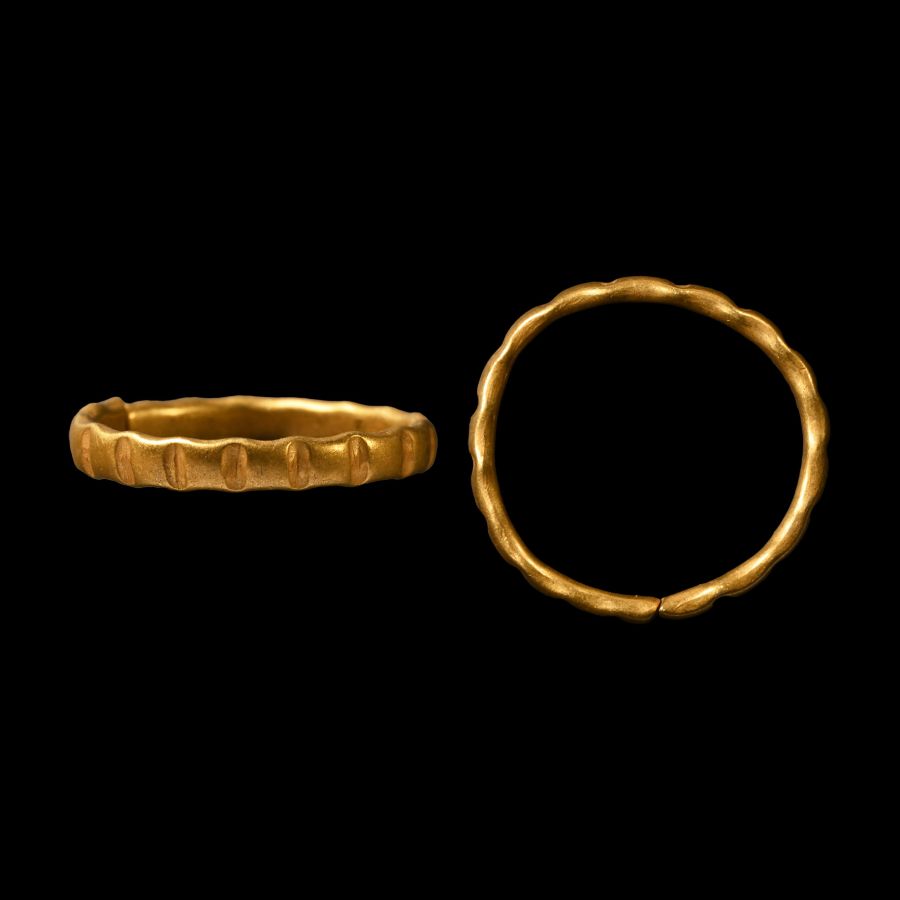
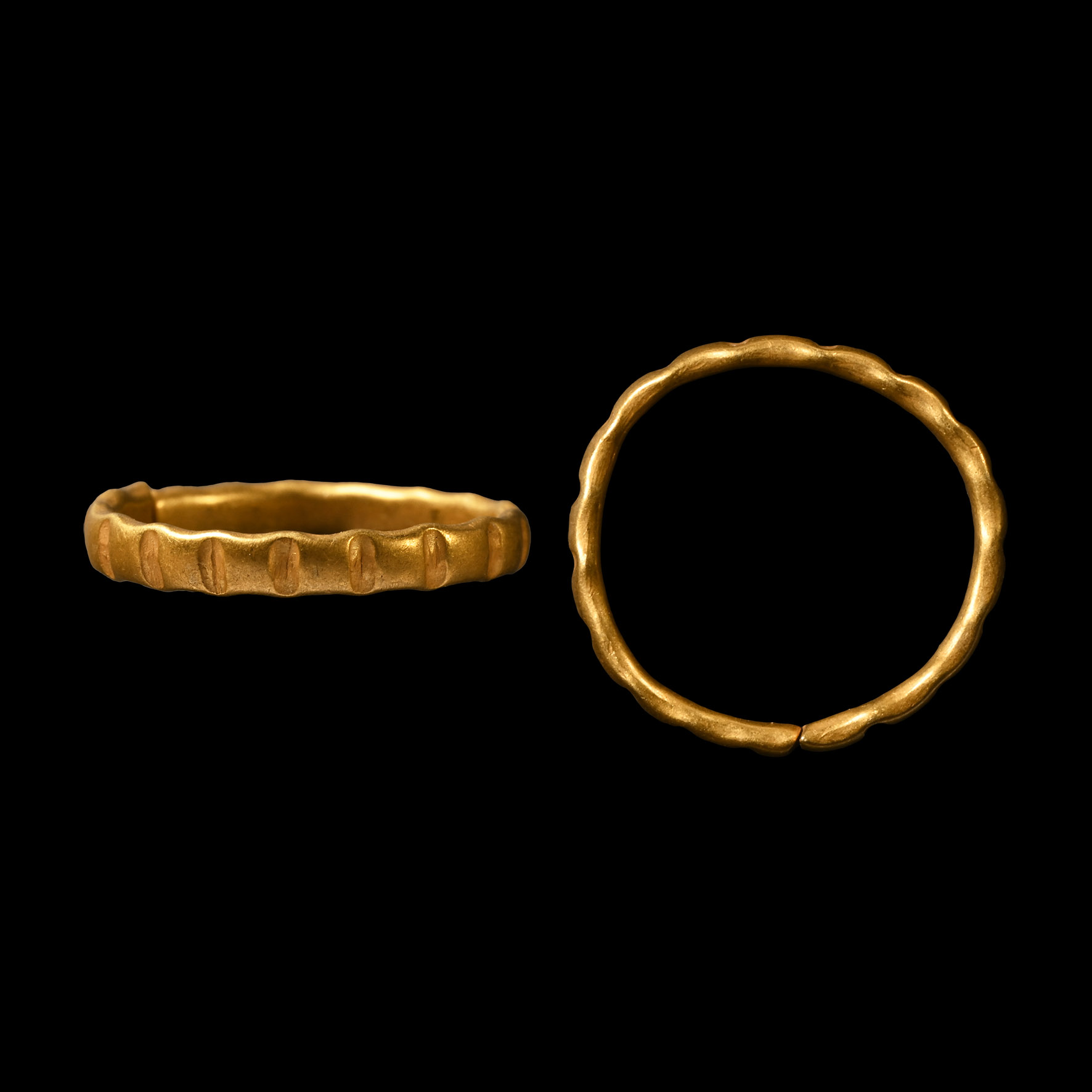
Roman Gold Barred Ring
1ST-2ND CENTURY A.D.
5/8 in. (2.12 grams, 17.45 mm overall, 14.80 mm internal diameter (approximate size British G, USA 3 1/4, Europe 4.92, Japan 4)).
Penannular hoop with segmented design, butted ends.
ProvenanceEx property of a late Japanese collector, 1970-2000s.
CONDITIONTimeLine Auctions follows a vetting process to ensure the authenticity and legality of all items, reinforcing our commitment to integrity and responsible trading. Each antiquity, antique, and coin lot undergoes thorough examination by a vetting committee of at least ten external specialists, professional trade association members, scientists, and archaeologists: Our Vetting Process
AUCTIONS:
TimeLine is a leading auction house specialising in antiquities, ancient art, collectables, natural history, coins, medals, and books. Our auctions offer museums, collectors, historians, and enthusiasts the opportunity to acquire unique and historically significant pieces.
-

Roman Bronze Figure of a Young Satyr of Dionysian Cortege
Circa 1st-2nd century A.D.Estimate: £2,000 - 3,000 (+bp*)
Opening Bid: £1,000
Modelled in the round with putto-like features, holding a nebris draped over his shoulders in the manner of Dionysus, with tousled hair and pointed ears; one foot absent; mounted on a custom-made stand. 316 grams total, 15 cm high including stand
Acquired on the German art market, 1989-1995. with The Museum Gallery, 19 Bury Place, London, WC1A 2JB, 1998-2003. with Bonhams, London, Knightsbridge, 16-17 May 2002, no.305. Property of a London based academic, 2003-present. Accompanied by copies of the relevant Bonham's catalogue pages. This lot has been checked against the Interpol Database of stolen works of art and is accompanied by a search certificate number no.12052-217493.
The young satyr is covered by a nebris, a deer skin, similar to an aegis, originally worn as an item of clothing by hunters and subsequently attributed to Dionysus. Consequently, it was adopted by his followers in the processions and ceremonies held in his honour, during the liturgical celebrations of the Dionysia. It was commonly worn in the same way as an aegis, tying the two front legs over the right shoulder to allow the body of the skin to cover the wearer's left side (Ovid, Metamorphoses, VI, 593). In ancient works it is seen worn by characters of the Dionysian procession: Maenads, Bacchae, Satyrs, and Sileni. -
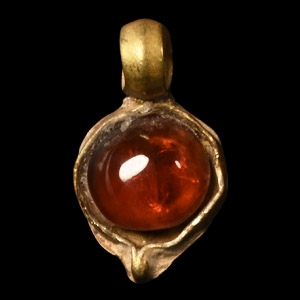
Roman Gold Pendant with Cabochon Garnet
1st-4th century A.D.Sold for (Inc. bp): £182
Discoid pendant with cell, inset cabochon garnet, integral loop above. 0.16 grams, 8 mm
Ex property of a late Japanese collector, 1970s. -
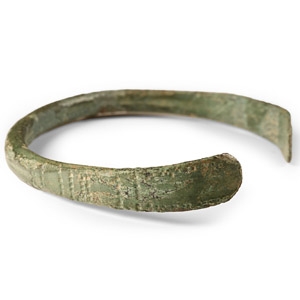
Roman Decorated Bronze Bracelet
1st-4th century A.D.Sold for (Inc. bp): £78
Penannular type with leaf-shaped flattened ends, lines of pointillé detailing. 17.6 grams, 64 mm
Ex German art market, 2000s. Acquired from an EU collector living in London. From the collection of Surrey, UK, gentleman.
