
Loading, please wait...


LOT 0837
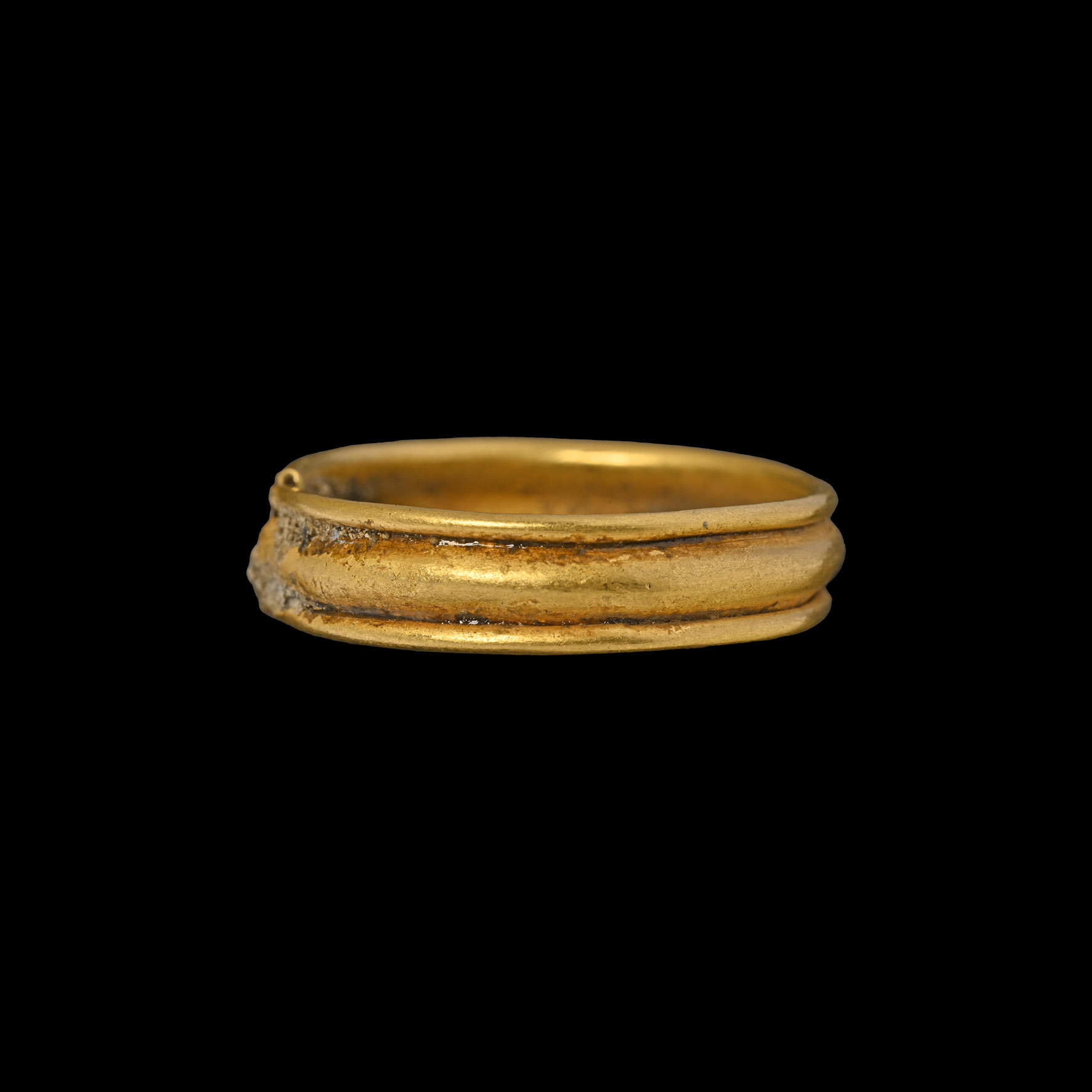
Roman Gold Banded Ring
1ST-4TH CENTURY A.D.
3/4 in. (2.15 grams, 19.78 mm overall, 16.90 mm internal diameter (approximate size British M, USA 6, Europe 12.46, Japan 12)).
Formed as a plain band with two rolled rims.
ProvenanceEx property of a late Japanese collector, 1970s-2000s.
CONDITIONTimeLine Auctions follows a vetting process to ensure the authenticity and legality of all items, reinforcing our commitment to integrity and responsible trading. Each antiquity, antique, and coin lot undergoes thorough examination by a vetting committee of at least ten external specialists, professional trade association members, scientists, and archaeologists: Our Vetting Process
AUCTIONS:
TimeLine is a leading auction house specialising in antiquities, ancient art, collectables, natural history, coins, medals, and books. Our auctions offer museums, collectors, historians, and enthusiasts the opportunity to acquire unique and historically significant pieces.
-
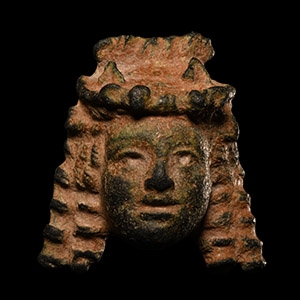
Roman Bronze Mask Appliqué
2nd century B.C.-1st century A.D.Estimate: £350 - 450 (‡+bp*)
Opening Bid: £180
With rounded fleshy face and hair in tiered bands, sockets to the eyes to accept silver inserts; diadem to the brow with foliage detailing; hollow to the reverse. 56 grams, 42 mm
Private collection of Mr S.A., Switzerland, 1990s, thence by descent. -
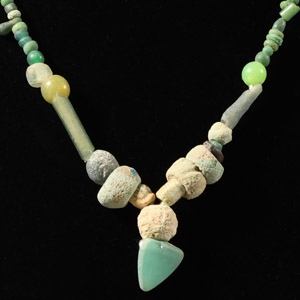
Roman Green Glass Bead Necklace String
1st-4th century A.D. and laterSold for (Inc. bp): £52
Restrung group of annular, spherical and melon beads with a later tabular dangle centrepiece. 22.6 grams, 35 cm
Acquired 1980-2015. Ex Abelita family collection. -
.jpg)
Roman Marble Portrait of a Boy as Worshipper of Isis
Early 3rd century A.D.Sold for (Inc. bp): £17,550
Carved head of a prepubescent worshipper of Isis, with soft facial features, long nose, small downturned mouth, heavy-lidded eyes, the whole giving the face a sombre or mournful appearance; the hair textured to indicate a short cut and combed forward across the scalp, sidelock above the right ear; mounted on a 16th century carved breccia upper body with leather cuirass and pteruges to right shoulder, cloak draped across the shoulders and fastened at the clavicle on the right side with a disc-brooch; socle base; some restoration. 19.6 kg total, 51.5 cm including stand
North German private collection, 1970s, and thence by descent. Antiquities, Bonhams, London, 5 October 2011, no.136. Accompanied by an academic report by Dr Raffaele D’Amato. This lot has been checked against the Interpol Database of stolen works of art and is accompanied by search certificate number no.12185-222445.
The child is depicted as a worshipper of Isis with the right side of the head signalling that the boy was a devotee of the goddess’s cult. The head of the boy is probably a funerary portrait, and it is clearly in the first half of 3rd century style. Its resemblance to the portrait of Gordian III on the so-called sarcophagus of Acilia is impressive, so much so that this was probably the reason for which the head was incorporated within a military bust in the 16th century.
