
Loading, please wait...
LOT 0107
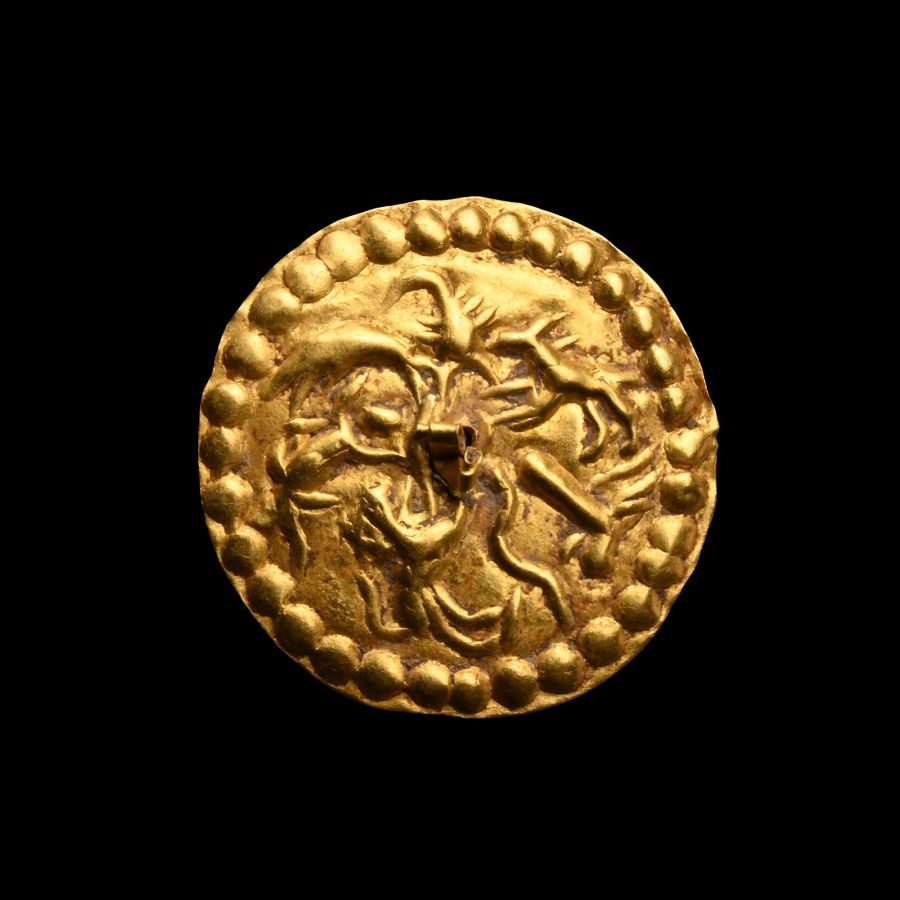
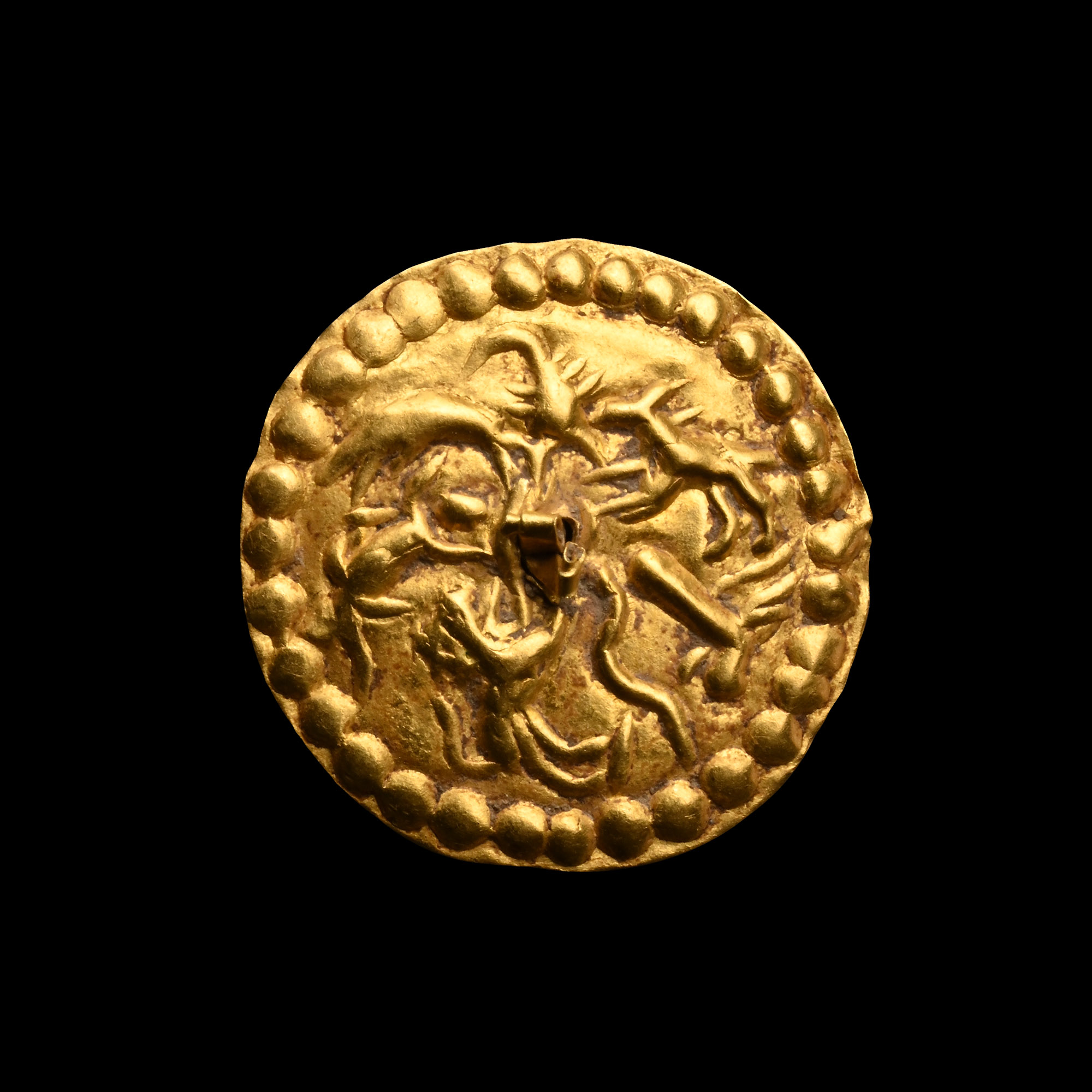
Roman Gold Applique with Magical Symbols
1ST-4TH CENTURY A.D.
7 1/2 in. (0.98 grams, 19.2 mm).
A repoussé disc with beaded border, esoteric magical symbols to the centre including a winged phallus, a scorpion, a snake, a dog / wolf, a squirrel(?) and a fish/dolphin; a small loop to the reverse.
ProvenancePrivate English collection, formed between the late 1970s and early 1990s.
Private collection, UK.
Cf. The British Museum, London, museum no.1814,0704.1172; Johns Hopkins Archeological Museum, Baltimore, accession no.485 (formerly FIC.07.225) dated to the 2nd century AD.
CONDITIONTimeLine Auctions follows a vetting process to ensure the authenticity and legality of all items, reinforcing our commitment to integrity and responsible trading. Each antiquity, antique, and coin lot undergoes thorough examination by a vetting committee of at least ten external specialists, professional trade association members, scientists, and archaeologists: Our Vetting Process
AUCTIONS:
TimeLine is a leading auction house specialising in antiquities, ancient art, collectables, natural history, coins, medals, and books. Our auctions offer museums, collectors, historians, and enthusiasts the opportunity to acquire unique and historically significant pieces.
-
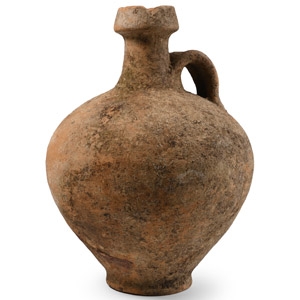
Roman Terracotta Wine Flagon
3rd-4th century A.D.Sold for (Inc. bp): £169
With narrow foot and broad shoulder, biconvex mouth and strap handle; mouth chipped. 448 grams, 16.8 cm
Ex German art market, 2000s. Acquired from an EU collector living in London. From the collection of a Surrey, UK, gentleman. -

Roman Black Glass Bead Necklace String
1st-4th century A.D. and laterSold for (Inc. bp): £65
Restrung designer necklace string of tubular, oblate and other types with rectangular tabular pendant centrepiece. 17.8 grams, 39.5 cm
London, UK, collection, 2000s. -
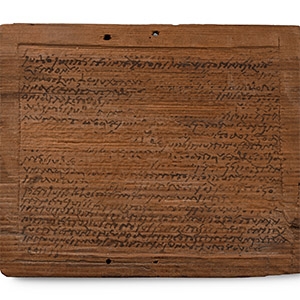
Roman Wooden Tablet with Testamentary Dispositions of Iulius Pomp(onius)
Mid 4th century A.D.Sold for (Inc. bp): £2,600
The third and last tablet of a Roman will made by Iulius Pomp(onius?), parts of lost surface on the inner face, two small holes both at the upper and lower rim (for binding the tablets of this document together); on the inner face the recess inscribed with twenty-one lines of Roman cursive script consisting of testamentary dispositions regarding a special category of fields (gemiones), ending with the mancipatory formula of Roman testaments; on the outer face two sulci and signatures of witnesses. 106 grams, 20.2 x 16.2 cm
Acquired by Albert Sfez in the early 1950s. Formerly the property of Monsieur Alain Sfez, a Belgium collector; acquired by gift from his father Albert Sfez, in 1965. Acquired by a London dealer in 1973. From an important London collection since 1975; thence by descent. Accompanied by a copy of an illustrated academic report by Professor Dr phil. Peter Rothenhöfer. This lot has been checked against the Interpol Database of stolen works of art and is accompanied by search certificate number no.12601-230811.
Professor Dr phil. Peter Rothenhöfer writes: 'Without any doubts this tablet is an original document from Roman times. Because only few Roman testaments have survived this document is of great importance both for Roman Legal and Social History'.
