
Loading, please wait...
LOT 0148
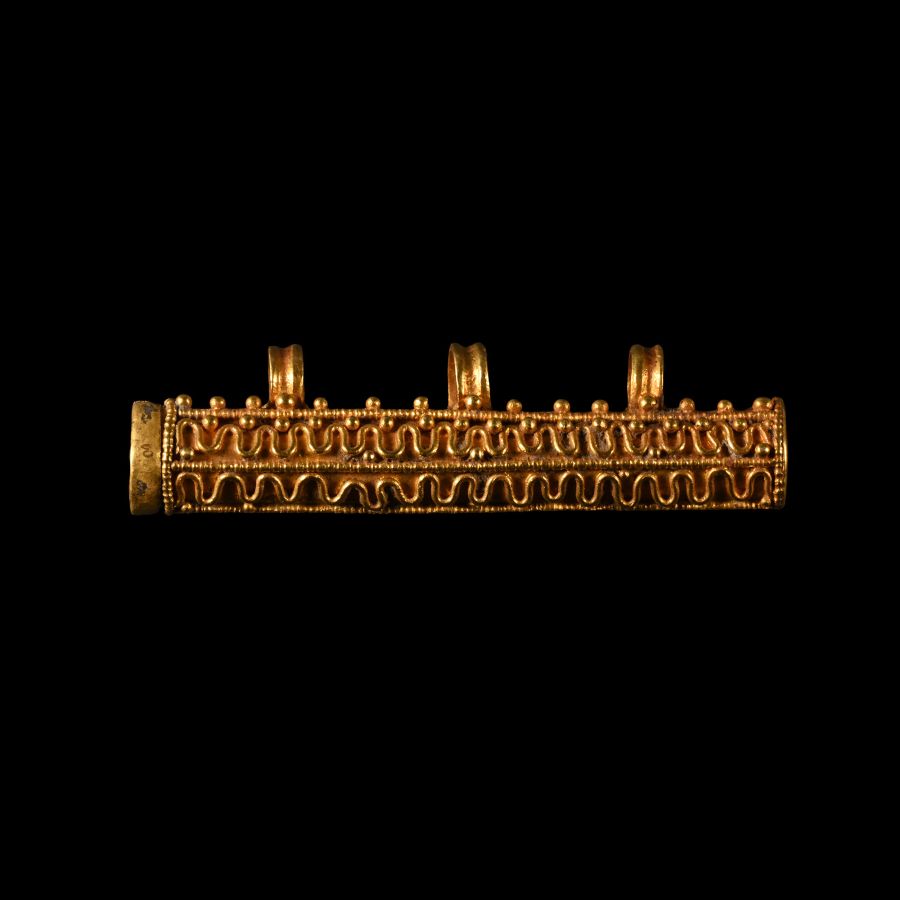
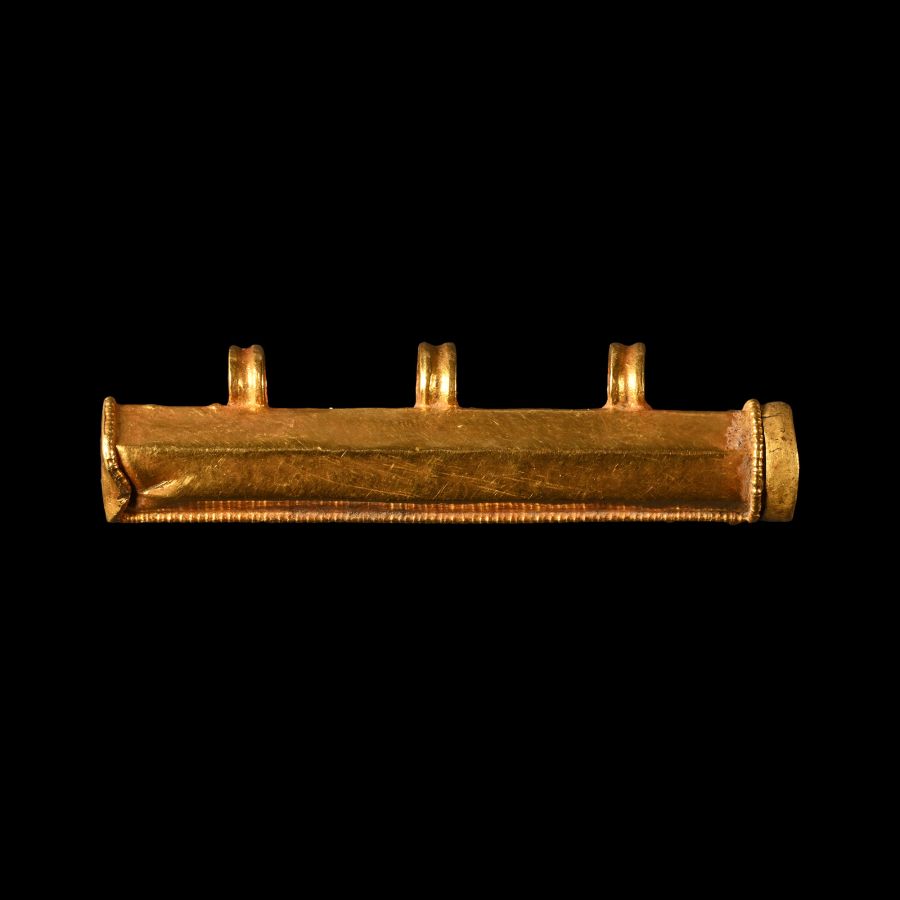
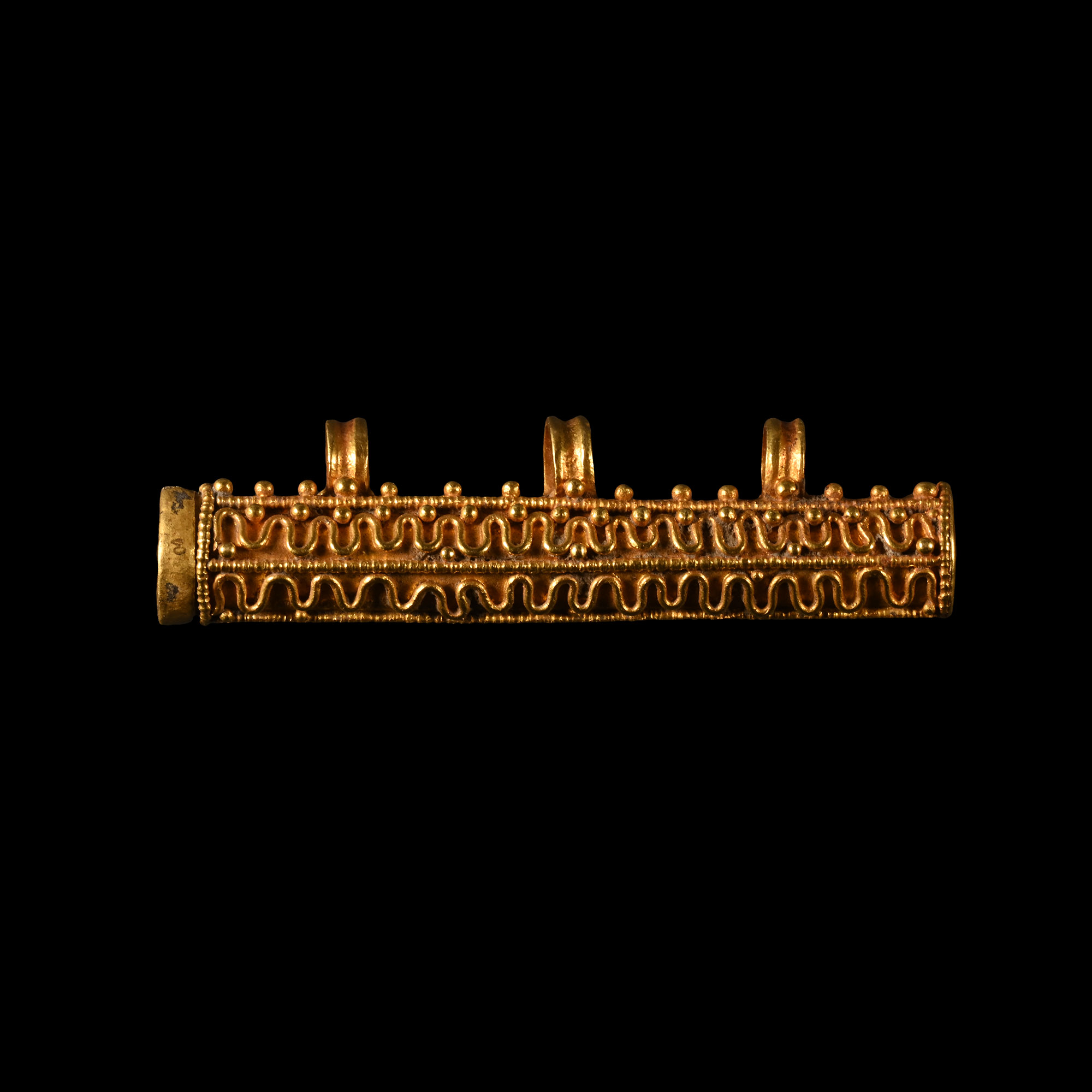
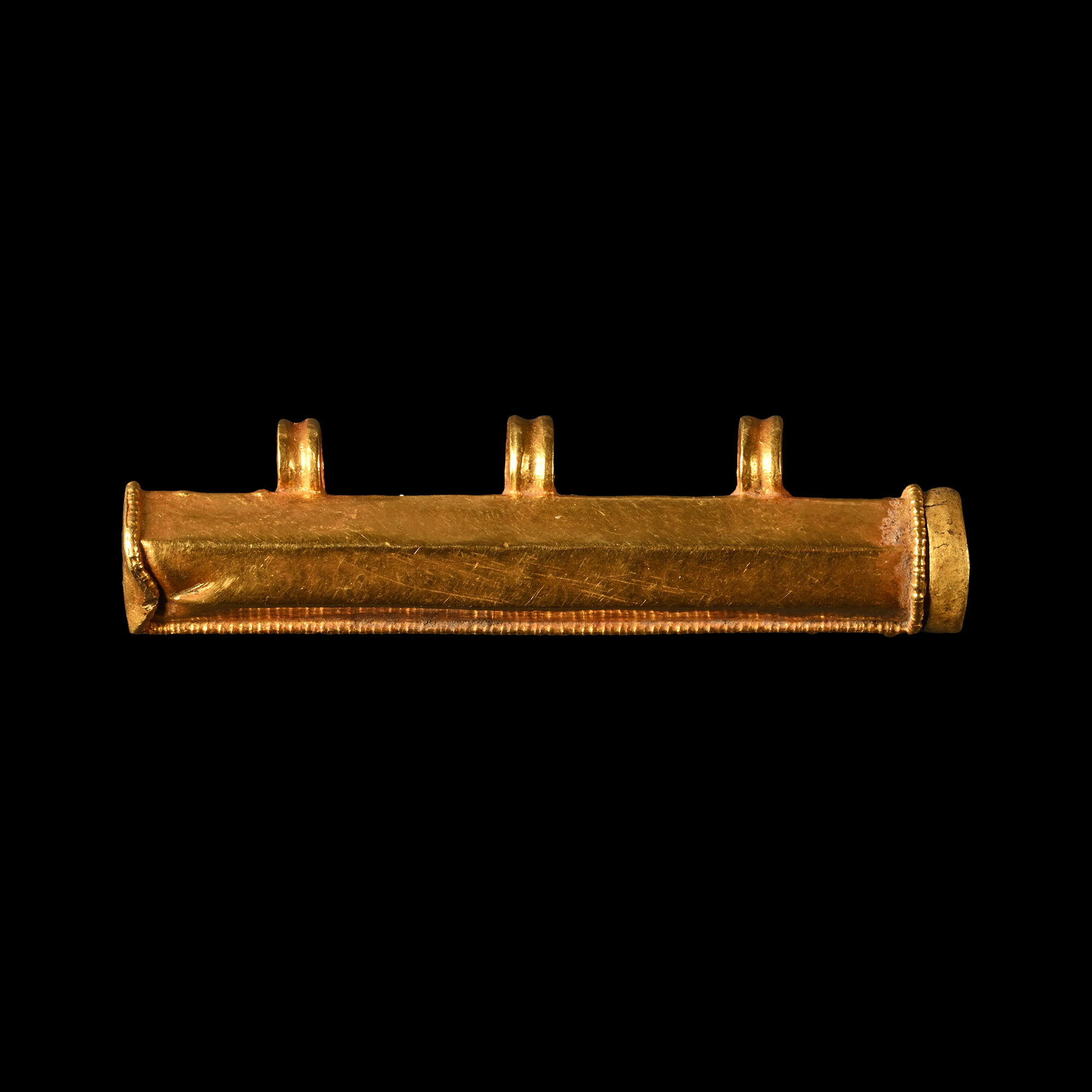
Roman Gold Amulet Holder
1ST-4TH CENTURY A.D.
1 7/8 in. (7.40 grams, 47 mm).
Hexahedral in section, hollow with gusseted suspension loops, applied filigree meanders with granules.
ProvenanceEx German art market, 2000s.
Acquired from an EU collector living in London.
From the collection of Surrey, UK, gentleman.
TimeLine Auctions follows a vetting process to ensure the authenticity and legality of all items, reinforcing our commitment to integrity and responsible trading. Each antiquity, antique, and coin lot undergoes thorough examination by a vetting committee of at least ten external specialists, professional trade association members, scientists, and archaeologists: Our Vetting Process
AUCTIONS:
TimeLine is a leading auction house specialising in antiquities, ancient art, collectables, natural history, coins, medals, and books. Our auctions offer museums, collectors, historians, and enthusiasts the opportunity to acquire unique and historically significant pieces.
LOT 0148
Roman Gold Amulet Holder
Estimate £1,200 - 1,700€1,390 - 1,970 (for guidance only)$1,620 - 2,300 (for guidance only)
-
Roman Marble Female Head
2nd century A.D.Estimate: £1,000 - 1,400 (‡+bp*)
Opening Bid: £500
Carved in the half-round, showing a mature female with rounded facial features and hair drawn back in a chignon; band and ridged body of the headdress in Egyptianising style; mounted on a custom-made wooden display stand. 520 grams total, 17 cm including stand
Private collection, Munich, Germany. with Heritage of Ketterer, Munich, Germany. with Auction House Ursula Nusser E.K., Germany, 2011, no.4021. -
Roman Terracotta Bowl Fragment with Boar
3rd-4th century A.D.Sold for (Inc. bp): £169
Substantial ceramic fragment with high-relief image of a boar running amid foliage; symbol of Legio X Fretensis. 125 grams, 10.1 cm
Ex German art market, 2000s. Acquired from an EU collector living in London. From the collection of Surrey, UK, gentleman. -
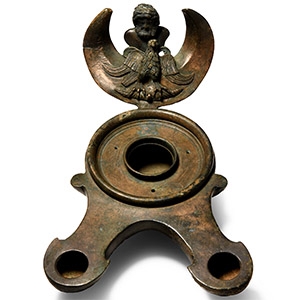
Very Large Roman Bronze Oil Lamp with Jupiter and Eagle
3rd-4th century A.D.Sold for (Inc. bp): £8,450
With a rounded body and double nozzle with volutes; the body flat with engraved volutes, raised rim and basal ring; to the rear a large crescent with Jupiter (Greek Zeus) to the centre and his eagle with spread wings before him; the god depicted with thick locks and voluminous beard, the eagle with detailed plumage and finely detailed face; accompanied by a custom-made display stand. 1.67 kg, 25.7 wide (3.08 kg total,18 cm high including stand)
Old private British collection, pre-1965. Property of a gentleman; acquired in the UK before 2000. Accompanied by a copy of an old black and white photograph. Accompanied by an academic report by Dr Raffaele D’Amato. This lot has been checked against the Interpol Database of stolen works of art and is accompanied by search certificate number no.12034-215425.
Here Jupiter is represented with his attributes connected with the crescent of goddess Luna. According to Bailey, all lamps in the category to which the map belongs, were intended for suspension. Lamps with multiple nozzles gave more light and thus were suitable for lighting large spaces.
