
Loading, please wait...
LOT 0776
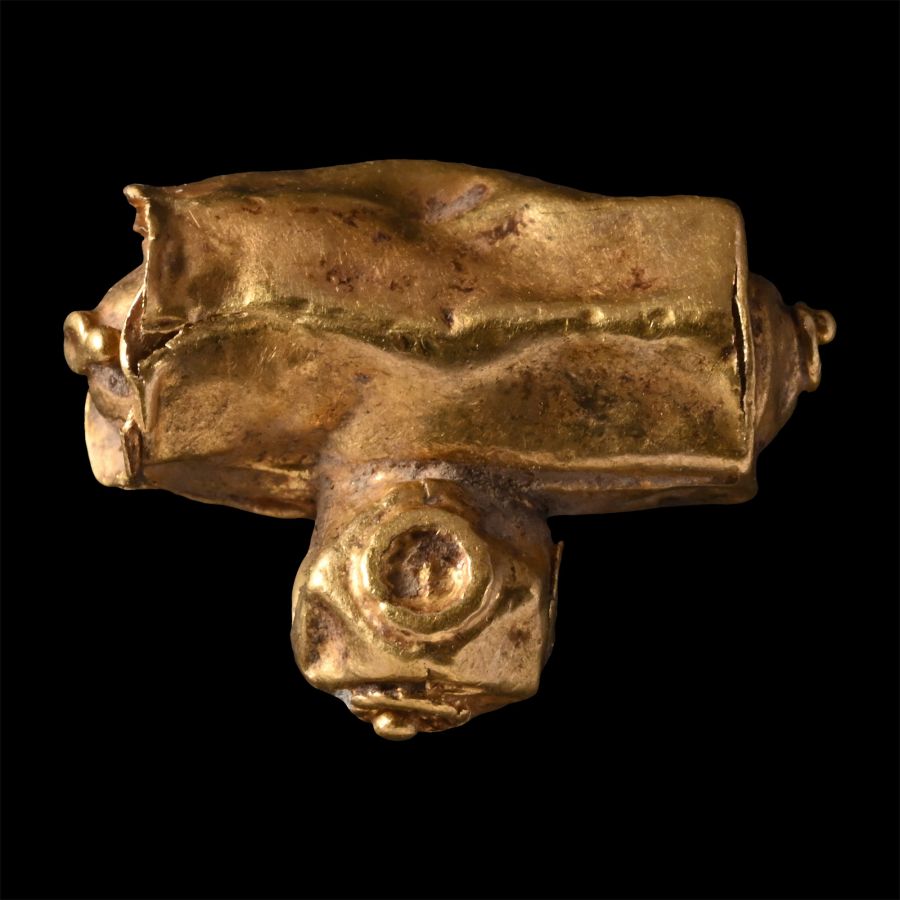
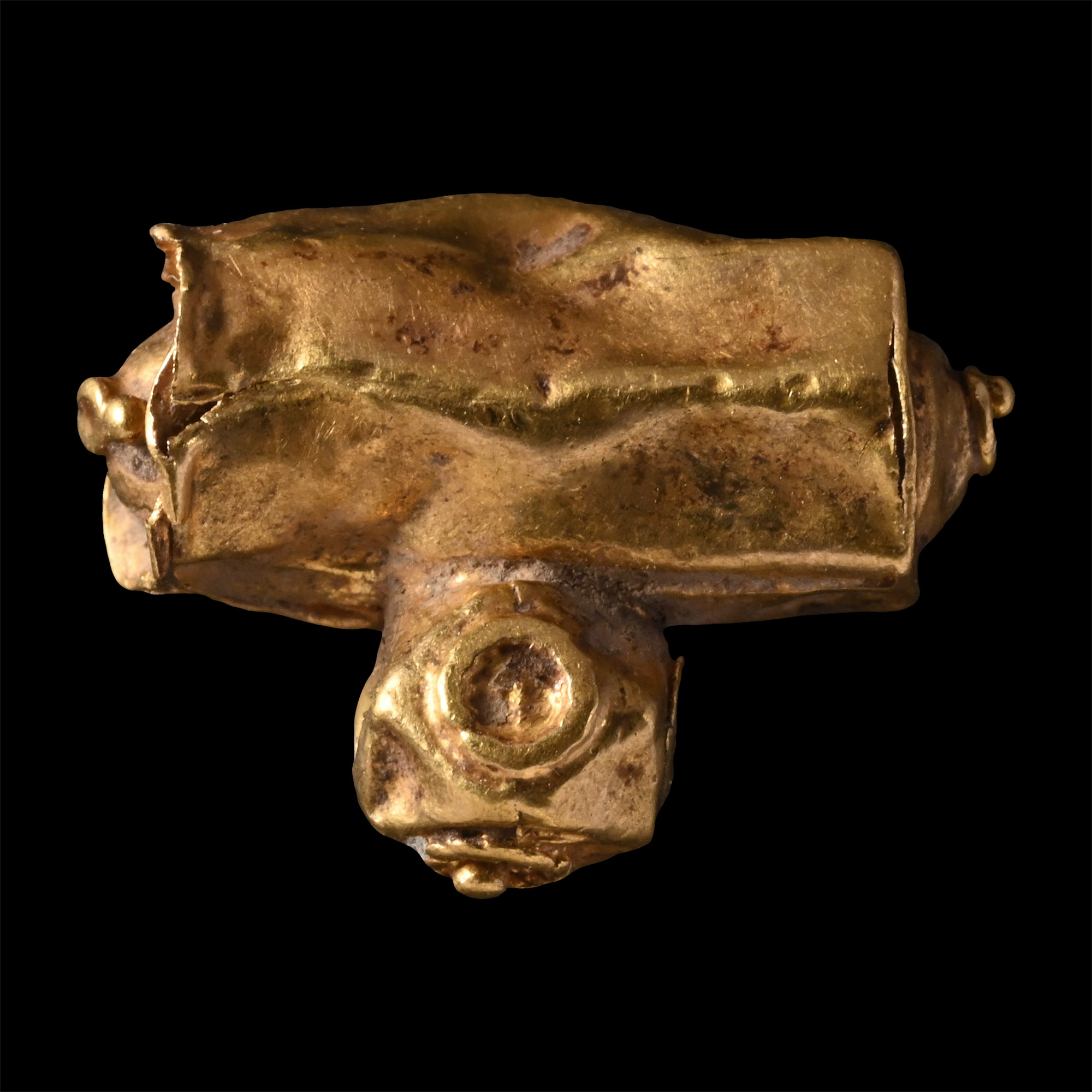
Roman Gold Amulet Case
5TH-6TH CENTURY A.D.
1/2 in. (0.78 grams, 14 mm).
Cylindrical body with domed finials with applied pellets, cornerless cube-shaped suspension loop with applied pellet and filigree annulets.
ProvenanceEx property of a late Japanese collector, 1970-2000s.
This lot is accompanied by an illustrated lot declaration signed by the Head of the Antiquities Department, Dr Raffaele D'Amato.
Cf. Wamser L. and Zahlhaas, G., Rom und Byzanz, Archaologischen Kostbarkeiten aus Bayern, München, 1999, figs.305-306, for similar.
FootnotesAssessing the typology and chronology of such amulet capsules is very difficult, and precise dating is usually impossible, especially since the context of the find is often unknown, as in this case. According to Schienerl, prismatic, usually hexagonal amulet capsules only appear in the 2nd or 3rd century, while the use of amulets in the Eastern Roman Empire ceased after the 7th century.
CONDITIONTimeLine Auctions follows a vetting process to ensure the authenticity and legality of all items, reinforcing our commitment to integrity and responsible trading. Each antiquity, antique, and coin lot undergoes thorough examination by a vetting committee of at least ten external specialists, professional trade association members, scientists, and archaeologists: Our Vetting Process
AUCTIONS:
TimeLine is a leading auction house specialising in antiquities, ancient art, collectables, natural history, coins, medals, and books. Our auctions offer museums, collectors, historians, and enthusiasts the opportunity to acquire unique and historically significant pieces.
-
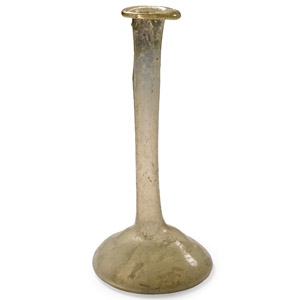
Roman Glass Candlestick Unguentarium
1st-3rd century A.D.Sold for (Inc. bp): £195
Comprising a low conical body and slightly convex wall, dimple base; tall cylindrical neck flaring to mouth with inward-folded rim; slightly iridescent surface. 58 grams, 17.5 cm
From an important London collection of glass, 1990s. This lot is accompanied by an illustrated lot declaration signed by the Head of the Antiquities Department, Dr Raffaele D'Amato.
This kind of toilet bottle was called ‘candlestick unguentarium’ by the academics due to the shape of its neck. They are especially found in Roman Egypt (Karanis class XIII.A.I.). -
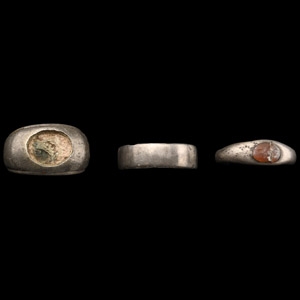
Roman Silver Ring Group
2nd-3rd century A.D.Sold for (Inc. bp): £247
Comprising: a flat-section ring with vertical ribs; a ring with a recess to accept a stone insert; a slender ring with a bird intaglio. 17.5 grams total, 22-23 mm
From a Dunmow, UK, collection; formed from 1970. -
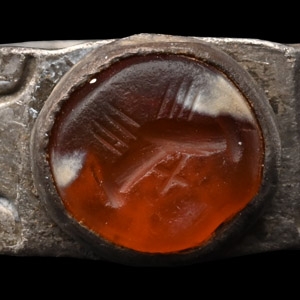
Roman Silver Ring with Clasped Hands Gemstone
2nd-3rd century A.D.Sold for (Inc. bp): £182
Rectangular-section hoop with angled shoulders, round bezel set with a carnelian intaglio bearing a stylised clasped hands motif. 4.48 grams, 23.36 mm overall, 19.95 mm internal diameter (approximate size British P 1/2, USA 7 3/4, Europe 16.86, Japan 16)
Ex German art market, 2000s. Acquired from an EU collector living in London. From the collection of a Surrey, UK, gentleman.
