
Loading, please wait...
LOT 0147
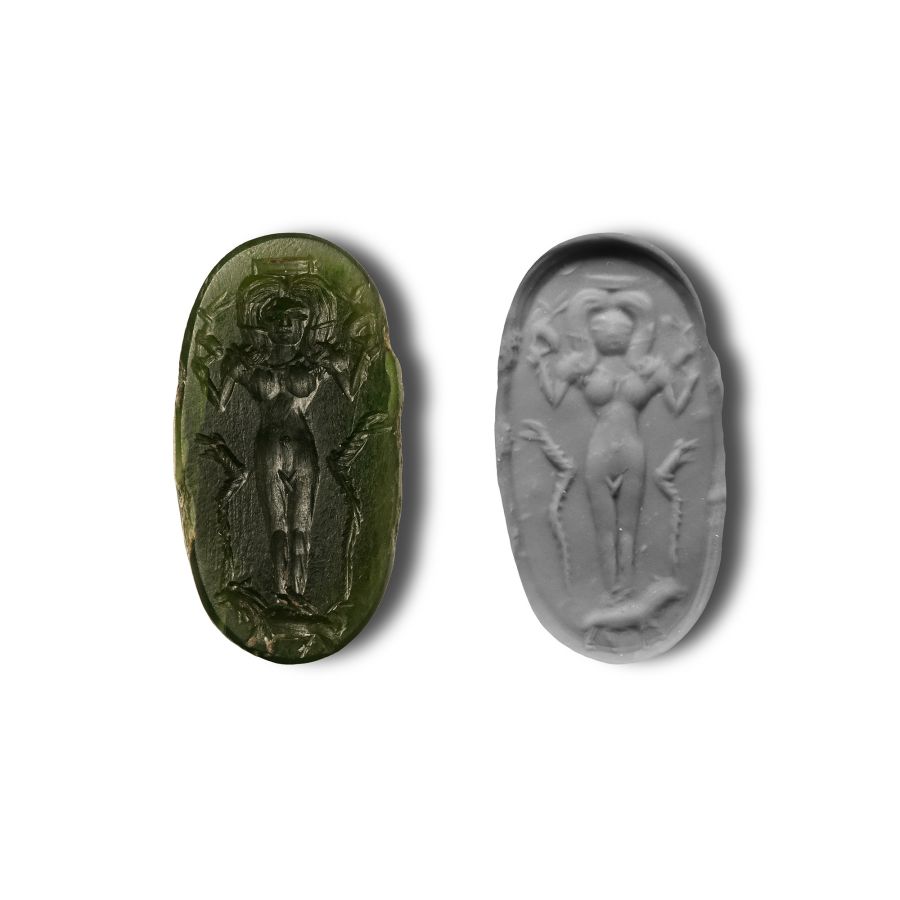
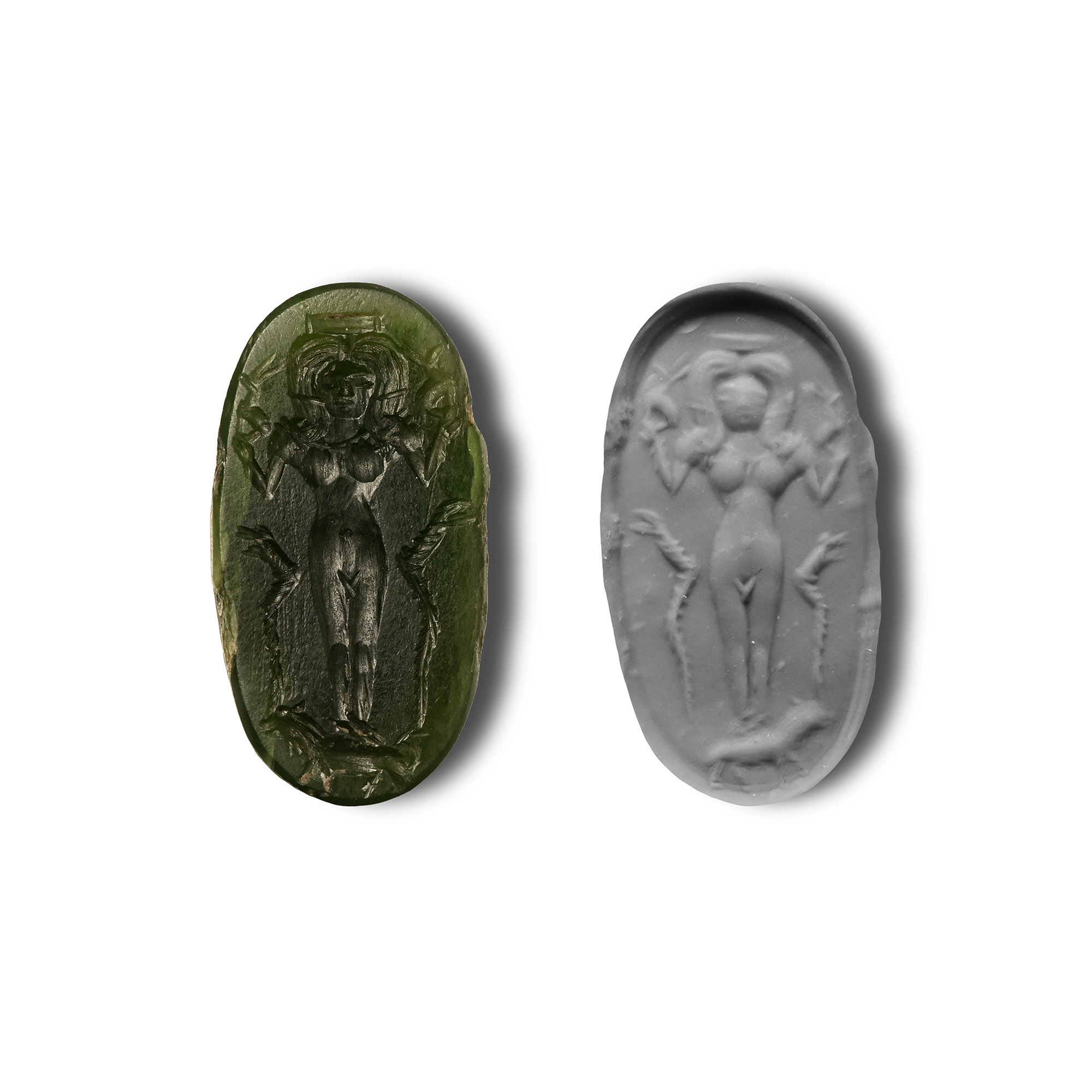
Roman Gnostic Green Gemstone
2ND-3RD CENTURY A.D.
1 in. (2.41 grams, 25 mm).
Ellipsoid with intaglio nude female flanked by serpents; supplied with a museum-quality impression. [No Reserve]
ProvenanceFrom the glyptic collection of Mr X; thence by descent.
Acquired Hotel des Ventes, Drouot, Eve SVV, Paris, France, 28 June 2017, no.156 (Part).
Property of a French collector.
TimeLine Auctions follows a vetting process to ensure the authenticity and legality of all items, reinforcing our commitment to integrity and responsible trading. Each antiquity, antique, and coin lot undergoes thorough examination by a vetting committee of at least ten external specialists, professional trade association members, scientists, and archaeologists: Our Vetting Process
AUCTIONS:
TimeLine is a leading auction house specialising in antiquities, ancient art, collectables, natural history, coins, medals, and books. Our auctions offer museums, collectors, historians, and enthusiasts the opportunity to acquire unique and historically significant pieces.
-
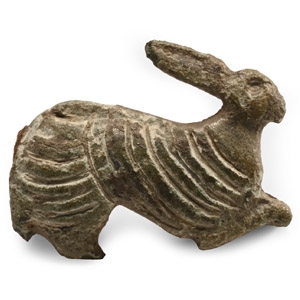
Roman Bronze Rabbit Plate Brooch
2nd-3rd century A.D.Sold for (Inc. bp): £221
In the form of a running rabbit, body with a series of incised lines for fur; pin to the reverse. 3.81 grams, 22 mm
Ex German art market, 2000s. Acquired from an EU collector living in London. From the collection of Surrey, UK, gentleman. -
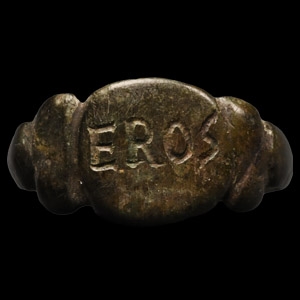
Roman Bronze Signet Ring for EROS
3rd-4th century A.D.Sold for (Inc. bp): £247
With cluster of bulbs to each shoulder, discoid bezel with 'EROS' inscription. 3.56 grams, 21.30 mm overall, 18.34 mm internal diameter (approximate size British Q, USA 8, Europe 17.49, Japan 16)
Ex German art market, 2000s. Acquired from an EU collector living in London. From the collection of Surrey, UK, gentleman. -
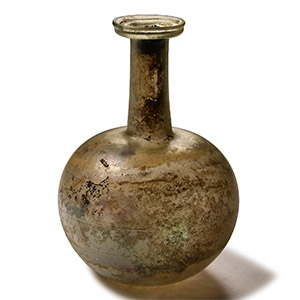
Roman Glass Vessel with Wheel-Cut Design
1st-3rd century A.D.Estimate: £600 - 800 (+bp*)
Opening Bid: £300
With globular body and long tubular neck, dimple base, everted rim with gusset to the outer edge; wheel-cut horizontal lines to the body. 115 grams, 13 cm
Acquired on the German art market, 1989-1995. with The Museum Gallery, 19 Bury Place, London, WC, UK, 1998-2003. Property of a London based academic, 2003-present.
