
Loading, please wait...
LOT 0742
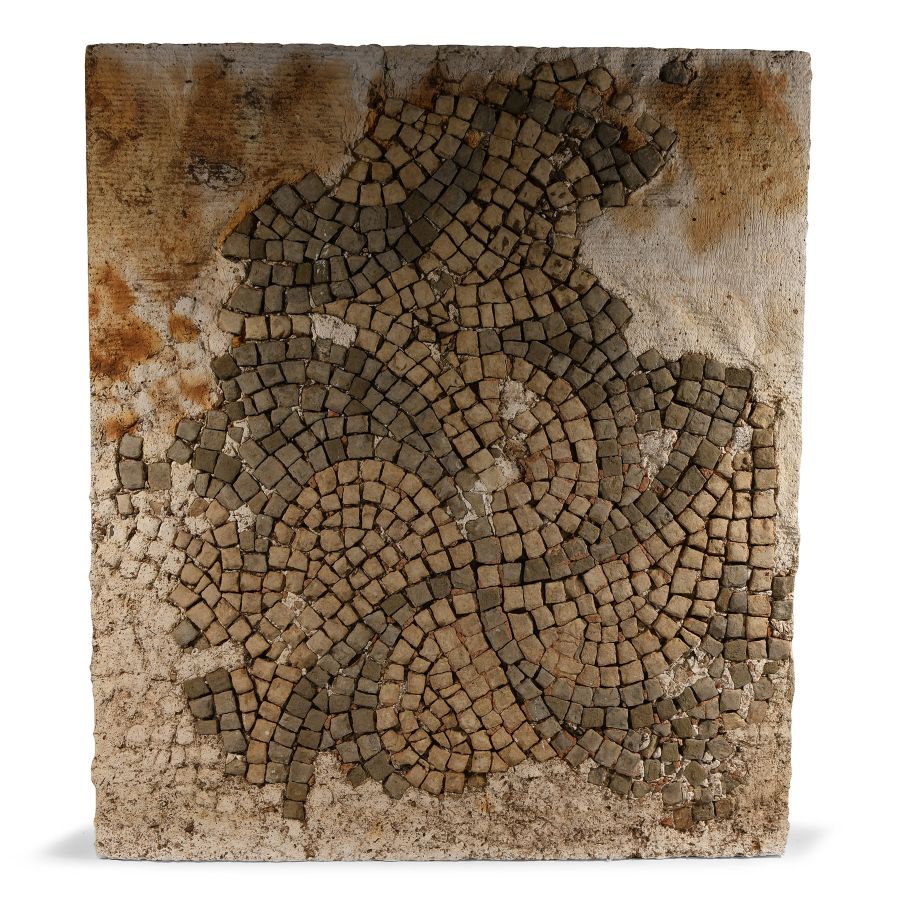
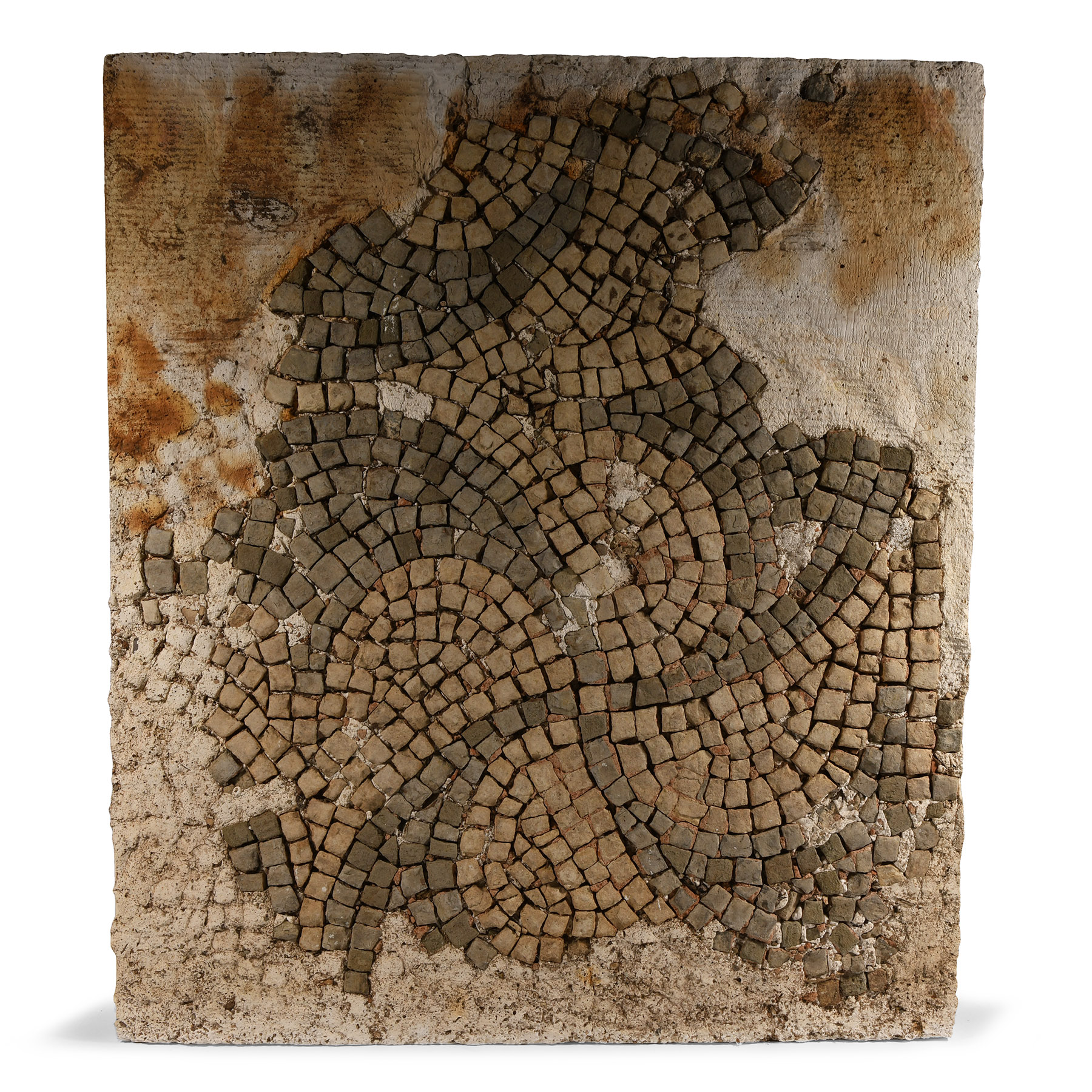
Roman 'Gloucestershire' Mosaic Panel
CIRCA 2ND-3RD CENTURY A.D.
30 in. (33 kg, 76 cm high).
Irregular mosaic fragment of beige, cream and grey tesserae with radiating trumpet-shaped swirls; mounted in a modern rectangular matrix. [No Reserve]
ProvenanceFound Gloucestershire, UK.
From a collection acquired on the UK art market from various auction houses and collections mostly before 2000.
From an important Cambridgeshire estate; thence by descent.
Cf. Cosh, R., Neal, D., Roman Mosaics of Britain, volume IV, Western Britain London, 2010, fig.56, for similar pattern.
FootnotesA mosaic found in Cirenchester (insula IX, Chester Street) shows panels defined by a dark blue-grey single fillet with an additional double fillet parallel to it on a longer axis, having an overall scheme of running pelta-pattern. Each pelta is outlined in dark-blue grey and infilled with red, white and dark blue grey at the centre.
CONDITIONTimeLine Auctions follows a vetting process to ensure the authenticity and legality of all items, reinforcing our commitment to integrity and responsible trading. Each antiquity, antique, and coin lot undergoes thorough examination by a vetting committee of at least ten external specialists, professional trade association members, scientists, and archaeologists: Our Vetting Process
AUCTIONS:
TimeLine is a leading auction house specialising in antiquities, ancient art, collectables, natural history, coins, medals, and books. Our auctions offer museums, collectors, historians, and enthusiasts the opportunity to acquire unique and historically significant pieces.
-
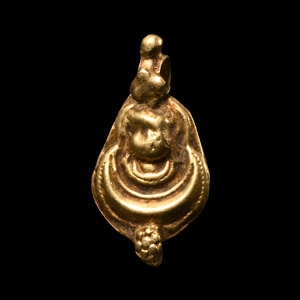
Roman Gold Lunar Pendant with Bust of Diana
1st-4th century A.D.Sold for (Inc. bp): £221
Repoussé pendant with inverted crescent beneath a facing female mask, possibly Diana or Luna, loops above an below. 0.37 grams, 15 mm
Ex Abelita family collection. From an old UK collection. Ex London, UK, gallery, 2000s. Accompanied by a previous catalogue information card. -
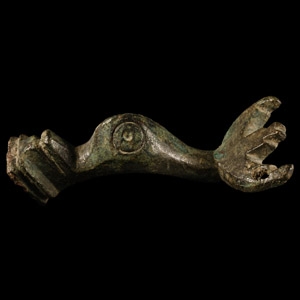
Roman Bronze Dolphin Mount
Circa 2nd-3rd century A.D.Sold for (Inc. bp): £72
Casket foot formed as a dolphin with trident tail pierced for attachment, incised ring-and-dot eyes, tiered rectangular base. 29.4 grams, 50 mm
Property of the vendor's grandfather, thence by family descent, circa 1985. From the private collection of a New York, USA gentleman. -
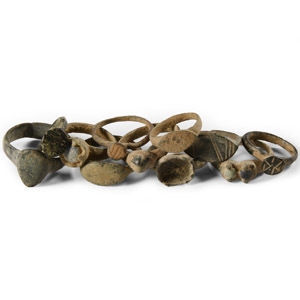
Roman and Byzantine Bronze Ring Group
Circa 3rd-16th century A.D.Sold for (Inc. bp): £111
Including trumpet bezel, claw-setting and other types. 30 grams total, 18-26 mm
Ex C. Sullivan collection, UK, 1990s.
