
Loading, please wait...
LOT 0713
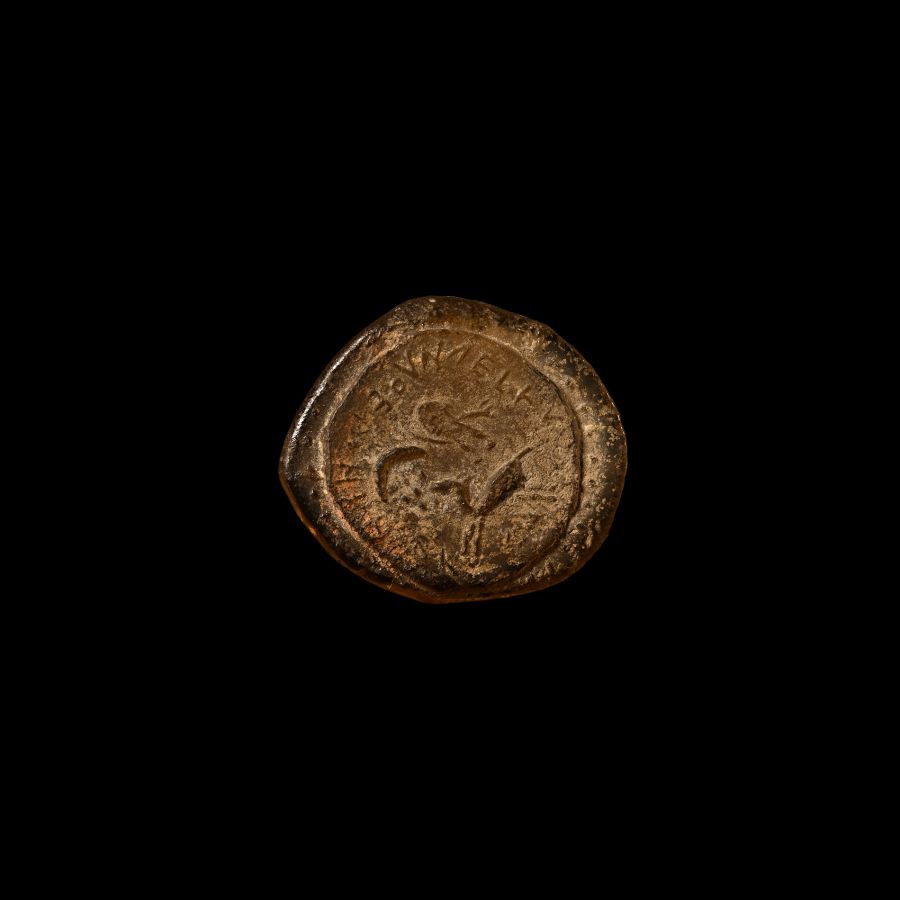
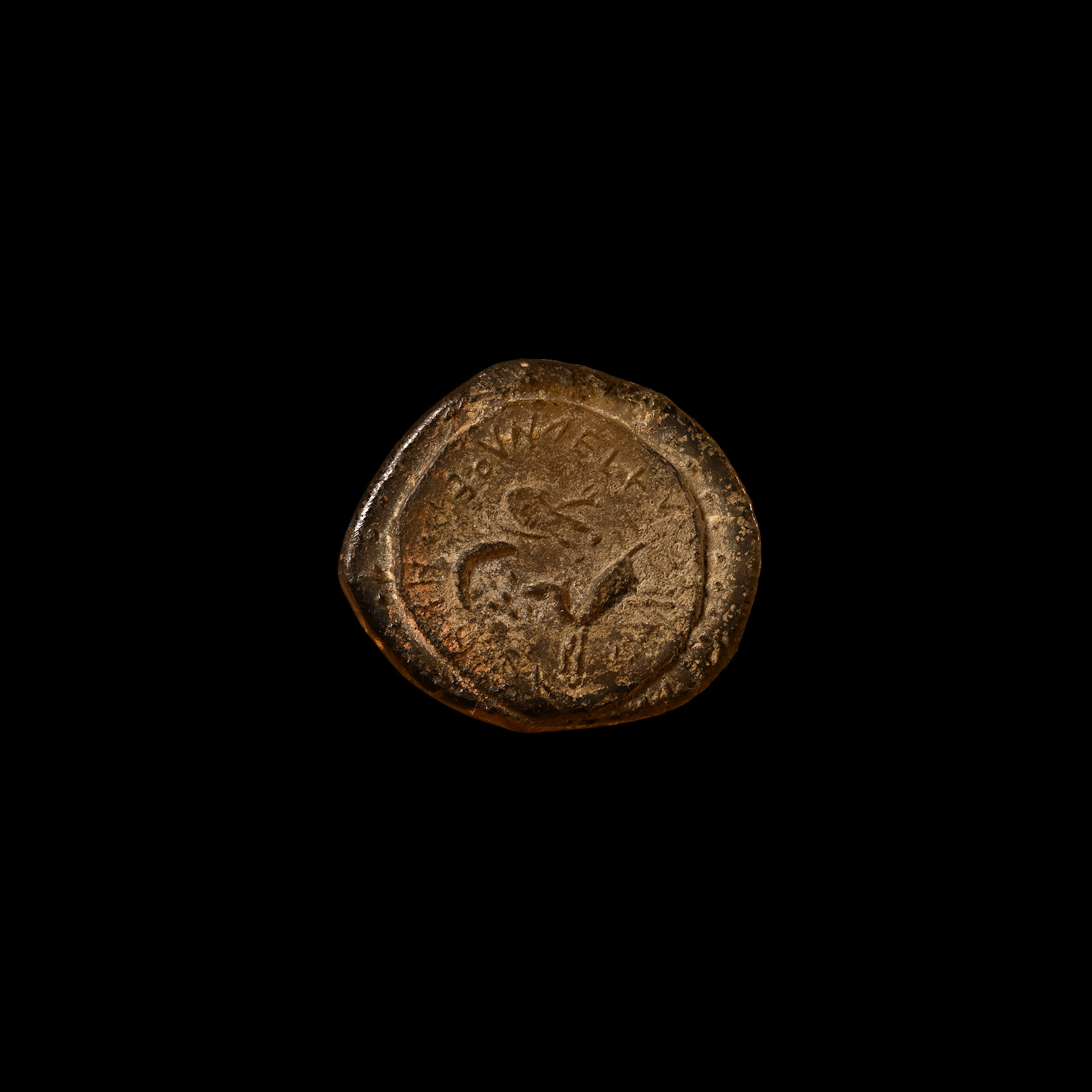
Roman Glass Weight with Animals and Inscription
1ST-6TH CENTURY A.D.
1 1/8 in. (5.4 grams, 30 mm).
Amber-coloured glass disc with irregular flange, low-relief horse, human and crescent, retrograde Greek text.
ProvenanceFrom the Robin Symes Gallery, stock number 91-321 on label, inventory number 185.
CONDITIONTimeLine Auctions follows a vetting process to ensure the authenticity and legality of all items, reinforcing our commitment to integrity and responsible trading. Each antiquity, antique, and coin lot undergoes thorough examination by a vetting committee of at least ten external specialists, professional trade association members, scientists, and archaeologists: Our Vetting Process
AUCTIONS:
TimeLine is a leading auction house specialising in antiquities, ancient art, collectables, natural history, coins, medals, and books. Our auctions offer museums, collectors, historians, and enthusiasts the opportunity to acquire unique and historically significant pieces.
-
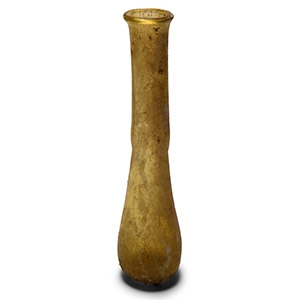
Roman Pale Green Glass Unguentarium
1st-2nd century A.D.Sold for (Inc. bp): £91
The lower body of piriform shape, cylindrical neck and everted rim; iridescent surfaces. 27.2 grams, 12.5 cm high
Acquired 1969-1999. From the private collection of the late Mr S.M., London, UK, thence by descent. -
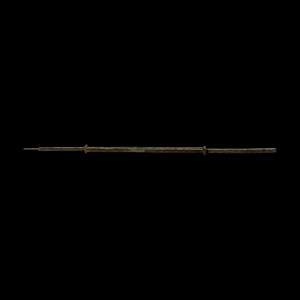
Roman Bronze Extendable Table Leg
2nd-3rd century A.D.Sold for (Inc. bp): £130
Composed of two rectangular-section bars with square-sockets. 2 kg total, 1.07 m
Acquired 1990s-early 2000s. East Anglian private collection.
These bars were one of the four supports of a folding table with a height-adjustable frame, often surmounted by busts of divinities. These folding supports for tables, bracers and cauldrons are known finds from important excavations in the Roman world, like Pompeii. The purpose of such folding stands varied; during a meal they were placed between the triclinium beds with bowls and plates hung to the hooks at the back of the holders. -
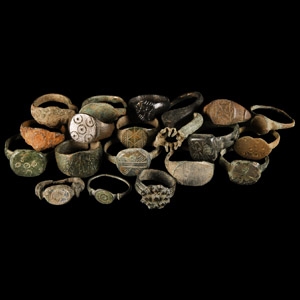
Roman to Post Medieval Bronze Ring Collection
1st-19th century A.D.Sold for (Inc. bp): £390
Composed of rings of various types and sizes, including bezels with decorative geometric, zoomorphic and enamelled designs. 75 grams total, 16-26 mm
Acquired on the German art market around 2000. From the collection of a Surrey, UK, gentleman.
