
Loading, please wait...

LOT 0769
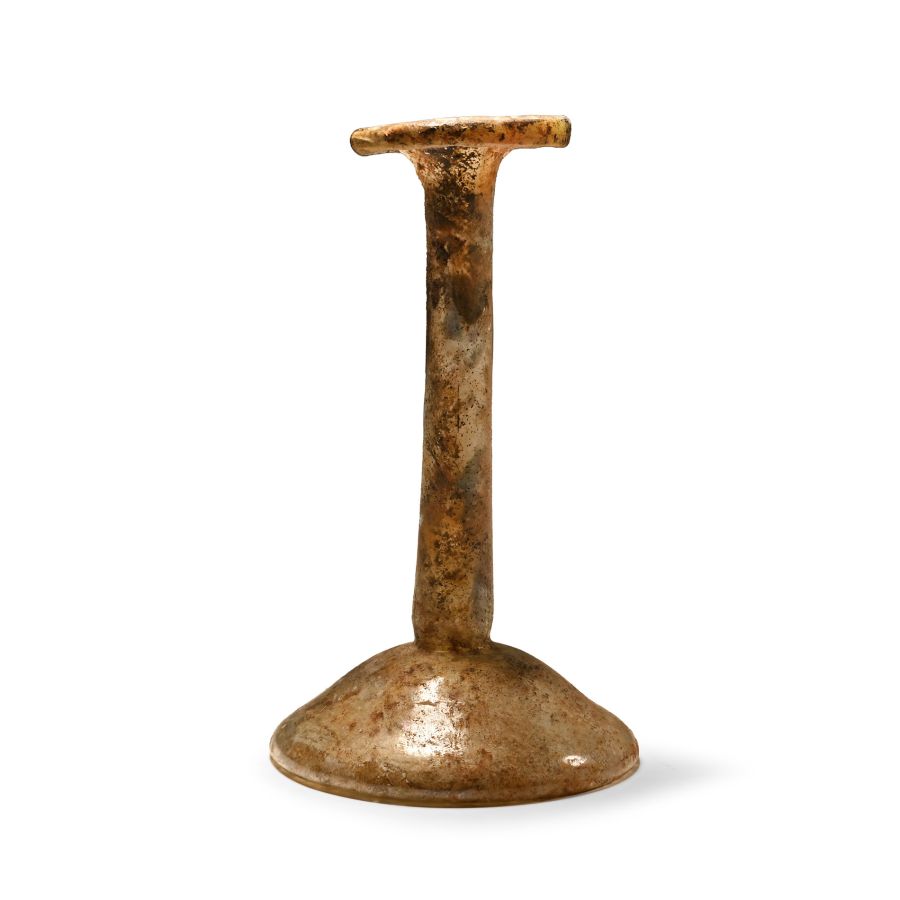
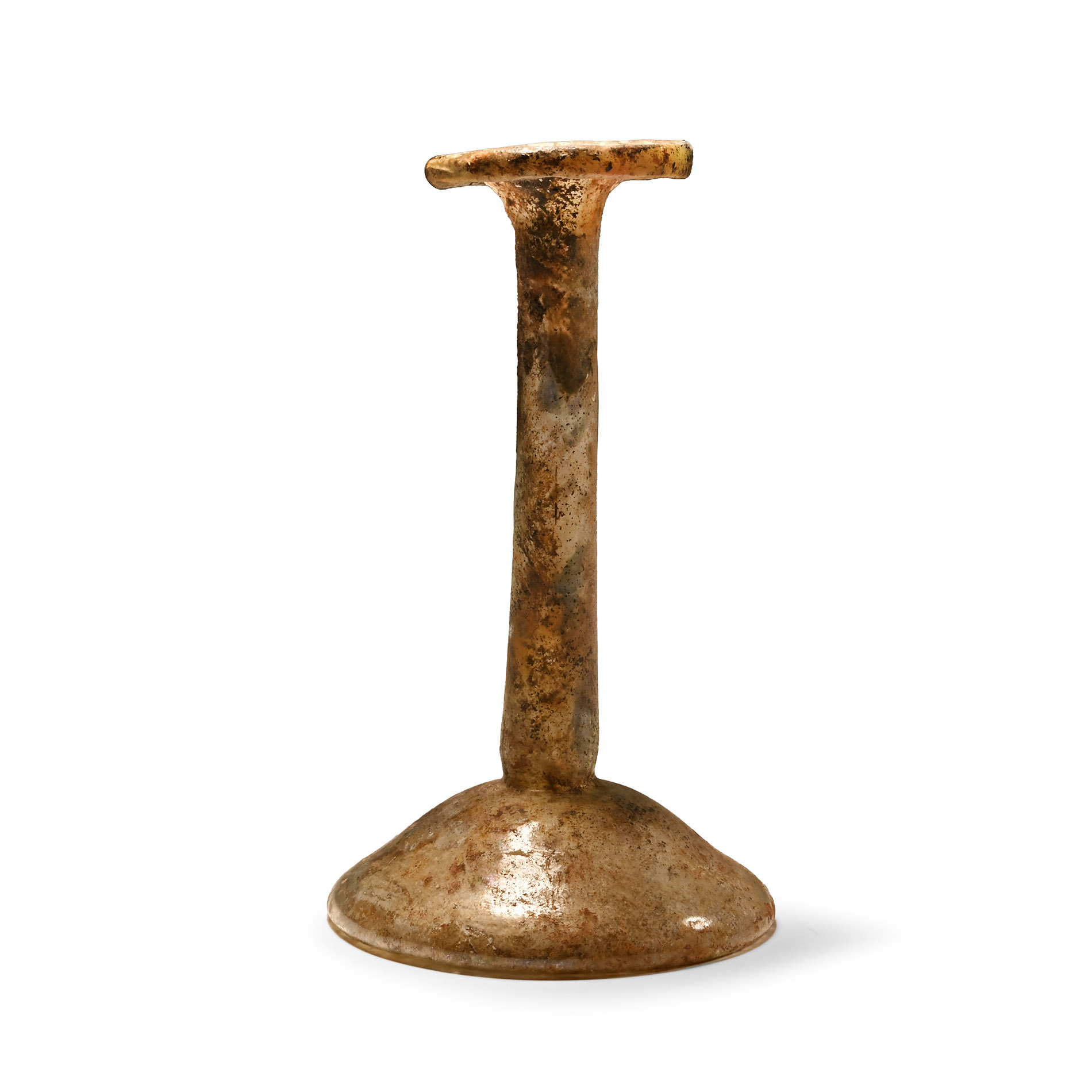
Roman Glass Vial
3RD CENTURY A.D.
5 1/2 in. (42 grams, 14 cm).
Wide domed body with flat base, tall narrow piriform neck and splayed rim.
ProvenanceEx London, UK, collection, 1980-1990s.
LiteratureCf. Filarska, B., Szkla Starozytne (Ancient Glass) II vol., Warszawa, 1972, II, cat.261, pl.XLVI,5, for similar vessel.
FootnotesThe lachrymatous (or lacrimal vase or unguentarium) was a vial of glass that contained ointments or perfumes. These small vessels, often found in Roman tombs, were formerly supposed to have been bottles into which mourners dropped their tears. Instead they contained perfume and unguents, and the large quantity of vessels found in tombs is due to the use of unguents at funeral ceremonies.
CONDITIONTimeLine Auctions follows a vetting process to ensure the authenticity and legality of all items, reinforcing our commitment to integrity and responsible trading. Each antiquity, antique, and coin lot undergoes thorough examination by a vetting committee of at least ten external specialists, professional trade association members, scientists, and archaeologists: Our Vetting Process
AUCTIONS:
TimeLine is a leading auction house specialising in antiquities, ancient art, collectables, natural history, coins, medals, and books. Our auctions offer museums, collectors, historians, and enthusiasts the opportunity to acquire unique and historically significant pieces.
-
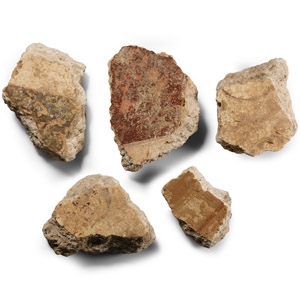
Roman Fresco Wall Plaster Collection
1st century A.D.Sold for (Inc. bp): £39
Fragments of wall plaster with rendered surface with incised detailing to the edge; impression of timber laths to the reverse. 662 grams total, 6.5-10.6 cm
Acquired in the 19th century. Ex Jeger collection, Switzerland.
These small fragments, for analogies with the fragments of Pompeii, seems to belong to the second style of Roman painting, red panels representing highlight and shadow, decorated with vegetal interlaces. Some panels were probably framed by a red grenade fillet. A fragment shows alternate blue and red colour over a cream background, maybe pertinent to a socle. -
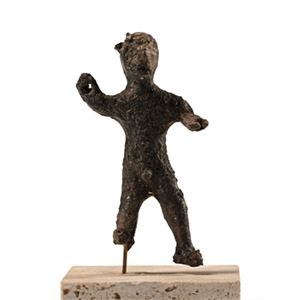
Roman Bronze Votive Statuette
1st century B.C.-1st century A.D.Sold for (Inc. bp): £78
Standing nude figure of a warrior with left hand extended, pierced to accept the grip of a shield, right hand raised, pierced to accept the shaft of a spear; mounted on a custom-made stand. 117 grams total, 82 mm including stand
From a collection acquired on the UK art market from various auction houses and collections mostly before 2000. From an important Cambridgeshire estate; thence by descent. -
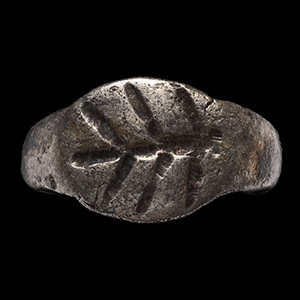
Roman Silver Child's Ring with Palm Branch
1st-2nd century A.D.Sold for (Inc. bp): £33
With lentoid-profile hoop, ellipsoid bezel with incuse frond motif. 2.31 grams, 16.88 mm overall, 13.87 mm internal diameter (approximate size British E, USA 2 1/4, Europe 2.41, Japan 2)
UK private collection before 2000. Acquired on the UK art market. Property of a London gentleman.
