
Loading, please wait...
LOT 0806
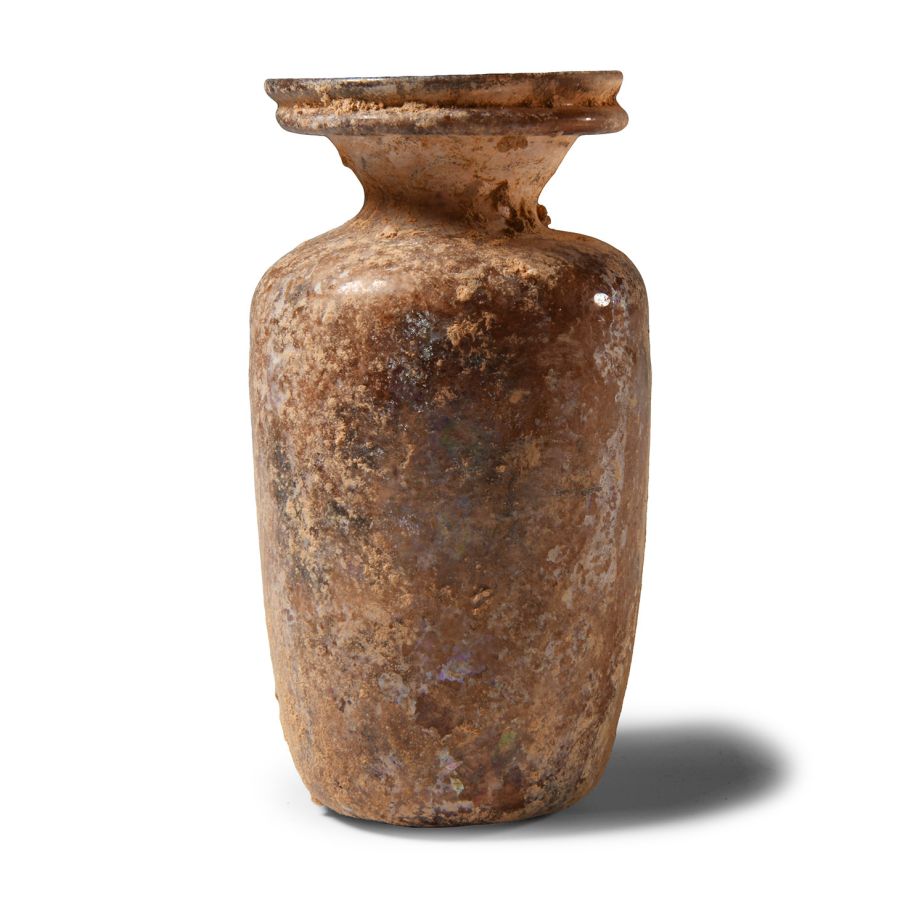
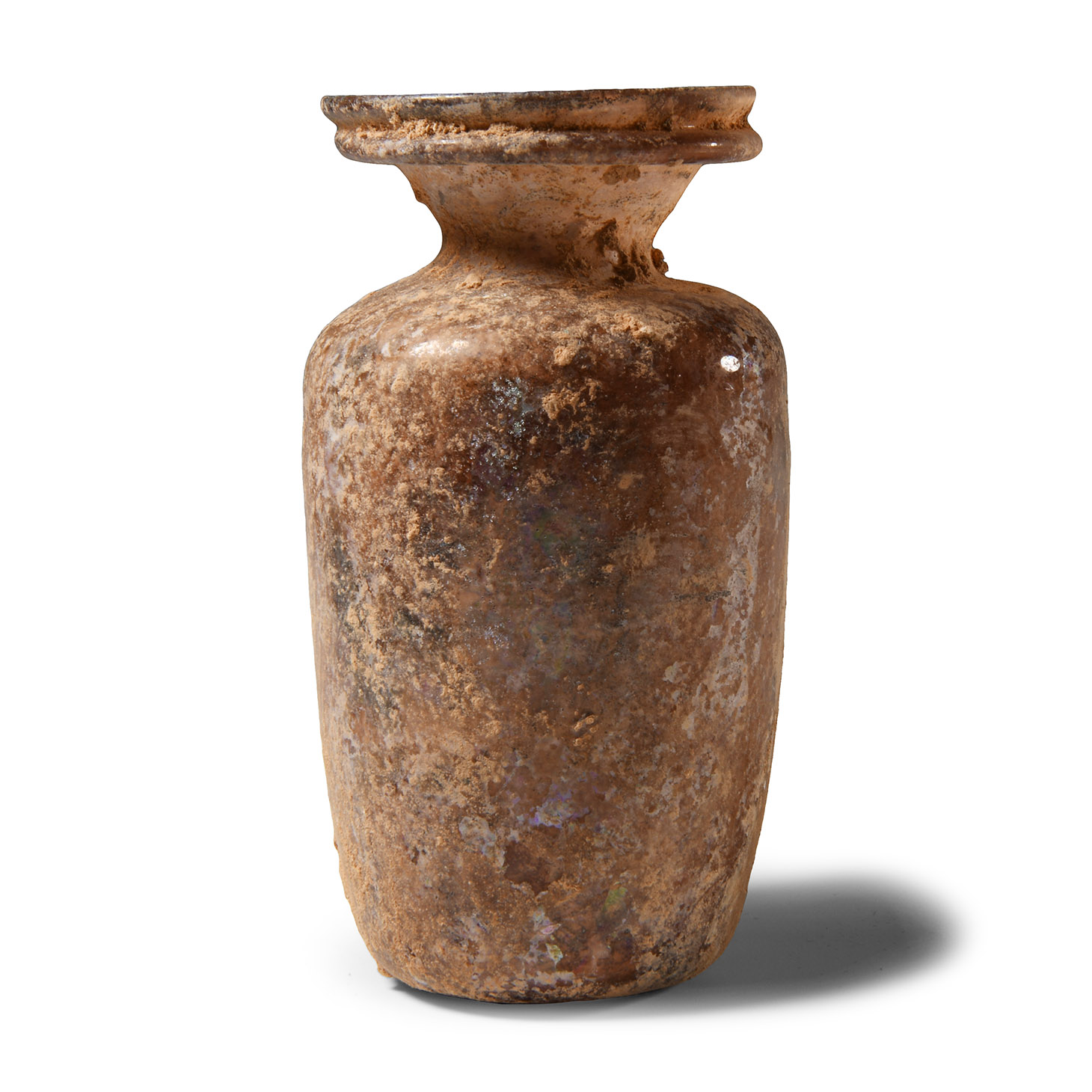
Roman Glass Vessel
1ST-3RD CENTURY A.D.
37/8 in. (51 grams, 98 mm).
With slightly tapering body, trumpet-shaped mouth and gussetted folded rim.
ProvenanceAcquired 1980-2015.
Ex Abelita family collection.
Cf. Lightfoot, C.S. Ancient Glass in the National Museums of Scotland, Edinburgh, 2007, item 307; Metropolitan Museum, New York, accession numbers 81.10.171 and 199318, for other Roman glass amphoras.
CONDITIONTimeLine Auctions follows a vetting process to ensure the authenticity and legality of all items, reinforcing our commitment to integrity and responsible trading. Each antiquity, antique, and coin lot undergoes thorough examination by a vetting committee of at least ten external specialists, professional trade association members, scientists, and archaeologists: Our Vetting Process
AUCTIONS:
TimeLine is a leading auction house specialising in antiquities, ancient art, collectables, natural history, coins, medals, and books. Our auctions offer museums, collectors, historians, and enthusiasts the opportunity to acquire unique and historically significant pieces.
-
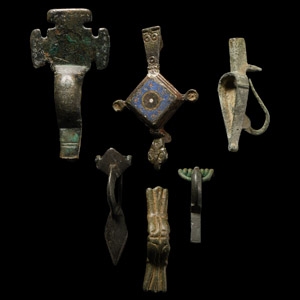
Roman and Anglo-Saxon Bronze Brooch Collection
2nd-7th century A.D.Sold for (Inc. bp): £182
Comprising: two bow brooches; an equal-arm brooch with incised decoration; a large portion of a Saxon cruciform brooch; a brooch with a teardrop-shaped cell; a hybrid brooch with enamelled lozenge-shaped central plate. 62 grams total, 31-61 mm
Ex Hansons Auctions, Derbyshire, UK. Property of a Shropshire private collector. Accompanied by an old identification ticket for the equal-armed brooch. -
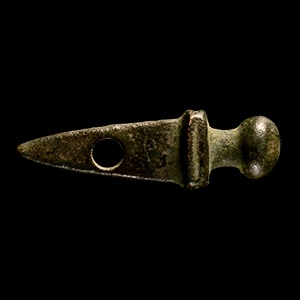
Roman Gladius Sword Amulet
Circa 1st century B.C.-1st century A.D.Sold for (Inc. bp): £208
A miniature sword-shaped votive or amulet with ribbed guard and knop finial; pierced through the blade. 4.50 grams, 31 mm
Ex property of a North West London gallery; formerly in a 1980s collection. -
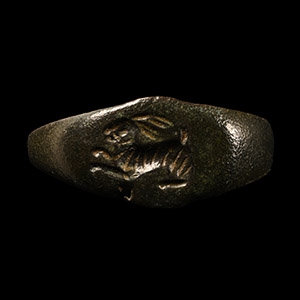
Roman Bronze Ring with Rabbit
3rd century A.D.Sold for (Inc. bp): £234
With integral ellipsoid bezel, intaglio crouching rabbit motif. 2.63 grams, 20.35 mm overall, 18.78 mm internal diameter (approximate size British P 1/2, USA 7 3/4, Europe 16.86, Japan 16)
Ex German art market, 2000s. Acquired from an EU collector living in London. From the collection of Surrey, UK, gentleman.
