
Loading, please wait...
LOT 0163
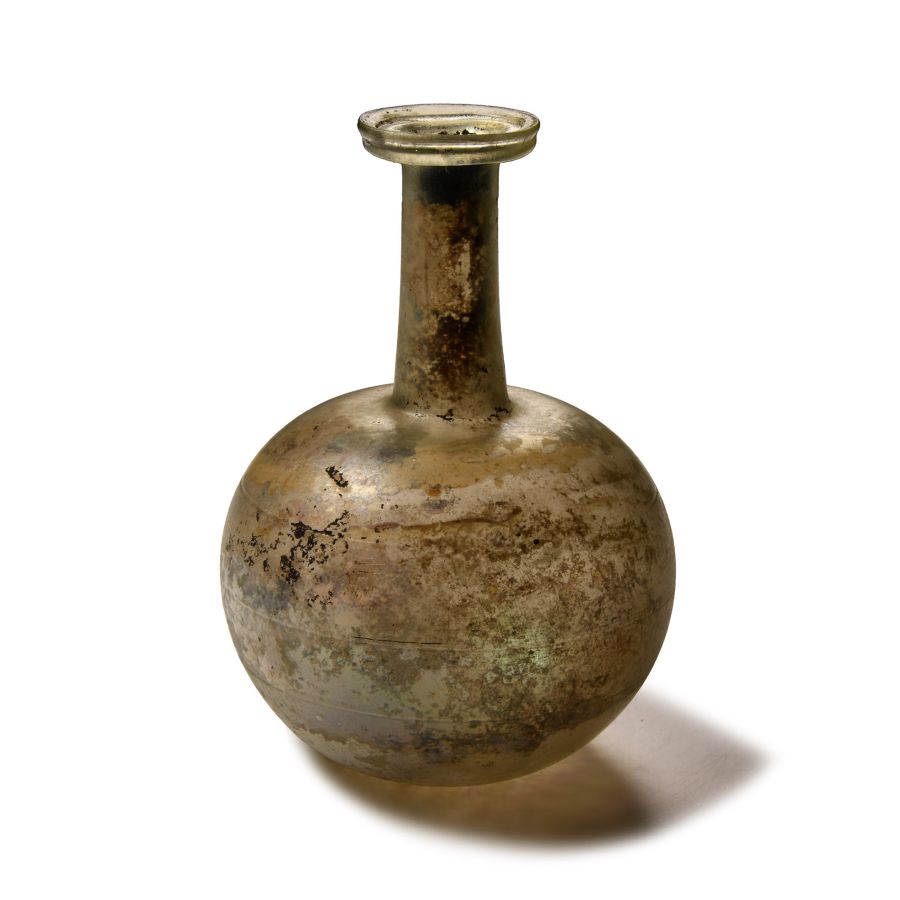
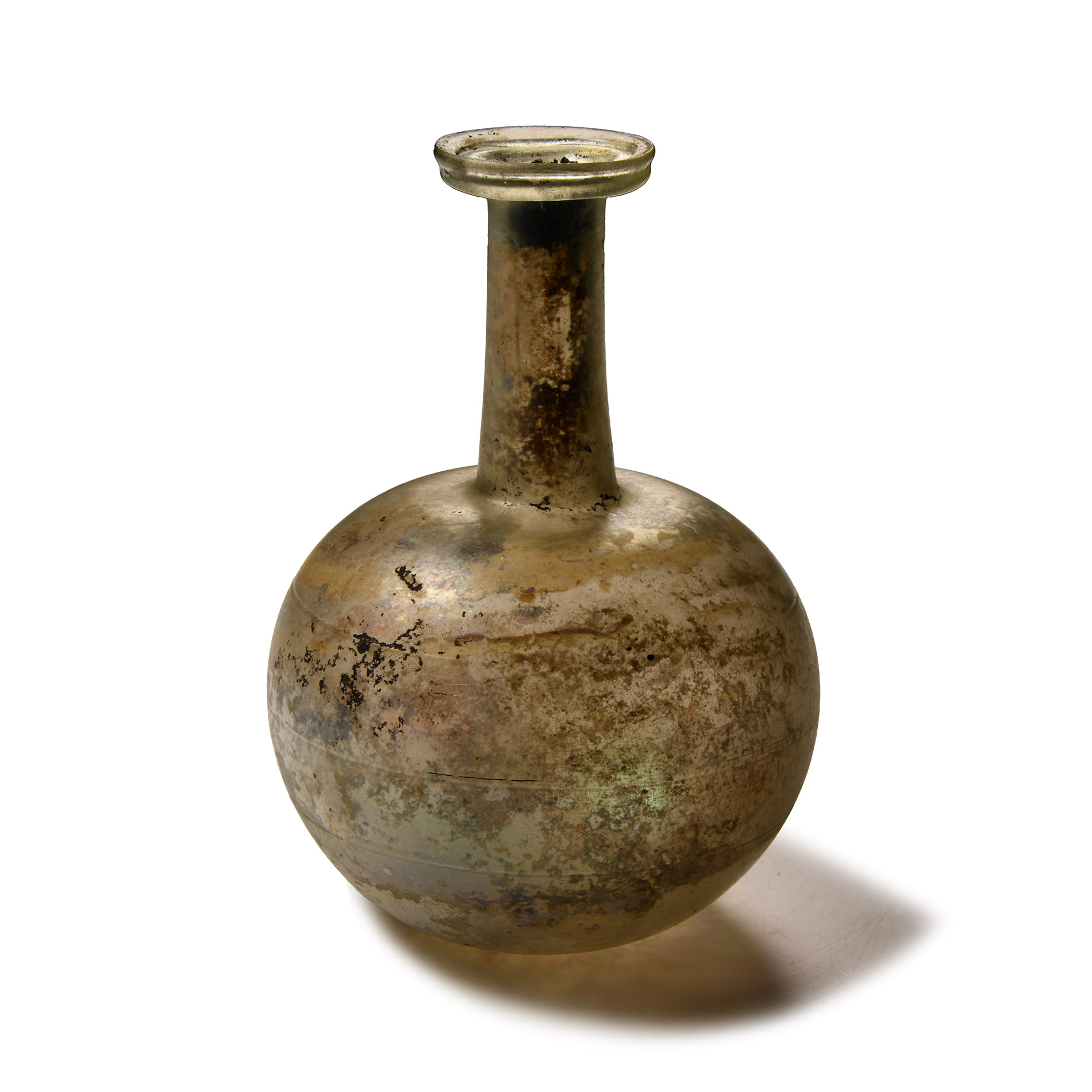
Roman Glass Vessel with Wheel-Cut Design
1ST-3RD CENTURY A.D.
5 1/8 in. (115 grams, 13 cm).
With globular body and long tubular neck, dimple base, everted rim with gusset to the outer edge; wheel-cut horizontal lines to the body.
ProvenanceAcquired on the German art market, 1989-1995.
with The Museum Gallery, 19 Bury Place, London, WC, UK, 1998-2003.
Property of a London based academic, 2003-present.
TimeLine Auctions follows a vetting process to ensure the authenticity and legality of all items, reinforcing our commitment to integrity and responsible trading. Each antiquity, antique, and coin lot undergoes thorough examination by a vetting committee of at least ten external specialists, professional trade association members, scientists, and archaeologists: Our Vetting Process
AUCTIONS:
TimeLine is a leading auction house specialising in antiquities, ancient art, collectables, natural history, coins, medals, and books. Our auctions offer museums, collectors, historians, and enthusiasts the opportunity to acquire unique and historically significant pieces.
LOT 0163
Roman Glass Vessel with Wheel-Cut Design
Estimate £600 - 800€700 - 930 (for guidance only)$810 - 1,080 (for guidance only)
-
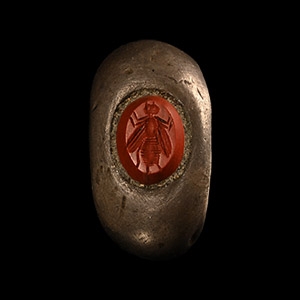
Roman Silver Ring with Fly Gemstone
2nd-3rd century A.D. and laterSold for (Inc. bp): £546
With later rounded plaque and inset jasper stud with intaglio fly motif. 17.26 grams, 26.69 mm overall, 19.90 mm internal diameter (approximate size British P, USA 7 1/2, Europe 16.23, Japan 15)
Acquired on the UK art market in the 1980s. From an East Anglian private collection. -
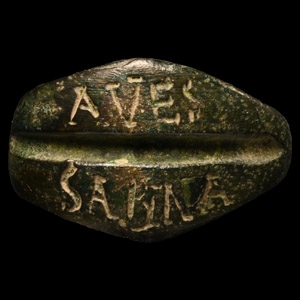
Roman Bronze Ring with Inscription
2nd-3rd century A.D.Sold for (Inc. bp): £364
With a narrow hoop (split) and wide hoop divided by a deep groove, inscribed with 'AVES SABINA' (= enjoy Sabina). 3.12 grams, 19.64 mm overall, 16.74 mm internal diameter (approximate size British J, USA 4 3/4, Europe 8.69, Japan 8)
Ex German art market, 2000s. Acquired from an EU collector living in London. From the collection of Surrey, UK, gentleman. -
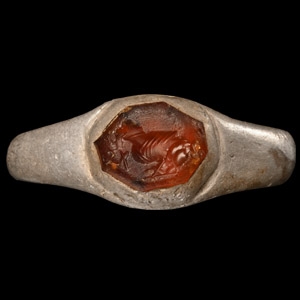
Roman Silver Ring with Bird Gemstone
3rd century A.D.Estimate: £200 - 300 (+bp*)
Opening Bid: £100
With wide angled shoulders and cell to the bezel, inset carnelian intaglio bird with frond in its beak. 7.87 grams, 27.22 mm overall, 21.38 x 16.48 mm internal diameter (approximate size British M 1/2, USA 6 1/4, Europe 13.09, Japan 12)
Ex German art market, 2000s. Acquired from an EU collector living in London. From the collection of Surrey, UK, gentleman.
