
Loading, please wait...
LOT 0670
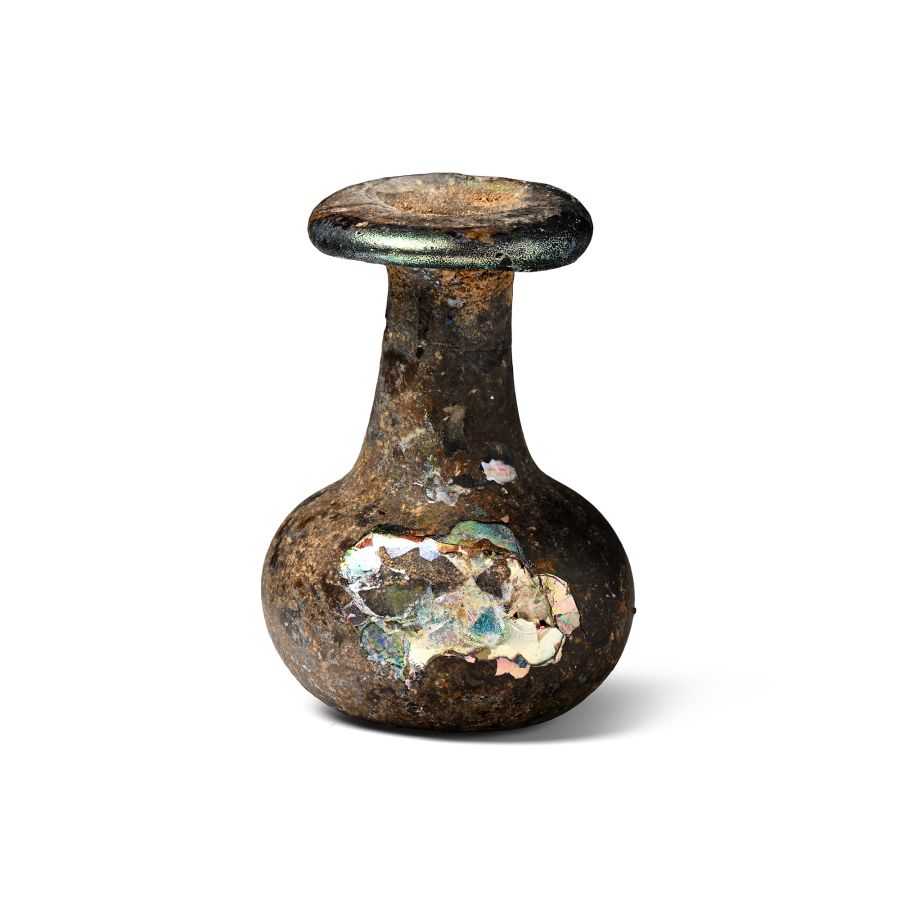
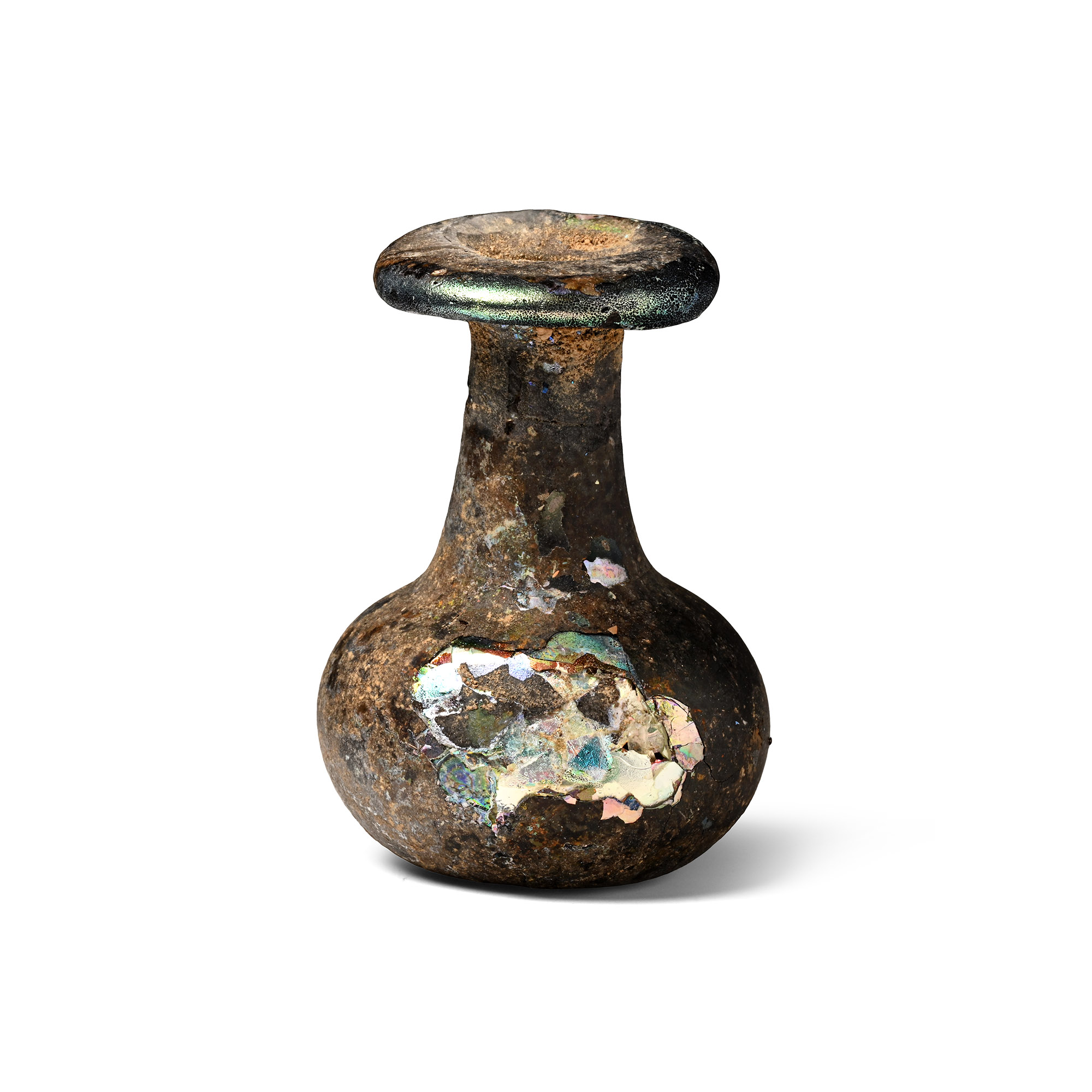
Roman Glass Unguentarium
1ST-4TH CENTURY A.D.
2 1/4 in. (10 grams, 56 mm).
With a squat bulbous body, tall neck and broad flared mouth, iridescent surface. [No Reserve]
ProvenanceEx London, UK, gentleman, 1990s.
CONDITIONTimeLine Auctions follows a vetting process to ensure the authenticity and legality of all items, reinforcing our commitment to integrity and responsible trading. Each antiquity, antique, and coin lot undergoes thorough examination by a vetting committee of at least ten external specialists, professional trade association members, scientists, and archaeologists: Our Vetting Process
AUCTIONS:
TimeLine is a leading auction house specialising in antiquities, ancient art, collectables, natural history, coins, medals, and books. Our auctions offer museums, collectors, historians, and enthusiasts the opportunity to acquire unique and historically significant pieces.
-
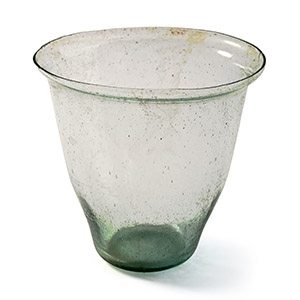
Roman Light Green Glass Lamp
Circa 4th century A.D.Estimate: £300 - 400 (+bp*)
Opening Bid: £160
Tapering body with pontil base, slightly everted rim; traces of iridescence. 41 grams, 80 mm
From an important collection of glass, London, UK, 1990s. -
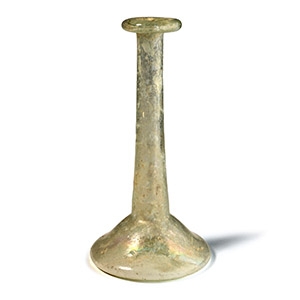
Roman Tall Glass Flask
1st-4th century A.D.Sold for (Inc. bp): £130
Comprising a squat conical body with a dimple at the base, long tubular neck with wide rim. 87 grams, 15 cm
Ex German art market, 2000s. Acquired from an EU collector living in London. From the collection of a Surrey, UK, gentleman. -
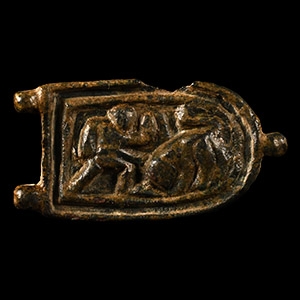
Late Roman Bronze Buckle-Plate with Combat Scene
Circa 5th century A.D.Estimate: £150 - 200 (+bp*)
Opening Bid: £80
Tongue-shaped in plan with knop finial and three pierced lugs to the reverse; raised rim enclosing a scene with advancing gladiator and a lion(?) preparing to attack. 19.1 grams, 49 mm
Ex London and Home Counties gentleman, R.W., 1970s. This lot is accompanied by an illustrated lot declaration signed by the Head of the Antiquities Department, Dr Raffaele D'Amato.
All E38 buckles probably originally had a kidney-shaped bow (T-shaped), a prong with a rectangular, undecorated shield, and a U-shaped hinge fitting with a finial depicting a man fighting a lion. This could be a rider stabbing the prone animal with his lance, or a gladiator with a raised shield killing a lion with a sword or lance. The reliefs are surrounded by a border of varying design. Depending on the width of the fitting, the number of rear pierced pegs varies between from two to three.
