
Loading, please wait...
LOT 0918
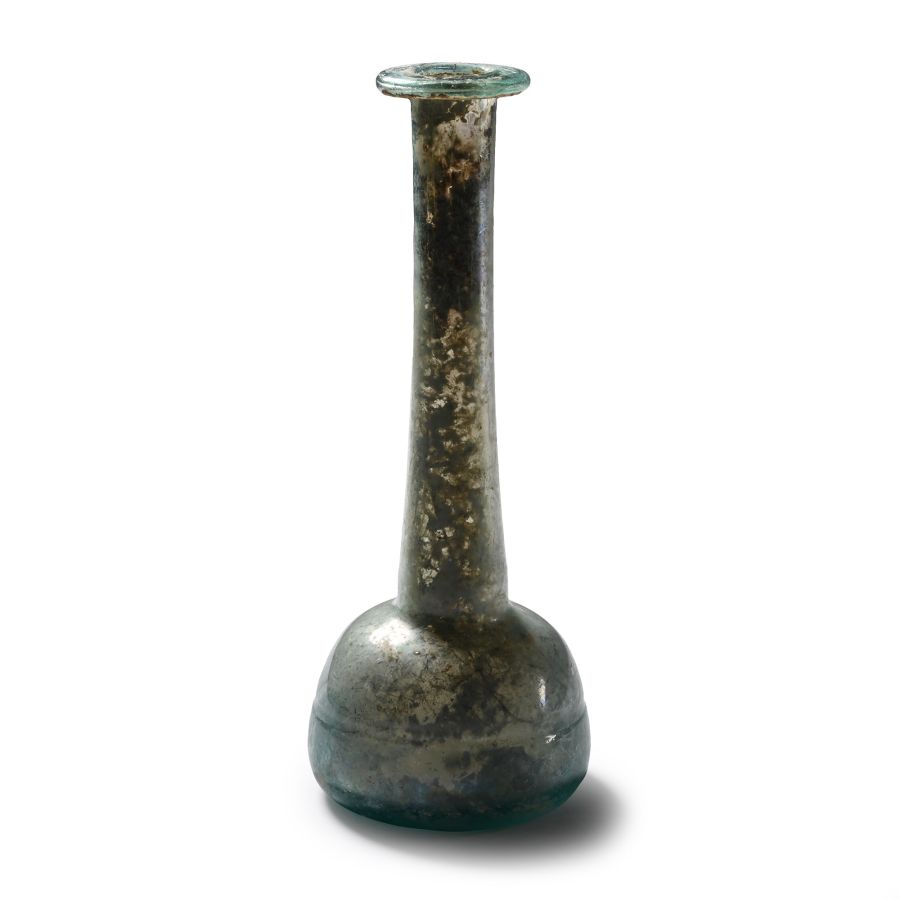
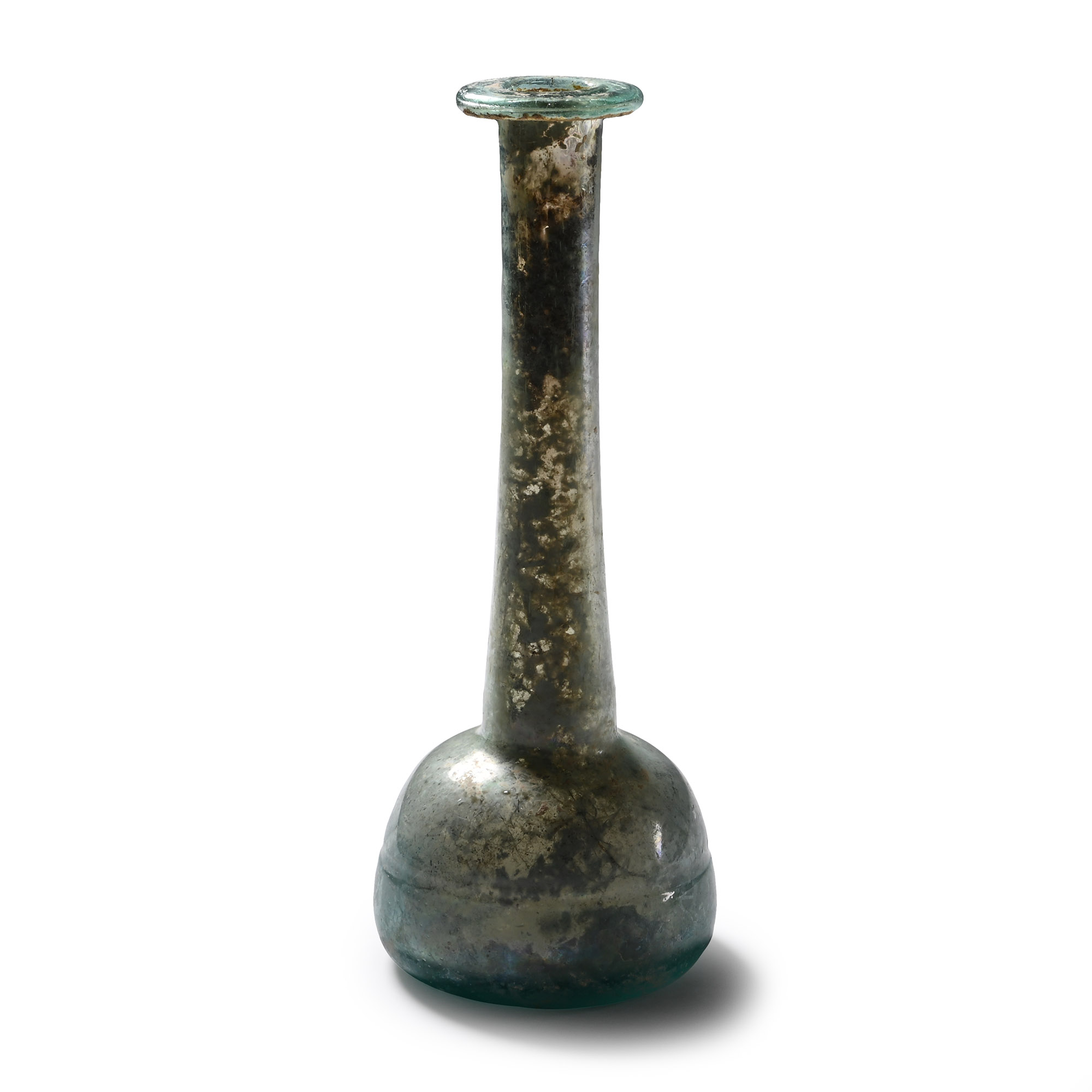
Roman Glass Unguentarium
1ST-3RD CENTURY A.D.
5 7/8 in. (78 grams, 15 cm).
With plano-convex body and dimple base, tall slender neck, folded rim; iridescent green surface.
ProvenanceFrom an important London collection of glass, 1990s.
This lot is accompanied by an illustrated lot declaration signed by the Head of the Antiquities Department, Dr Raffaele D'Amato.
Cf. Whitehouse, D., Roman Glass in the Corning Museum of Glass, vol.1, New York, 1997, item 262.
FootnotesThis kind of toilet bottle was called ‘candlestick unguentarium’ by the academics due to the shape of its neck. This specific type, with its transparent grayish green glass, is especially found in Roman Cyprus (Hayes's fabric 2 of Cypriot blown glass).
CONDITIONTimeLine Auctions follows a vetting process to ensure the authenticity and legality of all items, reinforcing our commitment to integrity and responsible trading. Each antiquity, antique, and coin lot undergoes thorough examination by a vetting committee of at least ten external specialists, professional trade association members, scientists, and archaeologists: Our Vetting Process
AUCTIONS:
TimeLine is a leading auction house specialising in antiquities, ancient art, collectables, natural history, coins, medals, and books. Our auctions offer museums, collectors, historians, and enthusiasts the opportunity to acquire unique and historically significant pieces.
LOT 0918
Roman Glass Unguentarium
Estimate £120 - 170€140 - 200 (for guidance only)$160 - 230 (for guidance only)
-
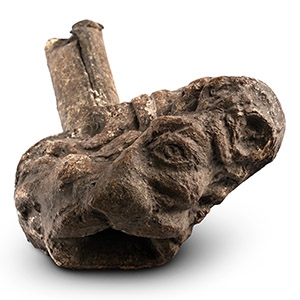
Roman Decorative Lead Water Outlet with Lion
1st-4th century A.D.Sold for (Inc. bp): £234
Comprising a length of round-section lead pipe attached to a domed plaque with lion-mask detailing. 2.48 kg, 19.5 cm
From the collection of a Buckinghamshire, UK, collector established from the earlier 1960s. -
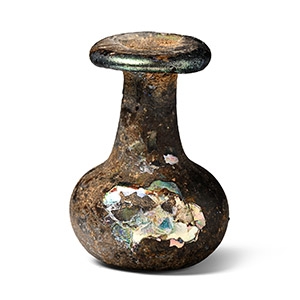
Roman Glass Unguentarium
1st-4th century A.D.Sold for (Inc. bp): £91
With a squat bulbous body, tall neck and broad flared mouth, iridescent surface. 10 grams, 56 mm
Ex London, UK, gentleman, 1990s. -
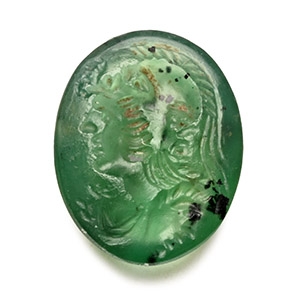
Roman Chrome Chalcedony Gemstone of Gryllus
1st century A.D.Sold for (Inc. bp): £910
With intaglio composite profile bust of a helmetted female (possibly depicting Minerva) facing left, and two other heads, one emerging from the helmet and the other beneath the neck; supplied with a museum-quality impression. 0.31 grams, 9 mm
Private English collection, formed between the late 1970s and early 1990s. Private collection, London, UK.
