
Loading, please wait...
LOT 0664
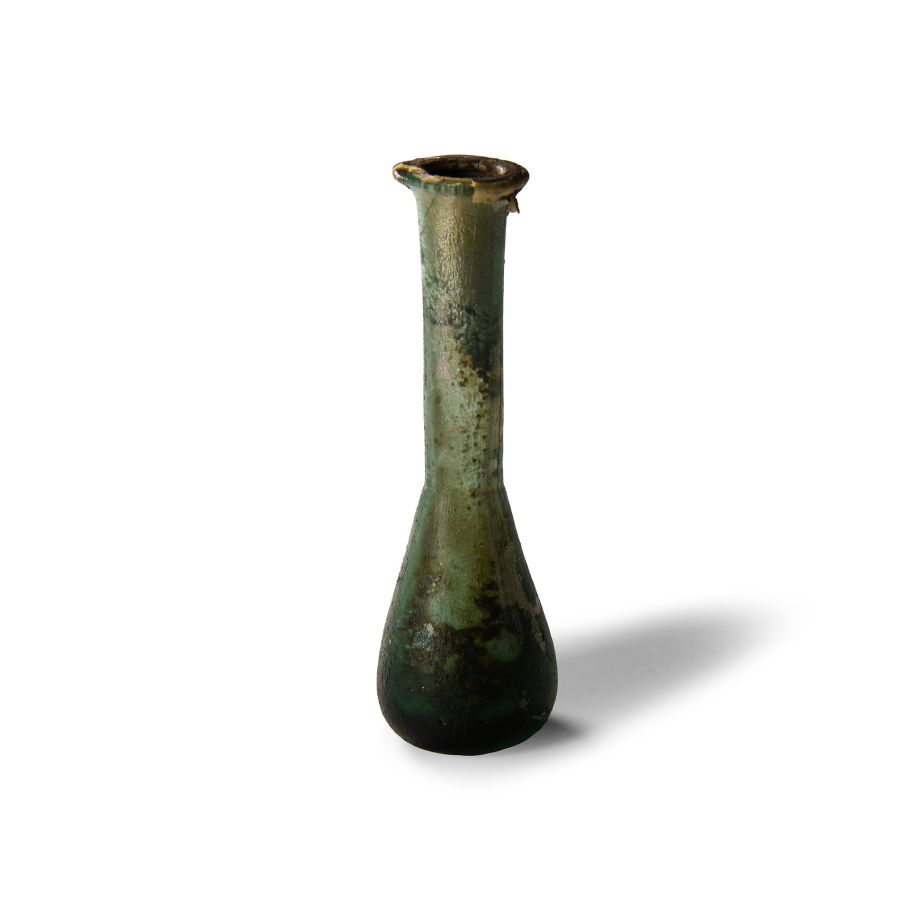
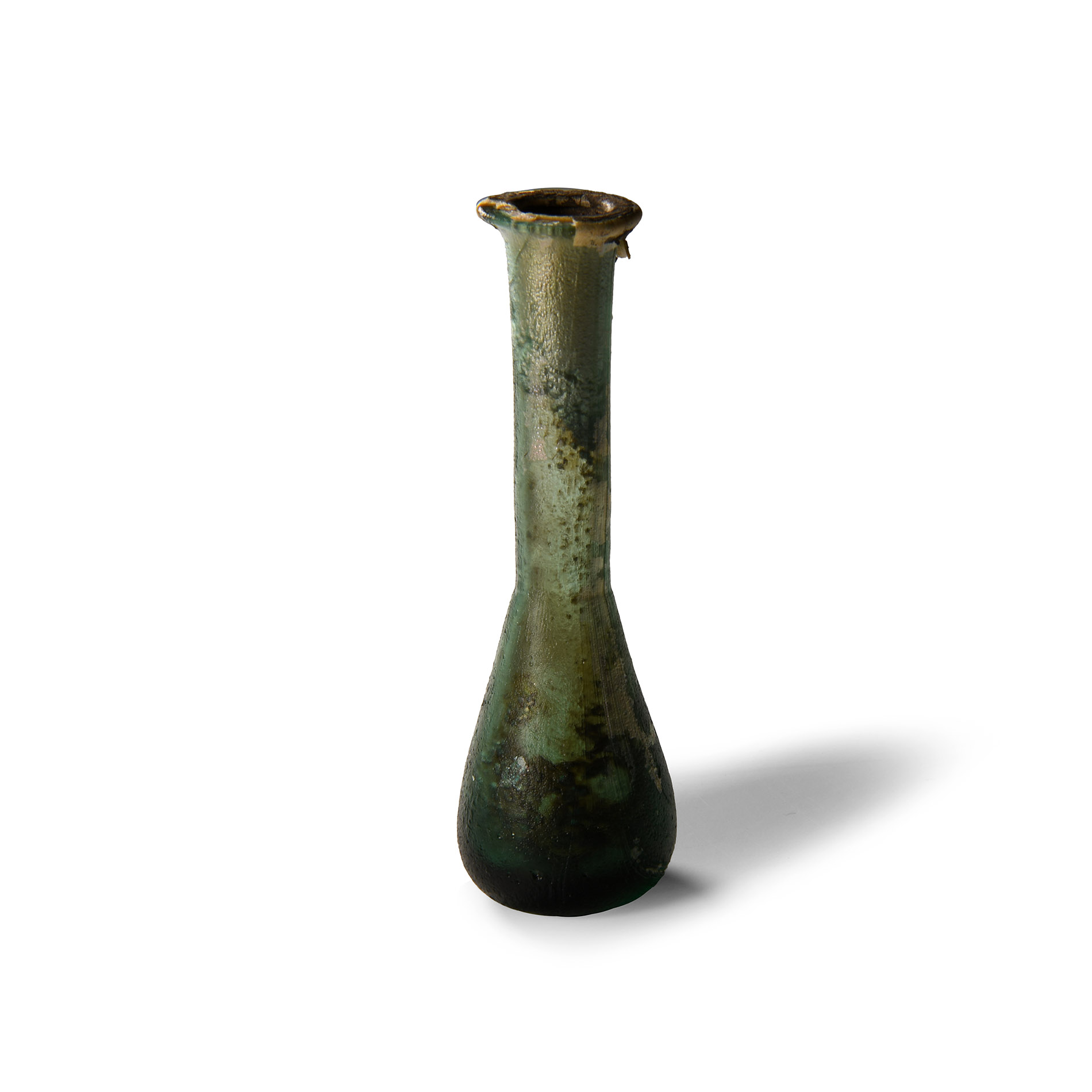
Roman Glass Unguentarium
1ST-2ND CENTURY A.D.
3 1/8 in. (18.8 grams, 79 mm).
With piriform body and flat base, tall neck and everted rim.
ProvenanceAcquired 1980-2015.
Ex Abelita family collection.
Cf. Whitehouse, D., Roman Glass in the Corning Museum of Glass, vol.2, New York, 2001, item 772.
CONDITIONTimeLine Auctions follows a vetting process to ensure the authenticity and legality of all items, reinforcing our commitment to integrity and responsible trading. Each antiquity, antique, and coin lot undergoes thorough examination by a vetting committee of at least ten external specialists, professional trade association members, scientists, and archaeologists: Our Vetting Process
AUCTIONS:
TimeLine is a leading auction house specialising in antiquities, ancient art, collectables, natural history, coins, medals, and books. Our auctions offer museums, collectors, historians, and enthusiasts the opportunity to acquire unique and historically significant pieces.
LOT 0664
Roman Glass Unguentarium
Estimate £100 - 140€120 - 160 (for guidance only)$140 - 190 (for guidance only)
-
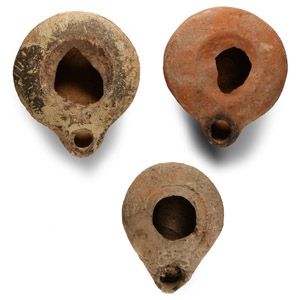
Roman Terracotta Oil Lamp Group
2nd-4th century A.D.Sold for (Inc. bp): £78
Each of low profile with stub nozzle and large filler hole. 122 grams total, 73-86 mm
From the H.N. collection, Milton Keynes, Berkshire, UK, 1990s. -
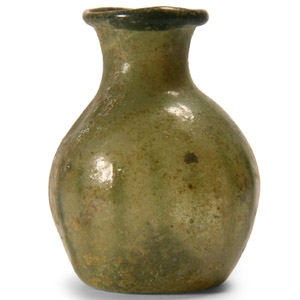
Late Roman Green Glass Vessel
4th-6th century A.D.Sold for (Inc. bp): £124
Bulbous in profile with dimpled underside, blown construction, everted rolled rim. 13.2 grams, 64 mm
Acquired from Allan Cherry, Bournemouth, UK, 2006. Ian Wilkinson collection, Nottinghamshire, UK.
Similar flasks and bottles were produced in Roman Asia Minor; this is a typical example of a type found in all corners of the empire. These were decorated in many ways including applying additional pieces of glass, by cutting the surface, or (as in our case) by moulding the vessels when they were blown. -
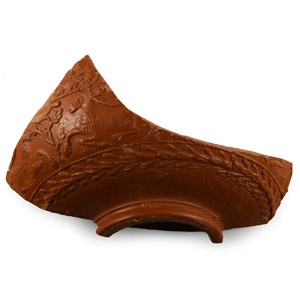
Romano-British 'Colchester' Samian Ware Sherd
1st century A.D.Sold for (Inc. bp): £78
Large fragment with portion of base and low-relief laurel wreath, stags, tree and other ornament; inked inscription 'Colchester 149/001256 / NE Car Ditch 10.5.72' and typed record card 'Section of Bowl. / Provenance: Colchester. / Dragendorff. Type 37.'. 155 grams, 15.7 cm
Found Colchester, Essex, UK, 1972. From the collection of a late East Anglian teacher and antiquarian who retired to the Isle of Wight in Hampshire, UK. He amassed a large collection of objects between the 1960s-1980s.
