
Loading, please wait...
LOT 0819
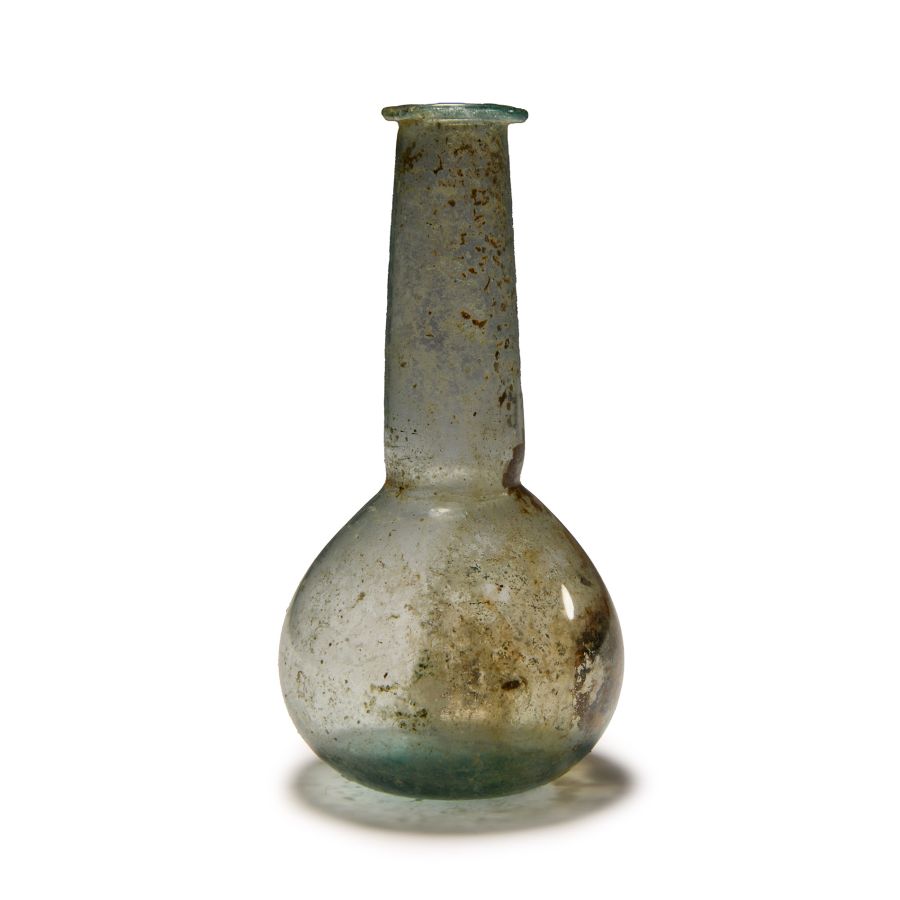
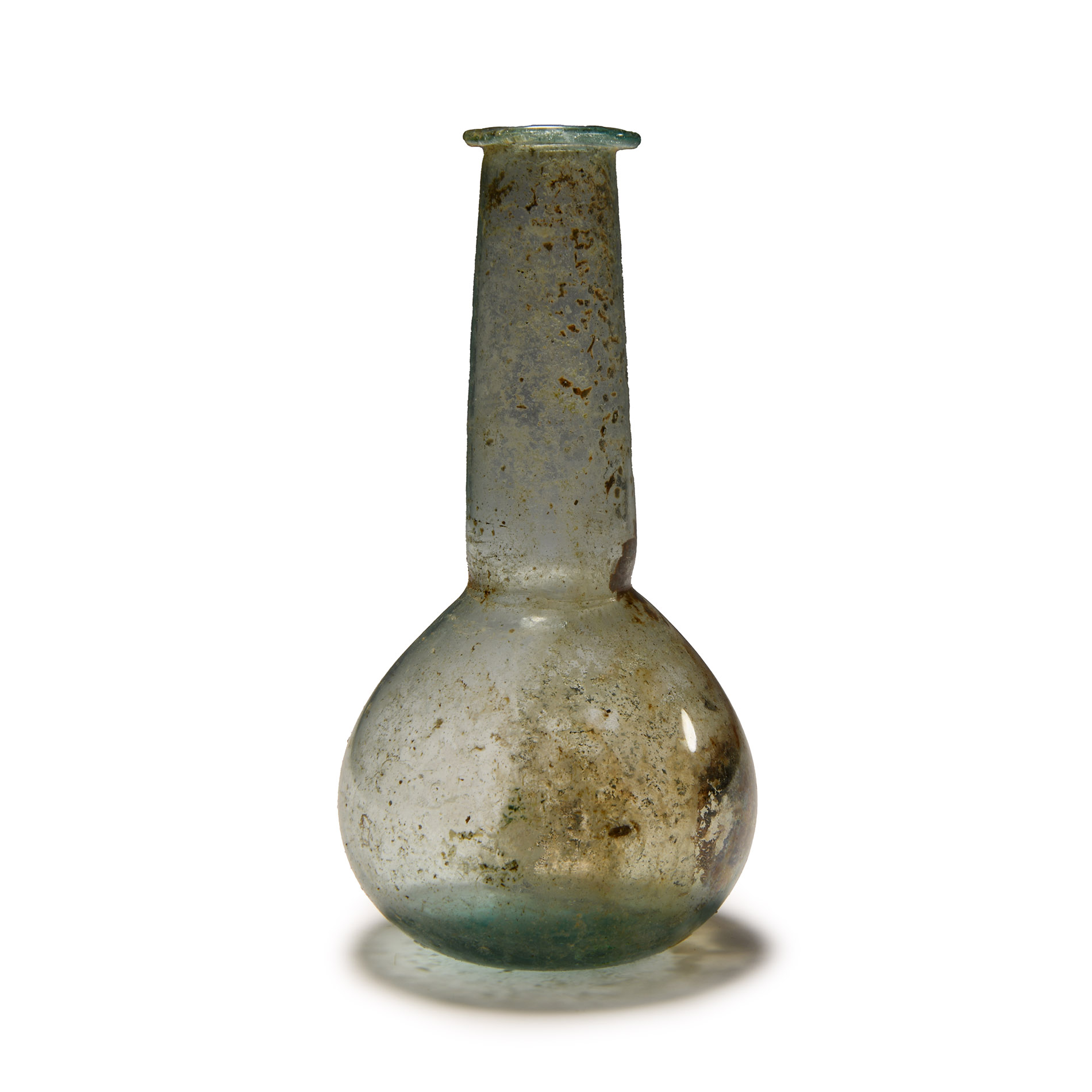
Roman Glass Unguentarium
1ST-2ND CENTURY A.D. OR LATER
4 3/4 in. (44 grams, 12.2 cm).
With bulbous body and dimple base, narrow neck and mouth with fared and folded rim.
ProvenanceEx property of a late Japanese collector, 1970-2000s.
LiteratureCf. Whitehouse, D., Roman Glass in the Corning Museum of Glass, vol.2, New York, 2001, item 772.
CONDITIONTimeLine Auctions follows a vetting process to ensure the authenticity and legality of all items, reinforcing our commitment to integrity and responsible trading. Each antiquity, antique, and coin lot undergoes thorough examination by a vetting committee of at least ten external specialists, professional trade association members, scientists, and archaeologists: Our Vetting Process
AUCTIONS:
TimeLine is a leading auction house specialising in antiquities, ancient art, collectables, natural history, coins, medals, and books. Our auctions offer museums, collectors, historians, and enthusiasts the opportunity to acquire unique and historically significant pieces.
-
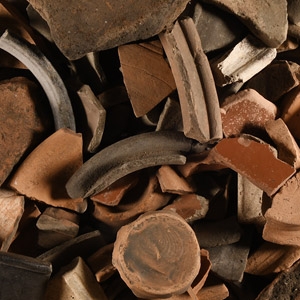
Romano-British British-Found Pottery Sherds
1st-4th century A.D.Sold for (Inc. bp): £98
Mainly domestic ware fragments, mortaria, amphorae and other types; in a wooden collector's tray, some with inked inscriptions including 'Col.' for Colchester. 9.85 kg total, 2-14 cm
Found UK. From the collection of a late East Anglian teacher and antiquarian who retired to the Isle of Wight in Hampshire, UK. He amassed a large collection of objects between the 1960s-1980s. -
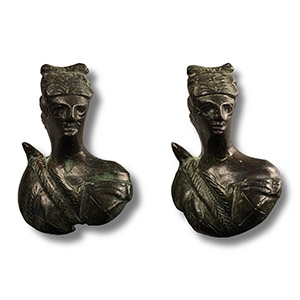
Roman Bronze Diana Attachment Pair
1st century A.D.Sold for (Inc. bp): £624
Matched pair of appliqués each a bust of the goddess Diana modelled in the round with hair dressed tight to the head, tunic and strap for a quiver passing over the right shoulder; the eyes formed oversize to accept silver inserts. 94 grams total, 60 mm each
Ex German art market, 2000s. Acquired from an EU collector living in London. From the collection of Surrey, UK, gentleman. -
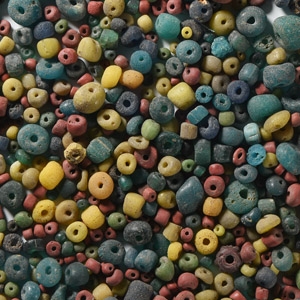
Roman and Other Mixed Glass Bead Group
1st-4th century A.D. and laterSold for (Inc. bp): £130
Mainly spherical, drum-shaped, annular and other types, including some 'trade wind beads'. 160 grams total, 2-12 mm
From the private collection of the late Mrs Belinda Ellison, a long time member of the Egyptian Exploration Society, c.1940-2020.
