
Loading, please wait...
LOT 0682
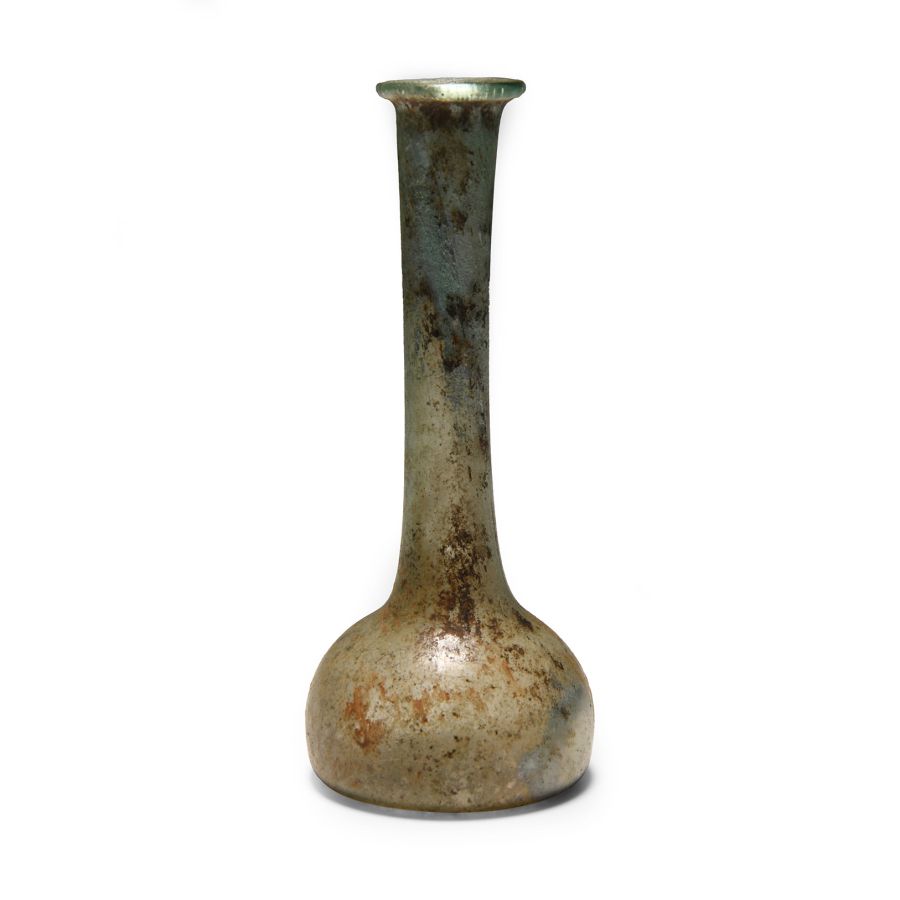
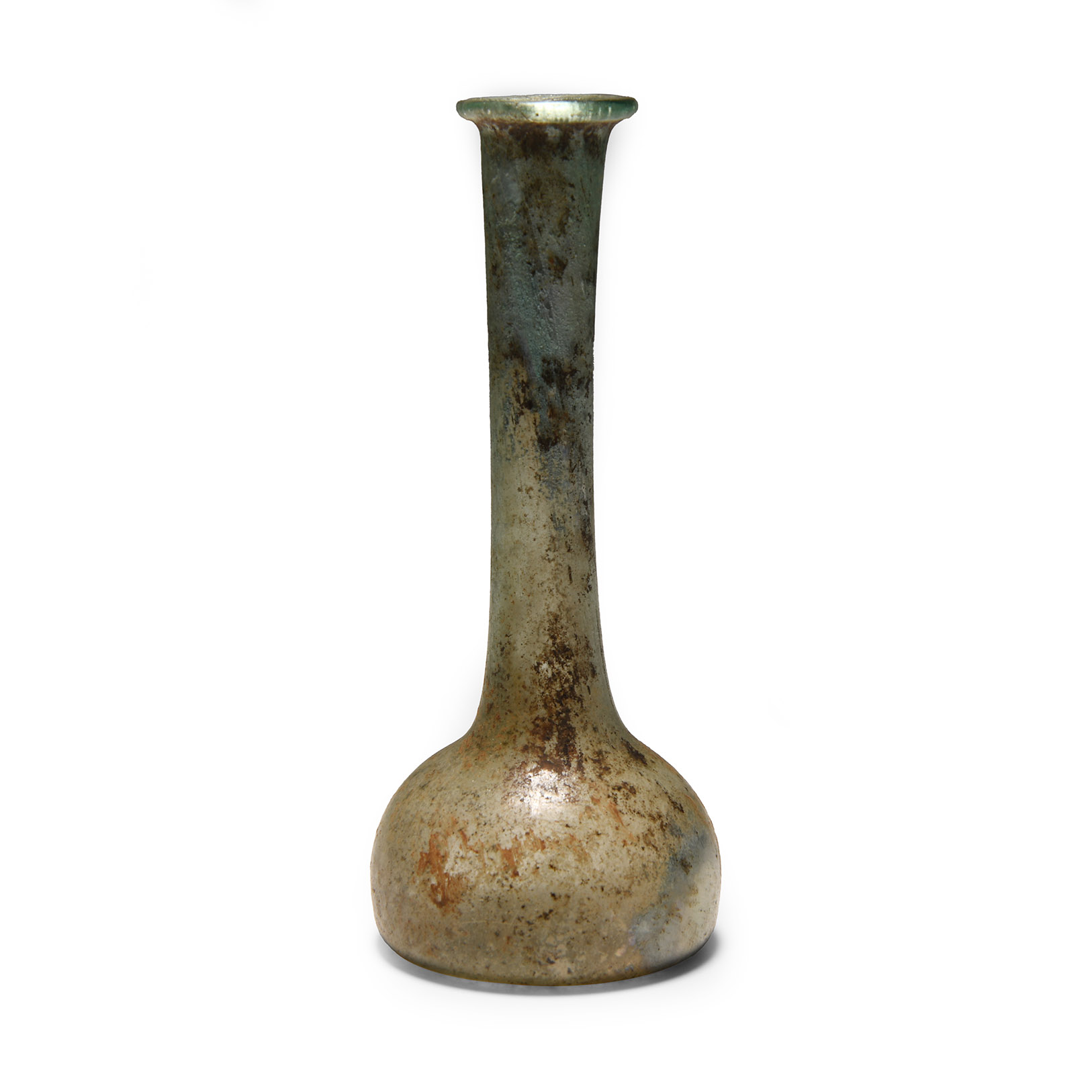
Roman Glass Unguentarium
2ND-3RD CENTURY A.D.
4 3/4 in. (24.6 grams, 12 cm).
With plano-convex body (damaged) and dimple base, tall slender neck, folded rim; iridescent surface. [No Reserve]
ProvenanceAcquired 1980-2015.
Ex Abelita family collection.
Cf. Whitehouse, D., Roman Glass in the Corning Museum of Glass, vol.1, New York, 1997, item 259.
CONDITIONTimeLine Auctions follows a vetting process to ensure the authenticity and legality of all items, reinforcing our commitment to integrity and responsible trading. Each antiquity, antique, and coin lot undergoes thorough examination by a vetting committee of at least ten external specialists, professional trade association members, scientists, and archaeologists: Our Vetting Process
AUCTIONS:
TimeLine is a leading auction house specialising in antiquities, ancient art, collectables, natural history, coins, medals, and books. Our auctions offer museums, collectors, historians, and enthusiasts the opportunity to acquire unique and historically significant pieces.
-
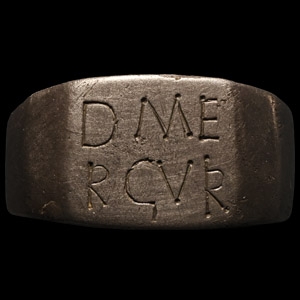
Roman Silver Military Ring with Inscription
Circa 2nd century A.D.Sold for (Inc. bp): £1,950
With facetted hoop and rectangular plaque, legend 'DME / RGVR' (D(eo) ME/RCVRI(o) (RI in ligature): ‘To the god Mercury), in rustic capitals. 10.59 grams, 25.88 mm overall, 21.00 mm internal diameter (approximate size British Q 1/2, USA 8 1/4, Europe 18.12, Japan 17)
Acquired on the UK art market in the 1980s. From an East Anglian private collection.
The inscription is to be segmented 'D MERGVR for D[EO] MERGVR[IO]' meaning '(dedicated) to the god Mercury'. A common formula for Roman inscriptions in Britain. -
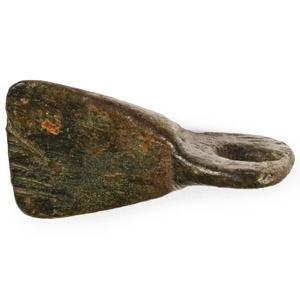
Romano-British Bronze Axe-Shaped Votive Pendant
1st-2nd century A.D.Sold for (Inc. bp): £78
With trapezoidal blade and pierced lug above; 1.21 grams, 17 mm
Found near Wetwang, East Yorkshire, UK, in 2005. Ian Wilkinson collection, Nottinghamshire, UK. -
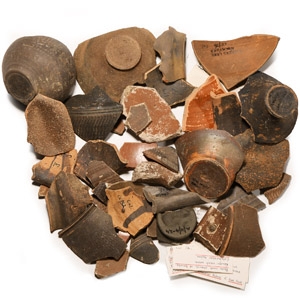
Romano-British Castor Ware and Other Sherd Group
1st-4th century A.D.Sold for (Inc. bp): £130
Mixed group of sherds, many with inked reference number, and collector's display cards including 'Sherd of calcite gritted bowl. Indented rim. Colchester kilns. 4th Cent.', 'NENE VALLEY / NVCIO', 'Col' for Colchester, 'CANVEY ISLAND / CC/6', 'MG/105 / CAMBRIDGE / P.', LONDON / CC/27', 'TINKERS LANE / ROCHFORD / CC/26'. 804 grams total, 2.5-10 cm
Found UK. From the collection of a late East Anglian teacher and antiquarian who retired to the Isle of Wight in Hampshire, UK. He amassed a large collection of objects between the 1960s-1980s. Accompanied by handwritten information display cards.
