
Loading, please wait...
LOT 0914
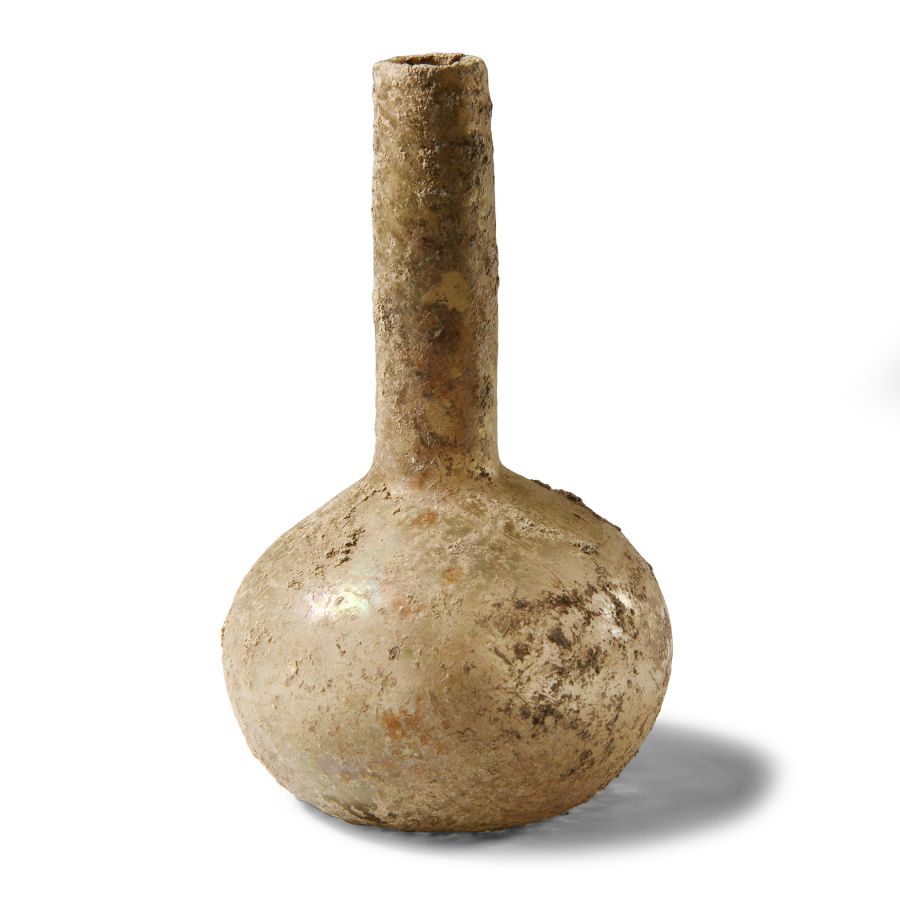
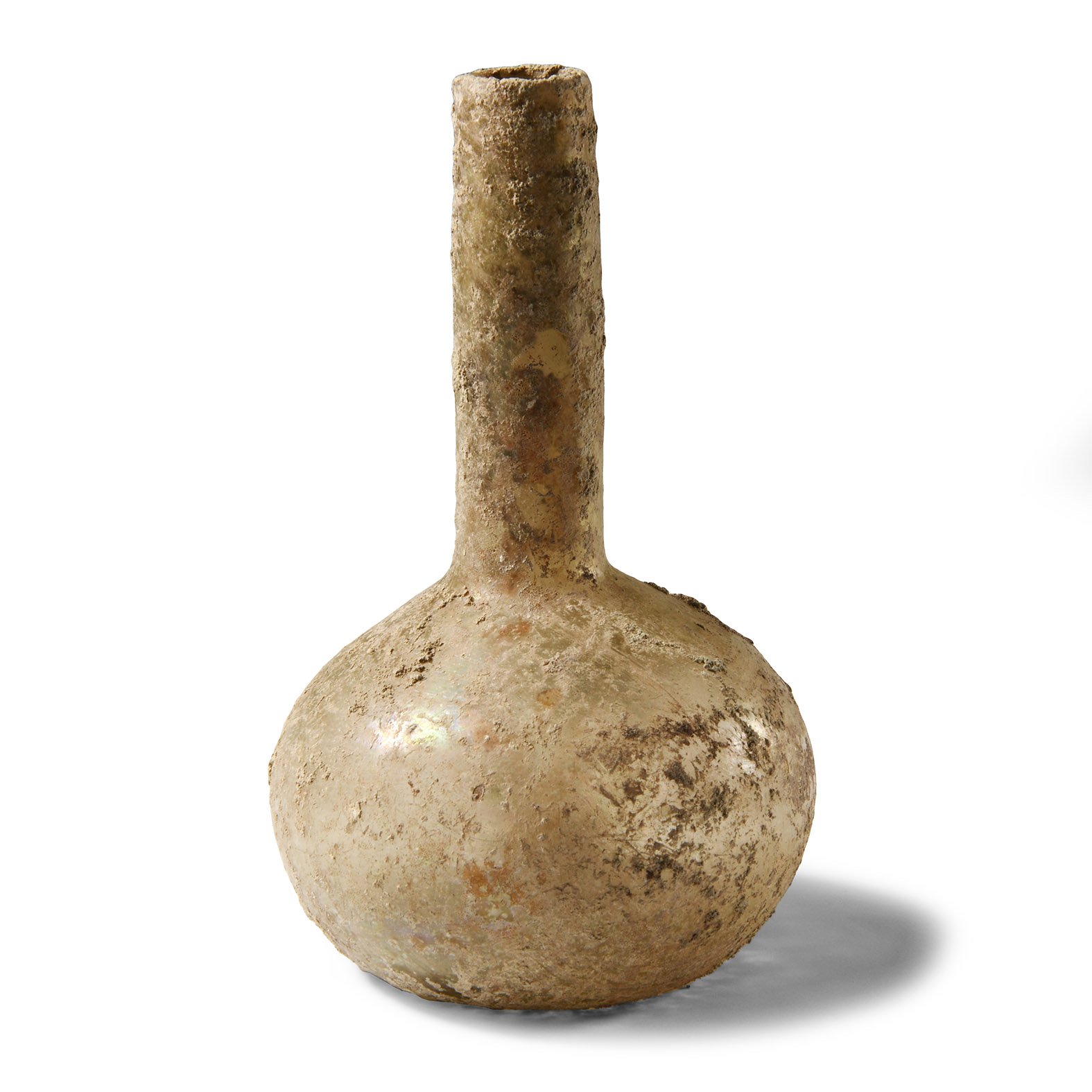
Roman Glass Unguentarium
1ST-3RD CENTURY A.D.
5 in. (68 grams, 12.5 cm).
With globular body, convex base, tall tubular neck, flat original rim and iridescent surface.
ProvenanceAcquired 1980-2015.
Ex Abelita family collection.
Cf. Whitehouse, D., Roman Glass in the Corning Museum of Glass, vol.1, New York, 1997, item 268, for type.
CONDITIONTimeLine Auctions follows a vetting process to ensure the authenticity and legality of all items, reinforcing our commitment to integrity and responsible trading. Each antiquity, antique, and coin lot undergoes thorough examination by a vetting committee of at least ten external specialists, professional trade association members, scientists, and archaeologists: Our Vetting Process
AUCTIONS:
TimeLine is a leading auction house specialising in antiquities, ancient art, collectables, natural history, coins, medals, and books. Our auctions offer museums, collectors, historians, and enthusiasts the opportunity to acquire unique and historically significant pieces.
-
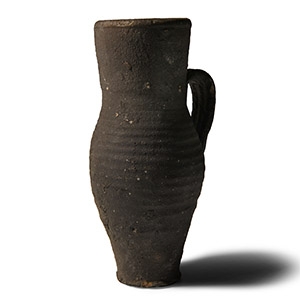
Roman Ribbed Greyware Jug
Carthage, circa 1st-2nd century A.D.Sold for (Inc. bp): £169
Slender in profile with narrow base, loop handle to the shoulder, flared mouth; with the remains of an antique label to the base. 303 grams, 16 cm
From a collection acquired on the UK art market from various auction houses and collections mostly before 2000. From an important Cambridgeshire estate; thence by descent. -
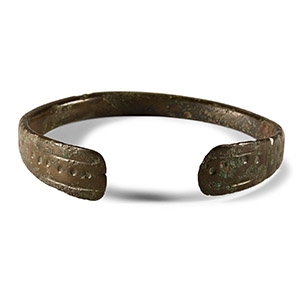
Roman Bronze Decorated Bracelet
1st-3rd century A.D.Sold for (Inc. bp): £72
Composed of a D-section hoop, flattened terminals with rounded ends decorated with horizontal rows of shallow dots and quatrefoils between parallel tracks. 17 grams, 53 mm wide
German art market, 1990s. Mr A.H., a North American collector living in the UK. -
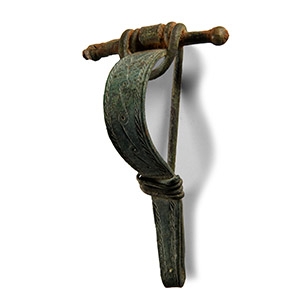
Large Roman Decorated Bronze Bow Brooch
2nd-3rd century A.D.Sold for (Inc. bp): £85
P-shaped with wide bow and foot, hatched to the edges with ring-and-dot ornament to the centre of the bow, bar above to hold the sprung pin, foot returning to form the catchplate, the upper edge of which is hammered into a flat wire coiled around the bottom of the bow. 56 grams, 95 mm
Ex property of an Austrian private collector since the 1970s.
