
Loading, please wait...
LOT 0698
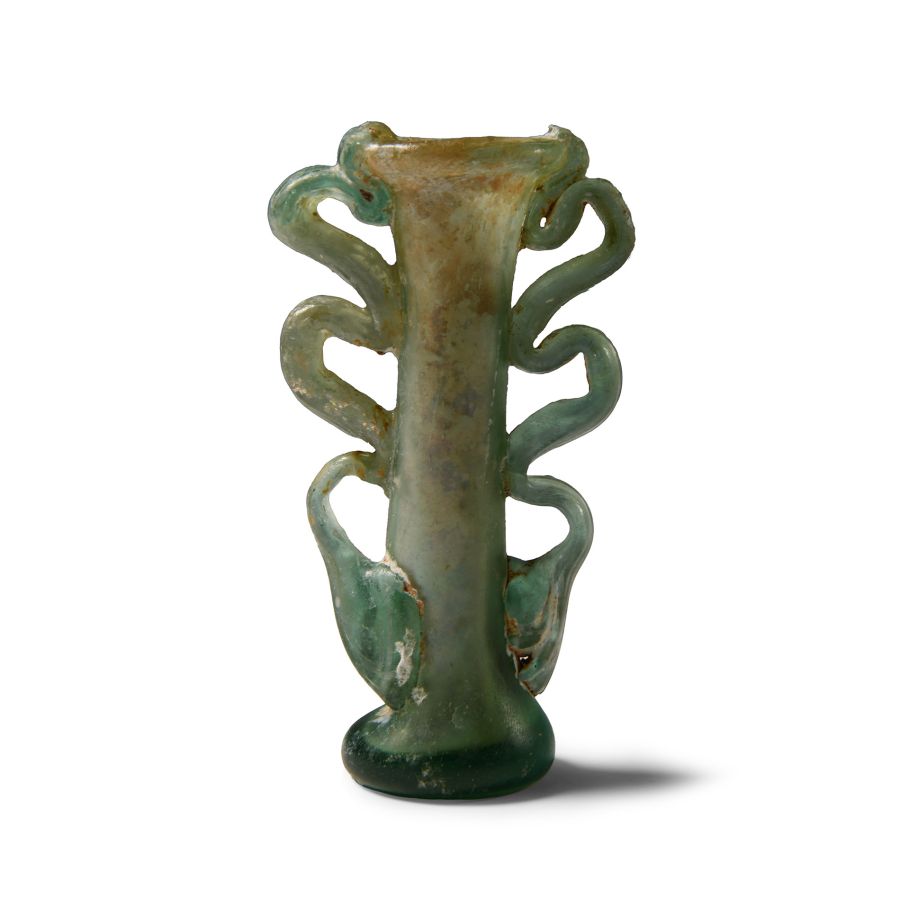
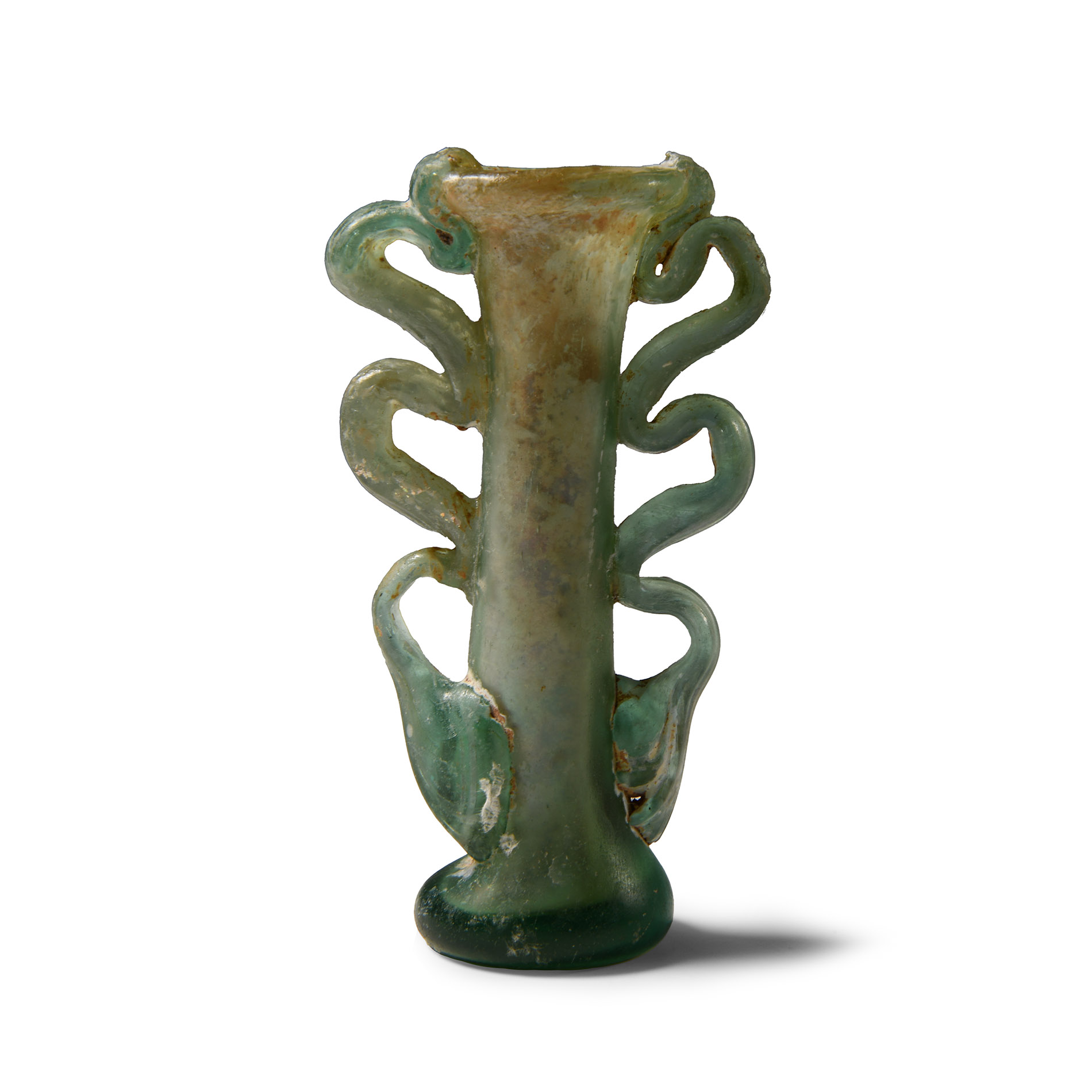
Roman Glass Unguentarium with Waves
1ST-3RD CENTURY A.D.
4 in. (62.4 grams, 10.2 cm).
With bulbous flat-bottomed base, tall neck and rolled everted rim applied trail zigzag handles to each side.
ProvenanceEx property of a late Japanese collector, 1970-2000s.
CONDITIONTimeLine Auctions follows a vetting process to ensure the authenticity and legality of all items, reinforcing our commitment to integrity and responsible trading. Each antiquity, antique, and coin lot undergoes thorough examination by a vetting committee of at least ten external specialists, professional trade association members, scientists, and archaeologists: Our Vetting Process
AUCTIONS:
TimeLine is a leading auction house specialising in antiquities, ancient art, collectables, natural history, coins, medals, and books. Our auctions offer museums, collectors, historians, and enthusiasts the opportunity to acquire unique and historically significant pieces.
LOT 0698
Roman Glass Unguentarium with Waves
Estimate £300 - 400€350 - 460 (for guidance only)$410 - 540 (for guidance only)
-
Roman Lead Coffin Panel with Sphinx, Medusa and Dolphins
2nd-3rd century A.DSold for (Inc. bp): £1,430
Decorated with a high-relief pattern comprising sphinxes surrounded by dolphins and masks of Medusa surrounded by laurel leaves all between Corinthian columns; ropework and floral border strips with laurel leaves above and lip below the upper edge. 13.65 kg, 80 cm
Acquired 1970s-early 1990s. Property of a North American collector. London collection, 2016. -
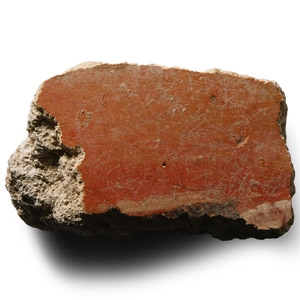
Roman 'Pompeii Red' Fresco Wallplaster
1st century A.D.Sold for (Inc. bp): £72
Fragment of wall plaster with rendered surface painted red with yellow and white detailing to the edge; impression of timber laths to the reverse; old inked inscription: 'SIDI BOU ALI' to verso. 234 grams, 11.3 cm
Acquired early 1900s. Swiss family collection. Acquired at Birmingham Coin & Antiquities Fair, circa 2004. Ian Wilkinson collection, Nottinghamshire, UK.
The ancient city of Sousse (today Sidi Bou Ali) was the Roman centre of Ulssipira, famous for its wonderful mosaics. However, as across Roman Tunisia, remains of frescoed houses have also been preserved. The ‘Pompeian red’ was used for walls as well as columns, such as those in the ‘house of the red columns’, Acholla, where the peristyle was formed by a narrow courtyard with stuccoed columns painted red. -
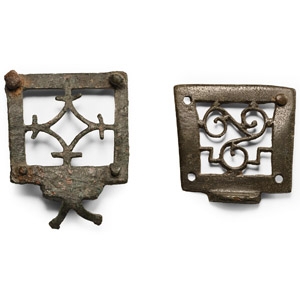
Roman Openwork Military Belt Mount Group
2nd century A.D.Sold for (Inc. bp): £98
Each with a trapezoidal frame and openwork design: one a coiled triskele, the other a lozenge with cruciform spurs; from a military belt. 13.2 grams total, 28-35 mm
Property of the vendor's grandfather, thence by family descent, circa 1985. From the private collection of a New York, USA gentleman
