
Loading, please wait...
LOT 0968
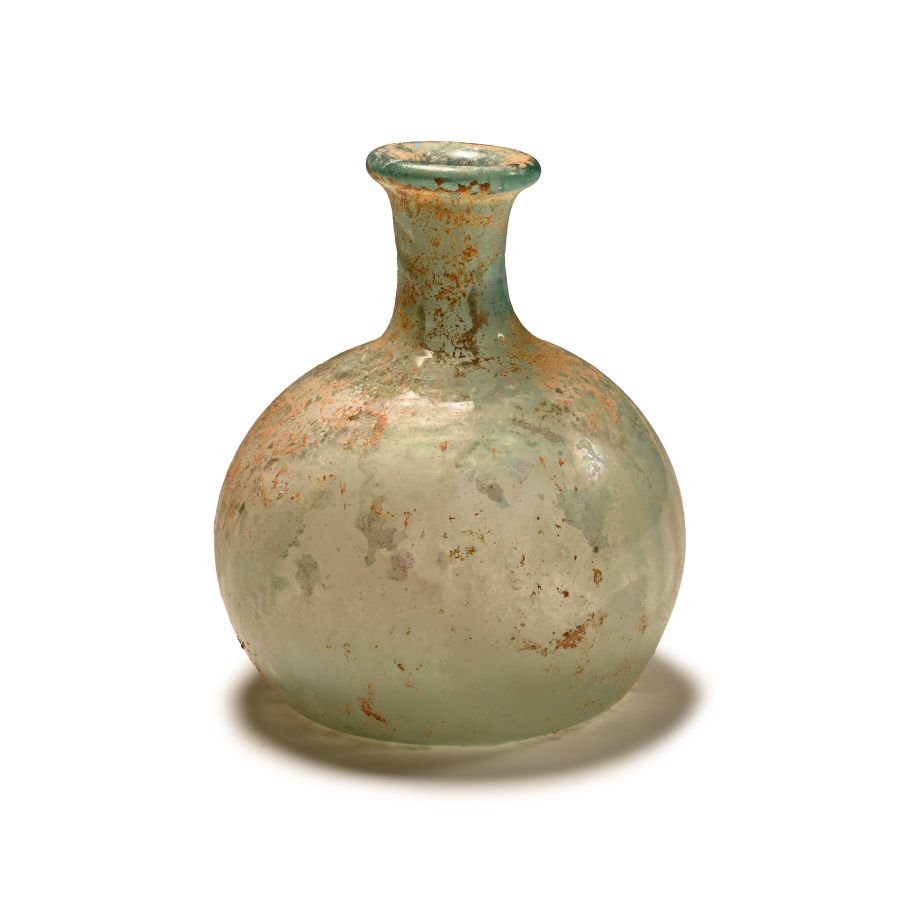
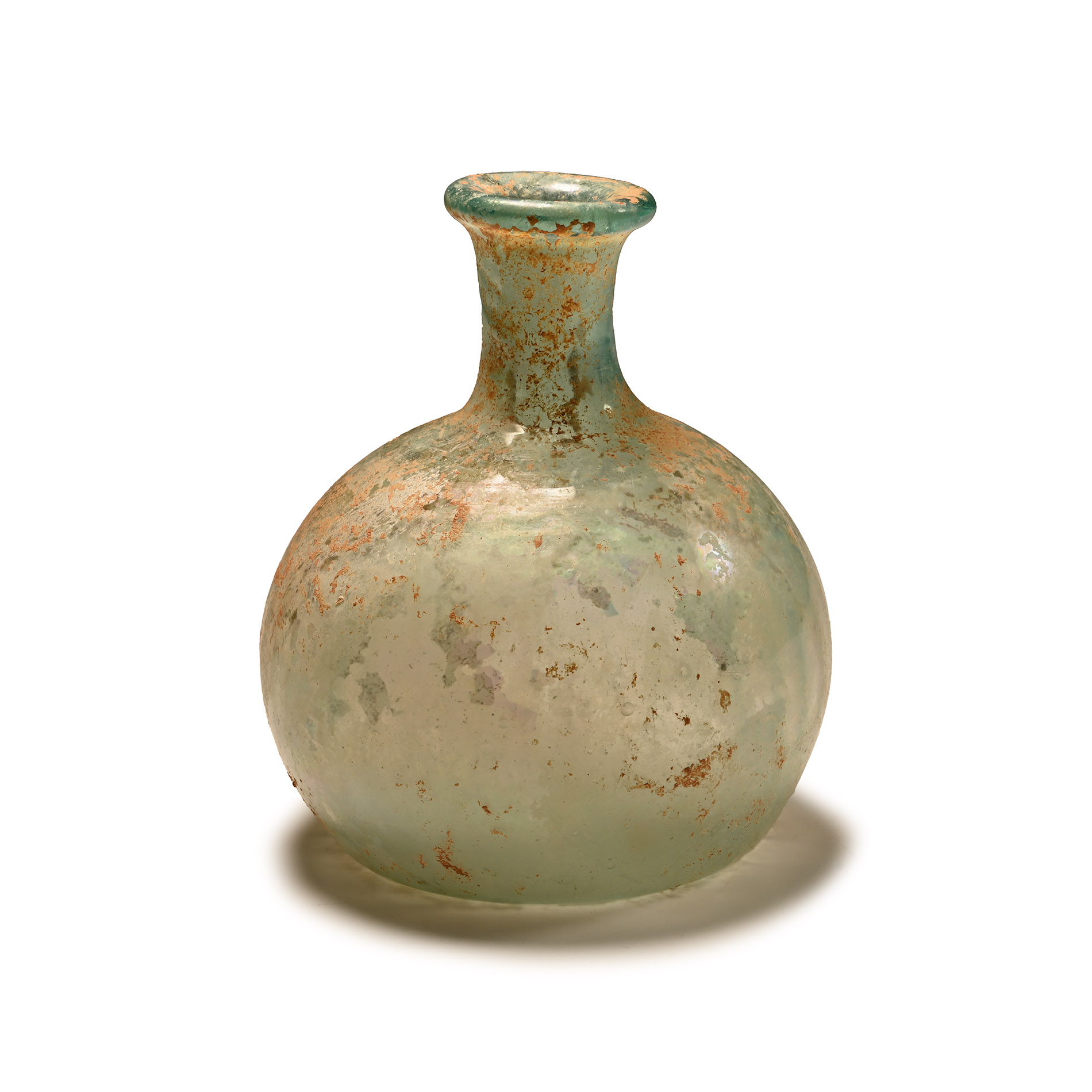
Roman Glass Toilet Bottle
1ST CENTURY A.D.
4 in. (73 grams, 10 cm).
With globular body, short everted rim and cylindrical neck, concave base.
ProvenanceEx London, UK, collection, 1980-1990s.
LiteratureCf. Whitehouse, D., Roman Glass in the Corning Museum of Glass, vol.1, New York, 1997, item 190, for the type.
FootnotesThe bottle should be associated with Isings form 6 or Tommaso type 7. Small bottles of this typology are among the earliest known blown glass. The everted rim seems to distinguish examples made in Italy and the western Mediterranean provinces from those of the Eastern Mediterranean, on which the rim is usually folded in the form of a flange.
CONDITIONTimeLine Auctions follows a vetting process to ensure the authenticity and legality of all items, reinforcing our commitment to integrity and responsible trading. Each antiquity, antique, and coin lot undergoes thorough examination by a vetting committee of at least ten external specialists, professional trade association members, scientists, and archaeologists: Our Vetting Process
AUCTIONS:
TimeLine is a leading auction house specialising in antiquities, ancient art, collectables, natural history, coins, medals, and books. Our auctions offer museums, collectors, historians, and enthusiasts the opportunity to acquire unique and historically significant pieces.
-
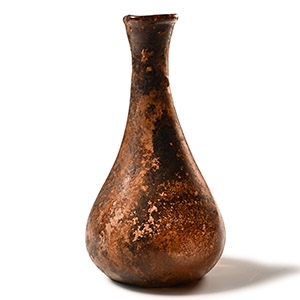
Roman Aubergine Glass Flask
1st-3rd century A.D.Estimate: £400 - 600 (+bp*)
Opening Bid: £200
With piriform body, dimpled base, tapering tubular neck with pinched and everted rolled rim. 19 grams, 11.5 cm
From an important London, UK, collection, 1970-1990s. -
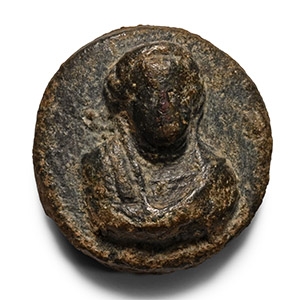
Roman Bronze Military Applique
1st-2nd century A.D.Sold for (Inc. bp): £169
Discoid in plan with low-relief facing bust. 4.75 grams, 16 mm
Acquired 1980-2015. Ex Abelita family collection. -
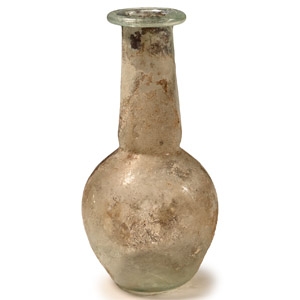
Roman Translucent Glass Vessel
1st-2nd century A.D.Sold for (Inc. bp): £195
With piriform body and dimple base, broad tapering neck, rolled and everted rim. 63 grams, 14.6 cm
Ex London, UK, collection, 1980-1990s.
