
Loading, please wait...
LOT 0826
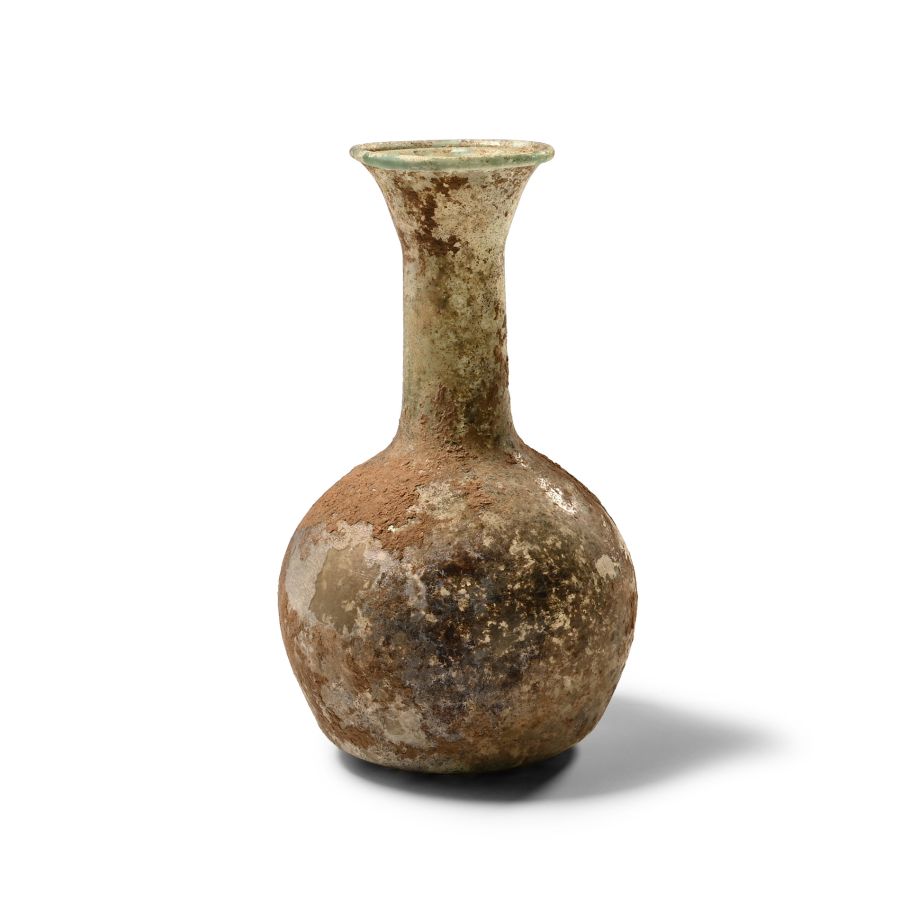
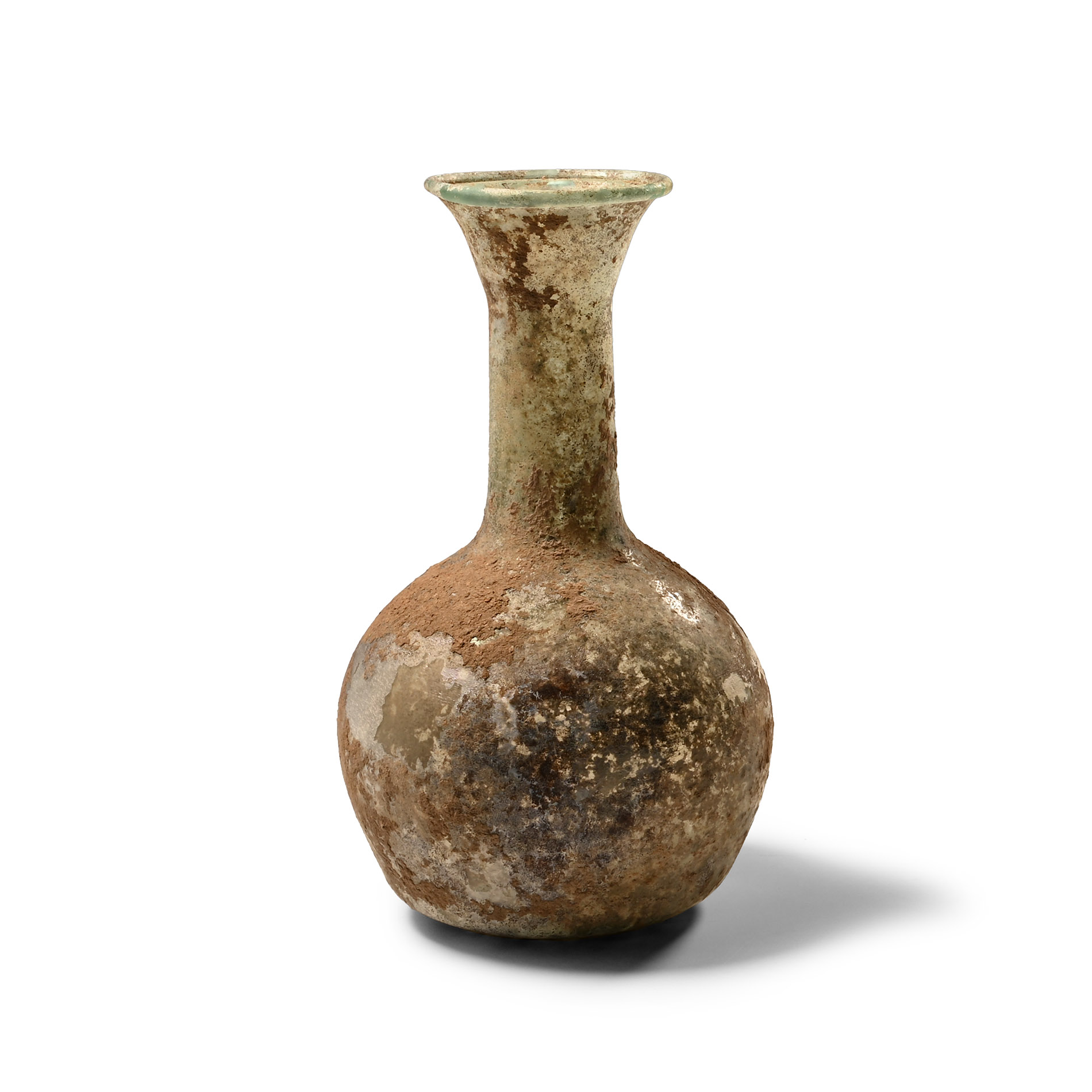
Roman Glass Toilet Bottle
1ST CENTURY B.C.-1ST CENTURY A.D.
5 1/2 in. (61 grams, 14 cm).
With globular body, everted rim, cylindrical neck, rounded shoulder merging with concave wall, rounded base.
ProvenanceEx London, UK, collection, 1980-1990s.
LiteratureCf. Whitehouse, D., Roman Glass in the Corning Museum of Glass, vol.1, New York, 1997, item 194, for the type.
FootnotesThis toilet bottle could be associated with the Isings form 6 and De Tommaso type 7. These small bottles are among the earliest known blown glass. The everted rim seems to distinguish examples made in Italy and the western Mediterranean provinces from those of the Eastern Mediterranean, on which the rim is usually folded in the form of a flange.
CONDITIONTimeLine Auctions follows a vetting process to ensure the authenticity and legality of all items, reinforcing our commitment to integrity and responsible trading. Each antiquity, antique, and coin lot undergoes thorough examination by a vetting committee of at least ten external specialists, professional trade association members, scientists, and archaeologists: Our Vetting Process
AUCTIONS:
TimeLine is a leading auction house specialising in antiquities, ancient art, collectables, natural history, coins, medals, and books. Our auctions offer museums, collectors, historians, and enthusiasts the opportunity to acquire unique and historically significant pieces.
LOT 0826
Roman Glass Toilet Bottle
Estimate £150 - 200€170 - 230 (for guidance only)$200 - 270 (for guidance only)
-
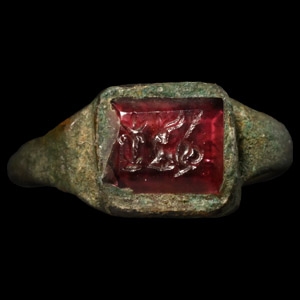
Roman Bronze Ring with Recumbent Deer Facing Back Gemstone
2nd-4th century A.D.Sold for (Inc. bp): £124
With a slender D-section hoop, square raised bezel set with red carnelian intaglio, engraved with a recumbent deer before a small tree, its head resting on its back and a long arrow piercing its back. 2.30 grams, 21.32 mm overall, 16.00 mm internal diameter (approximate size British K, USA 5 1/4, Europe 9.95, Japan 9)
Private collection formed since the 1940s. UK art market. Property of an Essex, UK, gentleman.
The iconography may refer to a version of a tradition in which Heracles shot the Ceryneian hind before it crossed the river Ladon. -
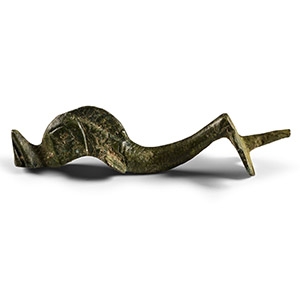
Roman Bronze Dolphin Furniture Mount
2nd-3rd century A.D.Sold for (Inc. bp): £85
Formed with undulating profile, flange base with dentilled edge and fixing spike, mouth terminating in a triangular support pad. 36.5 grams, 86 mm
Ex German art market, 2000s. Acquired from an EU collector living in London. From the collection of Surrey, UK, gentleman. -
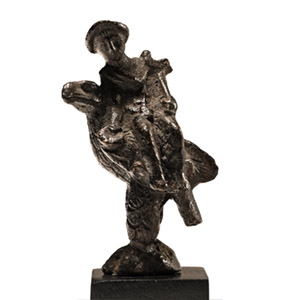
Roman Bronze Statuette of Young Mercury on the Eagle of Jupiter
2nd century A.D.Sold for (Inc. bp): £260
Modelled in the round as a figure of an eagle perching with its head turned to the right; on its back, the god Mercury with caduceus on his left arm and petasos on his head; mounted on a custom-made stand. 63.3 grams total, 68 mm including stand
From a collection acquired on the UK art market from various auction houses and collections mostly before 2000. From an important Cambridgeshire estate; thence by descent.
The figure of the messenger-god Mercury seated on the pinion of the eagle possibly relates to a mythic incident. Similar imagery was used in respect of Jupiter in scenes where the god was supposed to welcome a newly-deified emperor into the pantheon: see Metropolitan Museum of Art accession no. 32.142.2, for a sardonyx instance of this motif.
