
Loading, please wait...
LOT 0693
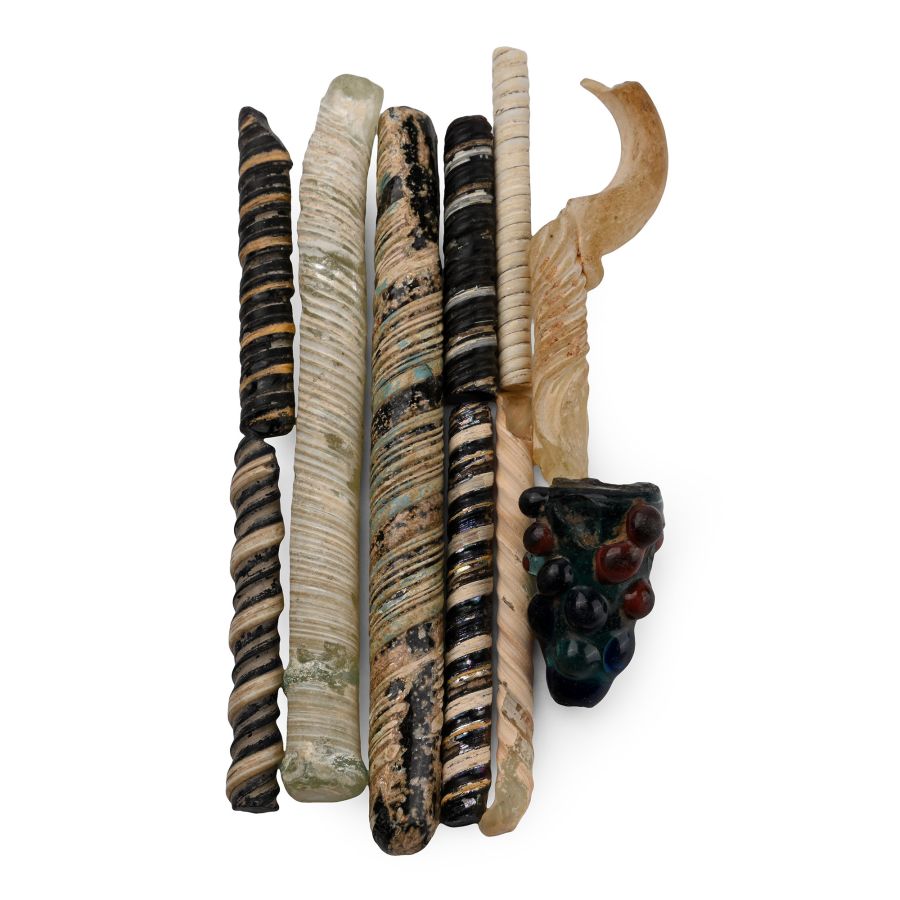
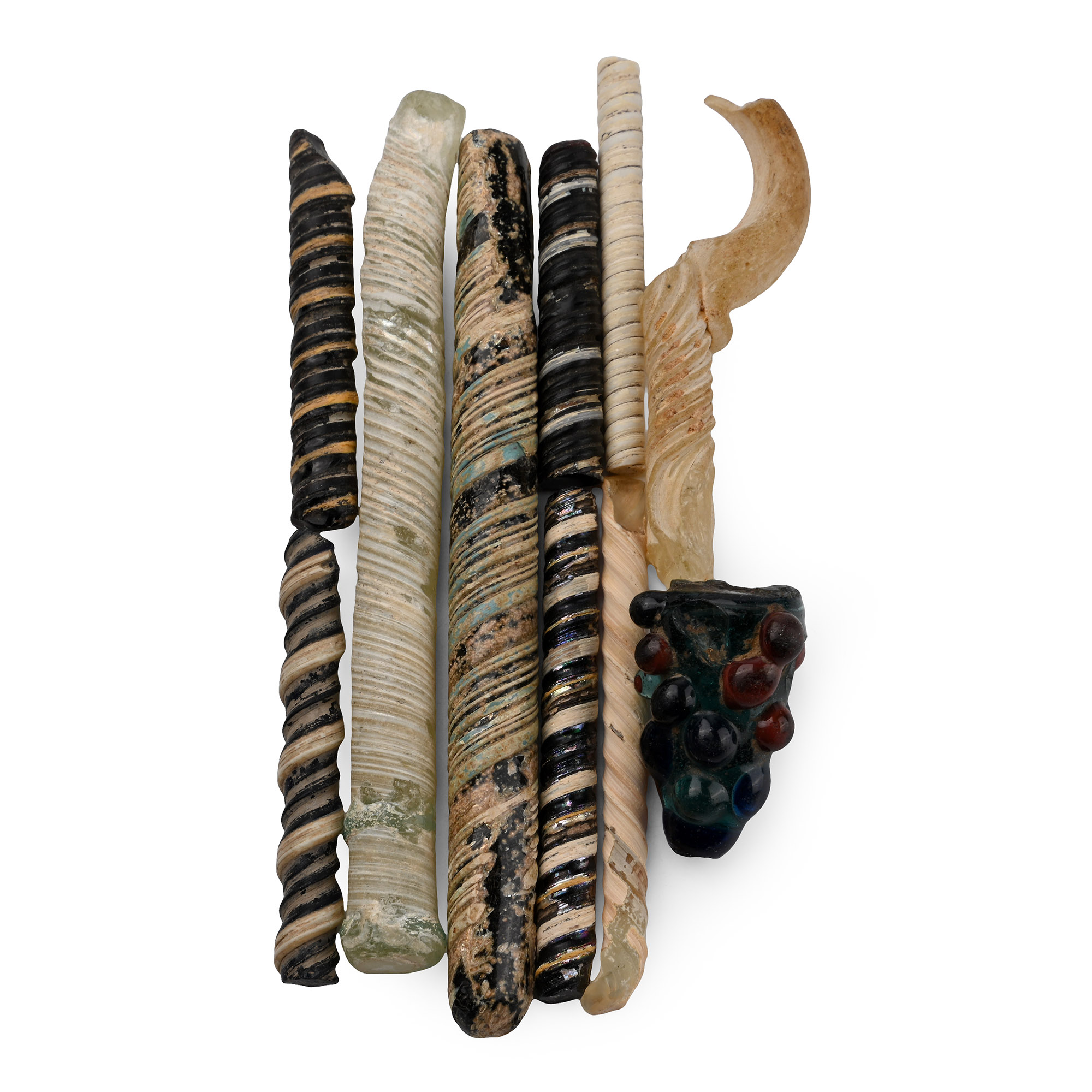
Roman Glass Stirring Rod Group
2ND-3RD CENTURY A.D.
1 1/4 - 4 3/8 in. (95 grams total, 3.3-11.3 cm).
Mixed group of glass rods and fragments, each with applied ornament in trails or granules. [10]
Provenancewith Archaeologia, Switzerland, before 1983.
Ex private North American collection.
London private collection, 2016.
TimeLine Auctions follows a vetting process to ensure the authenticity and legality of all items, reinforcing our commitment to integrity and responsible trading. Each antiquity, antique, and coin lot undergoes thorough examination by a vetting committee of at least ten external specialists, professional trade association members, scientists, and archaeologists: Our Vetting Process
AUCTIONS:
TimeLine is a leading auction house specialising in antiquities, ancient art, collectables, natural history, coins, medals, and books. Our auctions offer museums, collectors, historians, and enthusiasts the opportunity to acquire unique and historically significant pieces.
-
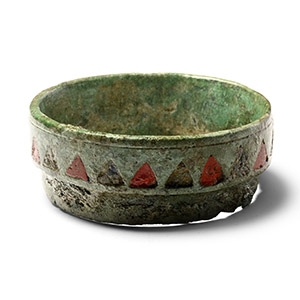
'The Kniveton' Romano-British Enamelled Bronze Drinking Horn Rim
2nd century A.D.Sold for (Inc. bp): £494
A sub-circular rim, emulating the natural shape of a cow-horn aperture, with alternating triangular inlaid cells of red and blue enamel, the lower internal socket with the remains of three fixing rivets. 52 grams, 53 mm
Found whilst searching with a metal detector in Kniveton, Derbyshire Dales, East Midlands, UK. Accompanied by a copy of the British Museum's Portable Antiquities Scheme (PAS) report no.WWID-7C901E.
The British Museum's Portable Antiquities Scheme (PAS) states: 'This is a find of note and has been designated: County / local importance'. -
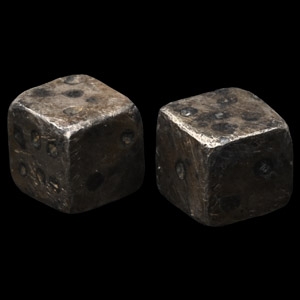
Roman Silver Niello Inlaid Gaming Dice Pair
1st-4th century A.D.Sold for (Inc. bp): £312
Pair of cuboid dice, each with niellod markings disposed 1:6, 2:4, 3:5. 8.12 grams total, 7 mm each
Ex German art market, 2000s. Acquired from an EU collector living in London. From the collection of a Surrey, UK, gentleman. -
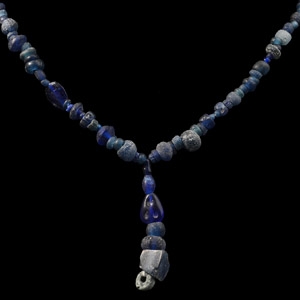
Roman Deep Blue Glass Bead Necklace String
1st-4th century A.D. and laterSold for (Inc. bp): £33
Restrung designer necklace string of biconvex, oblate and other types. 13.9 grams, 33.5 cm
London, UK, collection, 2000s.
