
Loading, please wait...
LOT 0960
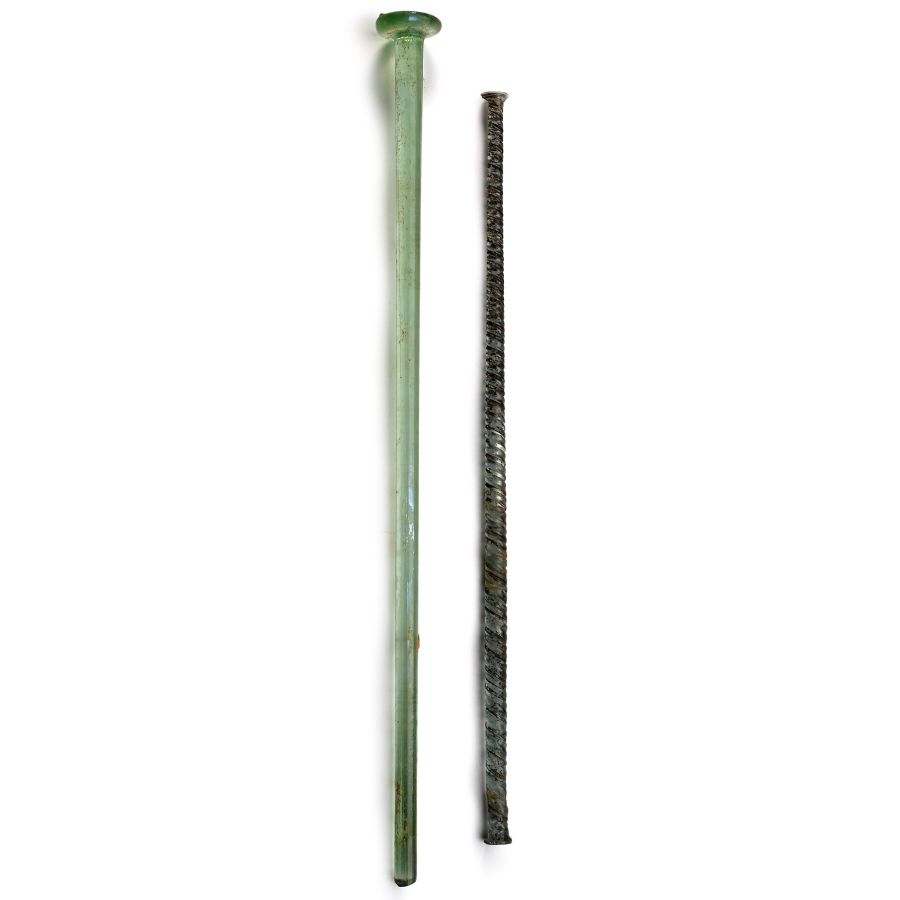
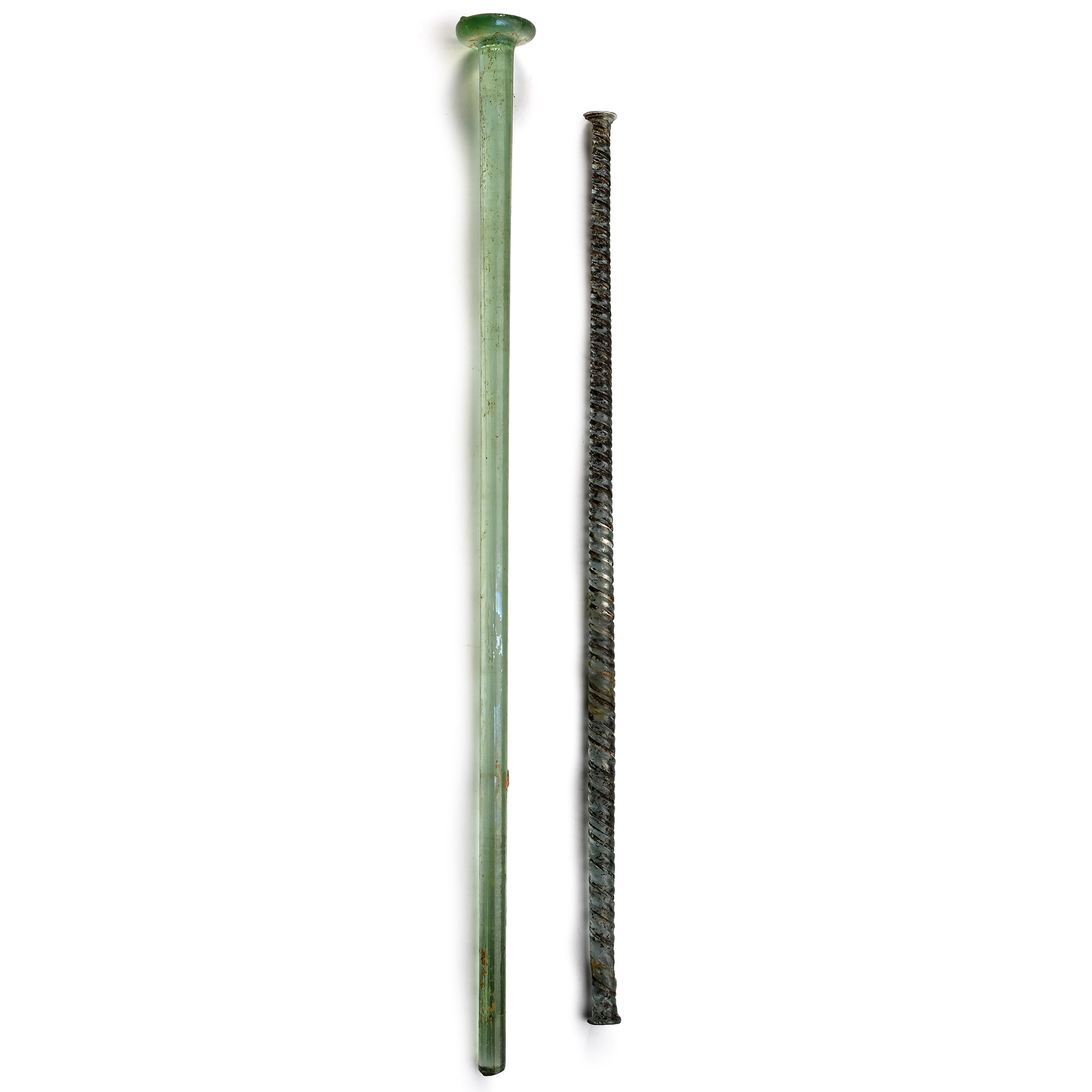
Roman Glass Stirring Rod Group
1ST-4TH CENTURY A.D.
7 7/8 - 8 7/8 in. (31 grams total, 20-22.5 cm).
Comprising: a long aqua glass tapering rod with disc finial; a shorter rod with small disc finial and applied twisted trail detailing. [2, No Reserve]
Provenancewith Archaeologia, Switzerland, before 1983.
Ex private North American collection.
London private collection, 2016.
TimeLine Auctions follows a vetting process to ensure the authenticity and legality of all items, reinforcing our commitment to integrity and responsible trading. Each antiquity, antique, and coin lot undergoes thorough examination by a vetting committee of at least ten external specialists, professional trade association members, scientists, and archaeologists: Our Vetting Process
AUCTIONS:
TimeLine is a leading auction house specialising in antiquities, ancient art, collectables, natural history, coins, medals, and books. Our auctions offer museums, collectors, historians, and enthusiasts the opportunity to acquire unique and historically significant pieces.
-
.jpg)
Roman Green Glass Bead Necklace String
1st-4th century A.D. and laterSold for (Inc. bp): £65
Restrung designer necklace string of tubular, tabular, oblate and other types with annular pendant centrepiece. 10.9 grams, 37.5 cm
London, UK, collection, 2000s. -
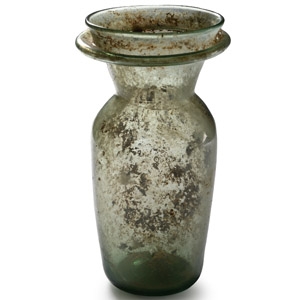
Roman Glass Bottle
3rd-4th century A.D.Estimate: £200 - 300 (+bp*)
Opening Bid: £110
With dimpled base, flared neck and carinated flange below the mouth, rounded rim. 102 grams, 12.9 cm
From an important London collection of glass, 1990s. This lot is accompanied by an illustrated lot declaration signed by the Head of the Antiquities Department, Dr Raffaele D'Amato.
The vessel's shape is a simplified version of a cup decorated with a zigzag line. This is characteristic of Palestinian workshops. Two similar vessels, similar to this one, have been found in Palestine: one in Beit Fajjar, dating to the late 3rd-4th century CE, the other in an unidentified location. -
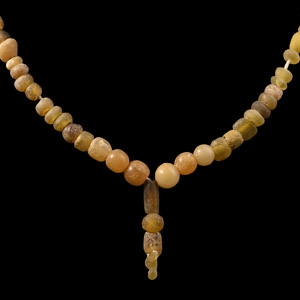
Roman Yellow Glass Bead Necklace String
1st-4th century A.D. and laterSold for (Inc. bp): £59
Restrung designer necklace string of spherical, oblate and other types. 25.4 grams, 38 cm
London, UK, collection, 2000s.
