
Loading, please wait...
_900x900.jpg "Roman Glass Pendant Pair")
_200x200.jpg "Roman Glass Pendant Pair")
.jpg "Roman Glass Pendant Pair")
LOT 0667
Roman Glass Pendant Pair
1ST-4TH CENTURY A.D.
5/8 in. (1.29 grams total, 15-16 mm).
A pair of bullae with integral loops, both showing iridescence. [2, No Reserve]
ProvenanceCollected from 1970-1999.
From the collection of the late Mr S.M., London, UK.
Freeborn Roman boys wore bullae until they reached adulthood, being given them eight days after their birth, on the same day that they were named. This important marked boys acceptance into the family. Bullae made of gold would only have been affordable to the members of the elite, whilst the lower classes wore pendants made of less expensive materials. The feminine equivalent was a lunar (crescentic) pendant.
CONDITIONTimeLine Auctions follows a vetting process to ensure the authenticity and legality of all items, reinforcing our commitment to integrity and responsible trading. Each antiquity, antique, and coin lot undergoes thorough examination by a vetting committee of at least ten external specialists, professional trade association members, scientists, and archaeologists: Our Vetting Process
AUCTIONS:
TimeLine is a leading auction house specialising in antiquities, ancient art, collectables, natural history, coins, medals, and books. Our auctions offer museums, collectors, historians, and enthusiasts the opportunity to acquire unique and historically significant pieces.
-
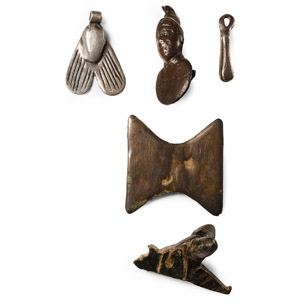
Roman and Earlier Silver and Bronze Artefact Collection
1st millennium B.C.-4th century A.D.Sold for (Inc. bp): £169
Comprising: amuletic pendant in the form of a fly with hatched wings; amuletic wishbone pendant; figure fragment; mount formed as the bust of Minerva with crested helmet; Bronze Age butterfly toggle. 34.5 grams total, 23-35 mm
From the collection of the famous author, writer and speaker, Gordon Bailey, Essex, UK; formed since 1968. -
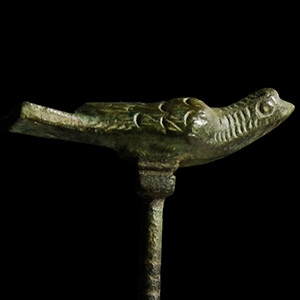
Roman Bronze Distaff with Bird Finial
4th-6th century A.D.Sold for (Inc. bp): £91
Comprising a slender stem with collar and baluster above the attachment loop; perching bird finial with incised plumage detailing. 28 grams, 18.5 cm
From a collection acquired on the UK art market from various auction houses and collections mostly before 2000. From an important Cambridgeshire estate; thence by descent. -
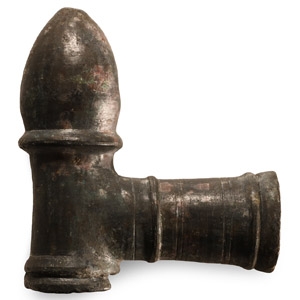
Roman Bronze Acorn-Shaped Chair Back Finial
3rd-4th century A.D. or laterSold for (Inc. bp): £20
Comprising a tubular vertical fitting with perpendicular tube and flared socket, acorn finial. 155 grams, 86 mm
From the private collection of M. Cummings, Lincolnshire, UK, 1990s.
