
Loading, please wait...
LOT 0921
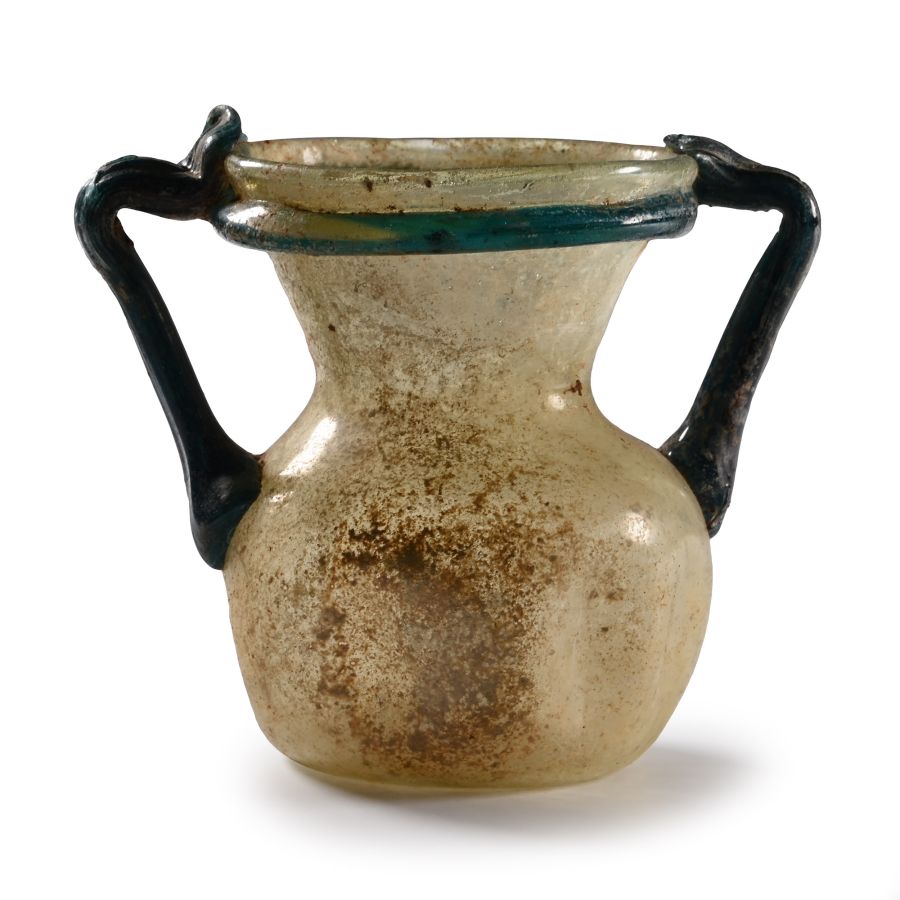
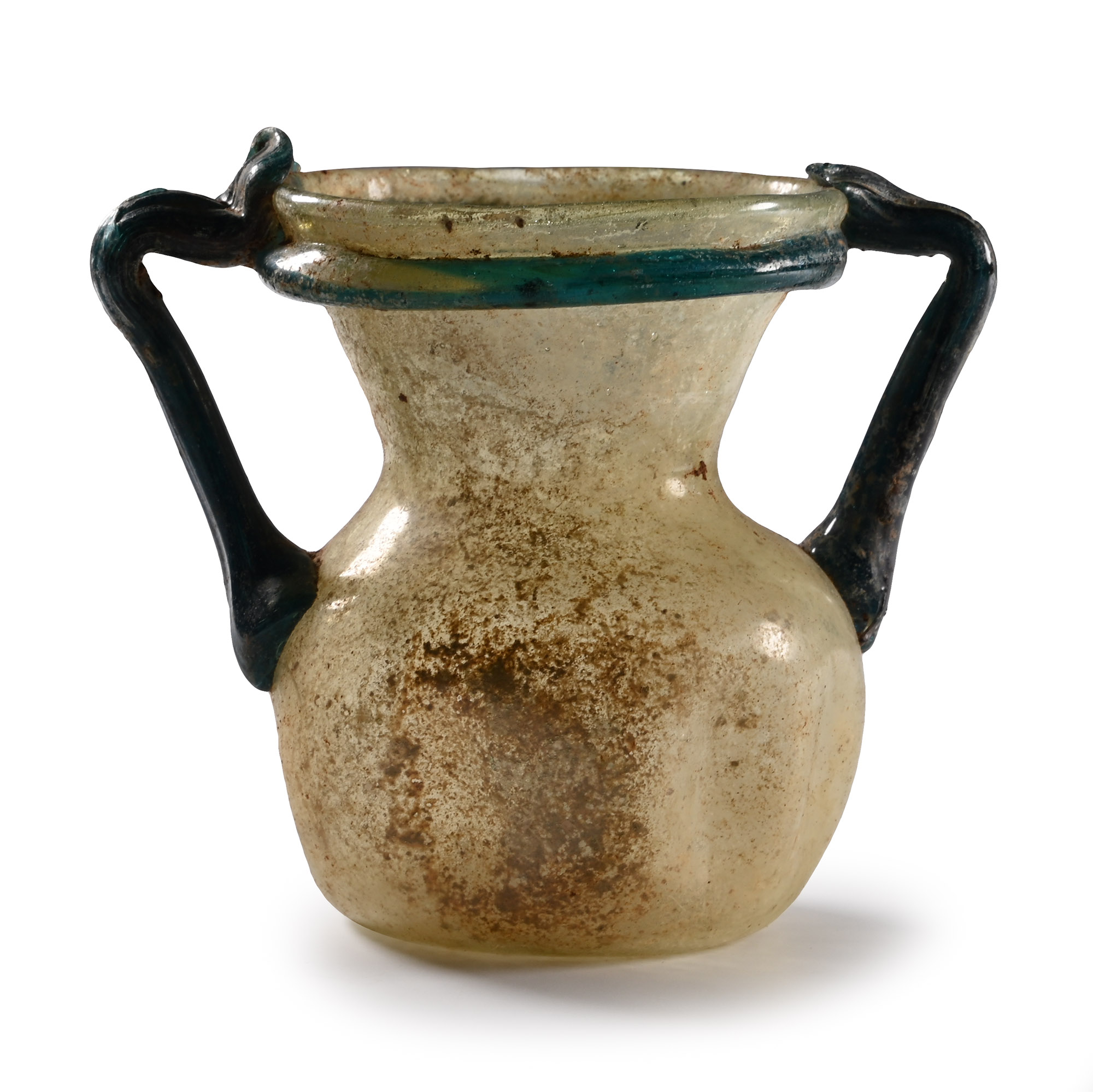
Roman Glass Handled Jar
4TH CENTURY A.D.
3 in. (39.4 grams, 78 mm wide).
With dimpled base, bulbous body with opposed dimples to the sidewall, applied flange to the neck, applied trails forming lateral handles.
ProvenanceFrom an important London collection of glass, 1990s.
This lot is accompanied by an illustrated lot declaration signed by the Head of the Antiquities Department, Dr Raffaele D'Amato.
See Whitehouse, D., Roman Glass: The Corning Museum of Glass, volume I, New York, 1997, items 297-298, for similar.
FootnotesThese biconical jars with opposed handles, rounded lips and overhanging tubular flanges, are typical of the late Roman period, There are Syro-Palestinian types, with similar examples having been found in Beit Fajjar, West Bank, Palestine.
CONDITIONTimeLine Auctions follows a vetting process to ensure the authenticity and legality of all items, reinforcing our commitment to integrity and responsible trading. Each antiquity, antique, and coin lot undergoes thorough examination by a vetting committee of at least ten external specialists, professional trade association members, scientists, and archaeologists: Our Vetting Process
AUCTIONS:
TimeLine is a leading auction house specialising in antiquities, ancient art, collectables, natural history, coins, medals, and books. Our auctions offer museums, collectors, historians, and enthusiasts the opportunity to acquire unique and historically significant pieces.
LOT 0921
Roman Glass Handled Jar
Estimate £300 - 400€350 - 460 (for guidance only)$410 - 540 (for guidance only)
-
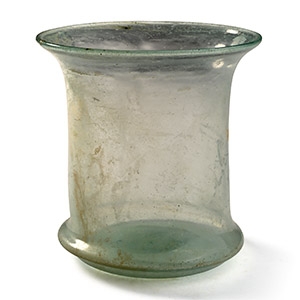
Roman Pale Green Glass Cup
Circa 3rd century A.D.Sold for (Inc. bp): £390
With slightly dimpled base, carinated flange to foot and tubular body, flared rim. 54 grams, 85 mm
From an important collection of glass, London, UK, 1990s. -
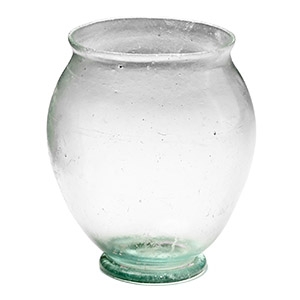
Roman Pale Green Glass Jar
2nd-3rd century A.D.Sold for (Inc. bp): £546
With applied disc base, flared neck and rounded rim. 62.53 grams, 98 mm
Acquired Christie's, London, Antiquities, Works of Art and Important Renaissance Bronzes, Plaquettes and Limoges Enamels, 8 July 1981, no.12 (part). From a private Wiltshire, UK, collection. Accompanied by a copy of the relevant Christie's catalogue pages. -
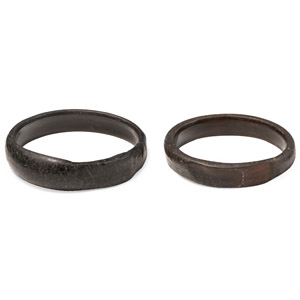
Roman Glass Bracelet Pair
1st-4th century A.D.Sold for (Inc. bp): £65
A matching pair of thick black glass bangles with rounded edges. 75 grams total, 73-79 mm
Ex German art market, 2000s. Acquired from an EU collector living in London. From the collection of a Surrey, UK, gentleman.
