
Loading, please wait...


LOT 0154
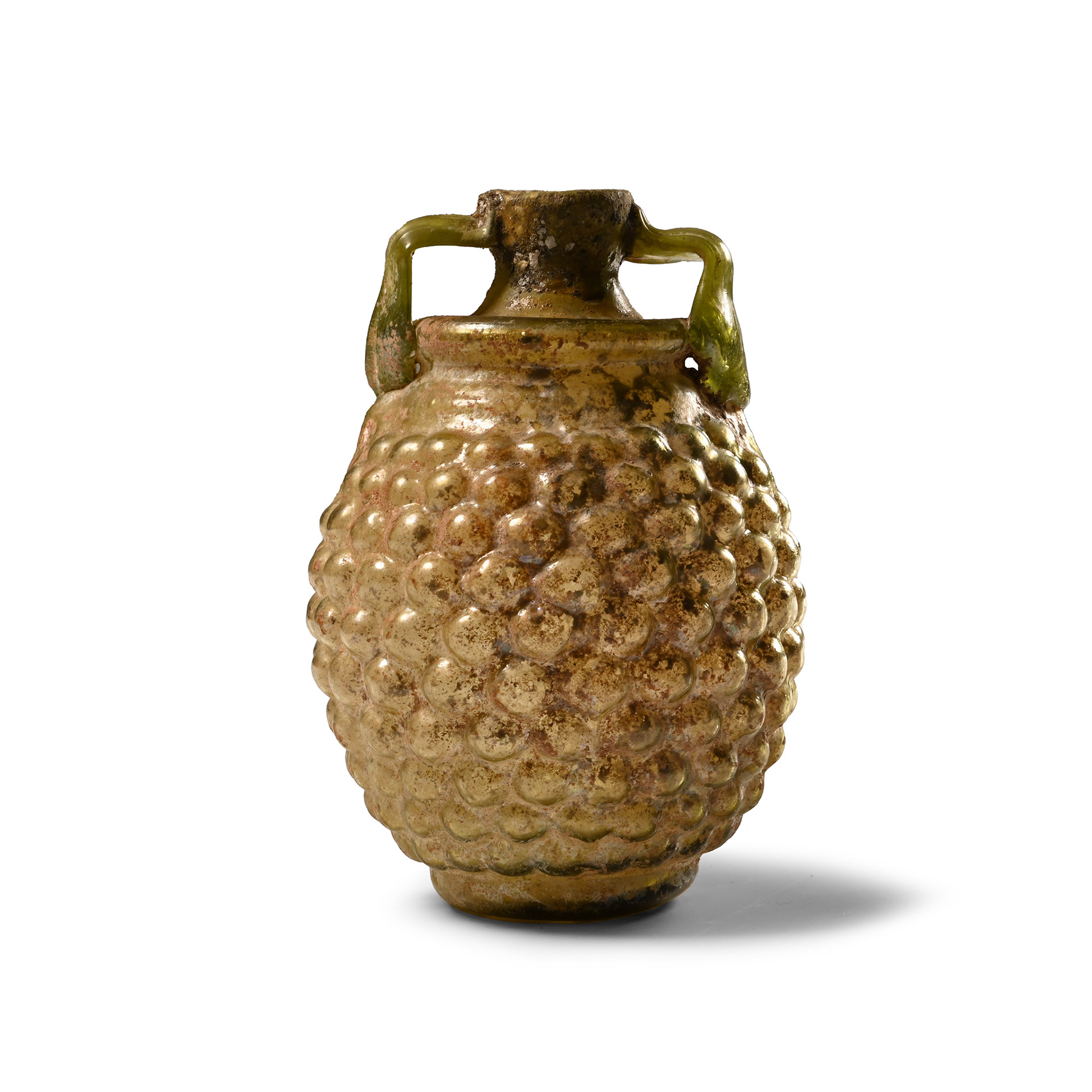
Roman Glass Grape Flask
3RD CENTURY A.D.
3 7/8 in. (50 grams, 97 mm).
Narrow mouth with squared rim, short cylindrical neck extending to a wide shoulder with applied strap handles, the ovoid body moulded with ten rows of stylised grapes; some iridescence; old collector''s label to underside '4187 TD'.
ProvenanceFrom the private collection of a French Count in the 19th century.
Ex Thierry de Maigret, April 2010.
Cf. Whitehouse, D., Roman Glass in the Corning Museum of Glass, vol.2, New York, 2001, item 631, for type.
FootnotesThe neck has the appearance of having been reduced in height and ground off flat at the rim, while the applied handles are an unusual feature on this type of vessel. The examples in the Corning Museum have a much taller neck and flared rim to the mouth.
CONDITIONTimeLine Auctions follows a vetting process to ensure the authenticity and legality of all items, reinforcing our commitment to integrity and responsible trading. Each antiquity, antique, and coin lot undergoes thorough examination by a vetting committee of at least ten external specialists, professional trade association members, scientists, and archaeologists: Our Vetting Process
AUCTIONS:
TimeLine is a leading auction house specialising in antiquities, ancient art, collectables, natural history, coins, medals, and books. Our auctions offer museums, collectors, historians, and enthusiasts the opportunity to acquire unique and historically significant pieces.
-
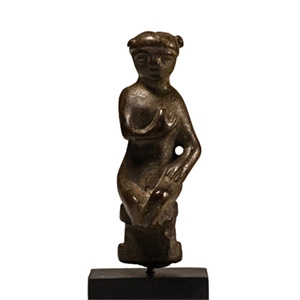
Gallo-Roman Bronze Statuette of Venus
2nd-3rd century A.D.Sold for (Inc. bp): £247
Modelled in the round figure of Venus (Aphrodite) seated nude on a columnar feature, her legs crossed, left hand placed on her thigh and right hand cupping her breasts; naive facial detailing with exaggerated lentoid eyes, hair parted in the middle and gathered in bunches; mounted on a custom-made stand. 152 grams total, 86 mm including stand
From a collection acquired on the UK art market from various auction houses and collections mostly before 2000. From an important Cambridgeshire estate; thence by descent. -
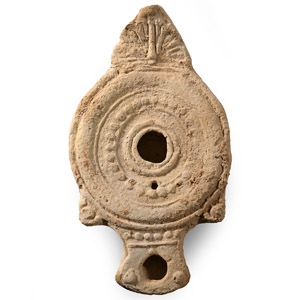
Roman Ceramic Oil Lamp with Reflector
1st-2nd century A.D.Sold for (Inc. bp): £52
Shallow discus with concentric circles and a raised pellets, a lug on each side of the nozzle; triangular reflector with foliate; concentric circles to the base; repaired. 90 grams, 11.9 cm
Ex Mothersole collection, Scotland, 1970s. -
.jpg)
Roman Bronze Flying Phallus
2nd-3rd century A.D.Sold for (Inc. bp): £546
Amuletic model phallus with swept lateral wings; mounted on a custom-made stand. 99 grams total, 67 mm high including stand
From a collection acquired on the UK art market from various auction houses and collections mostly before 2000. From an important Cambridgeshire estate; thence by descent.
