
Loading, please wait...
LOT 0114
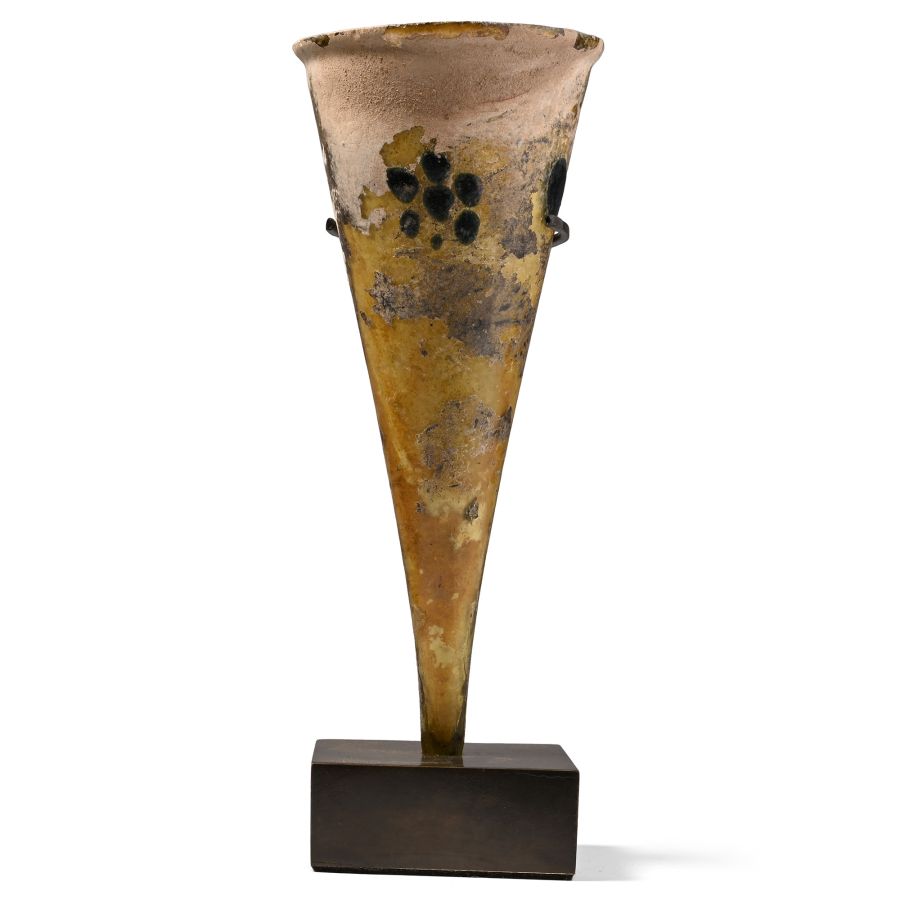
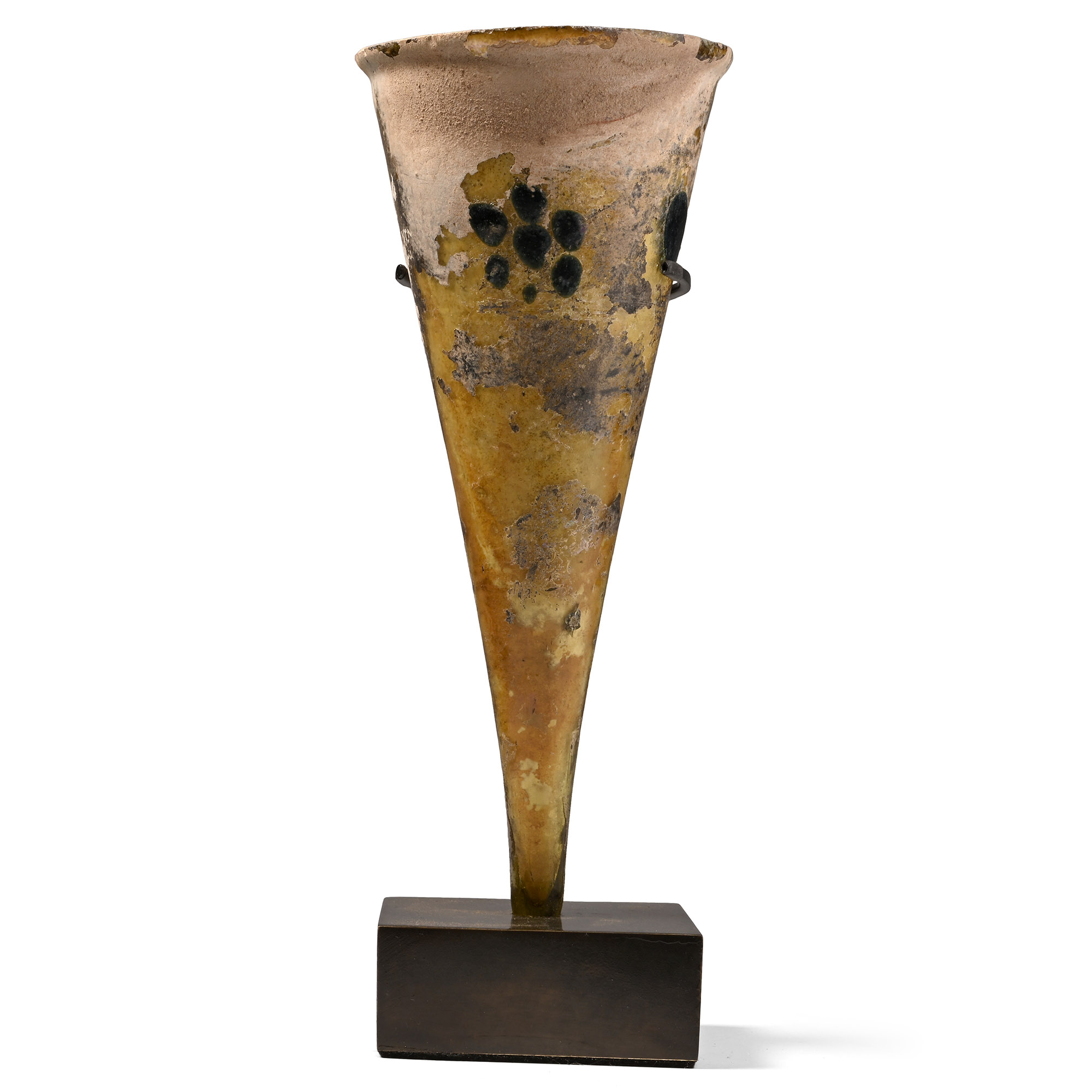
Roman Glass Flask with Dotted Rosettes
2ND CENTURY B.C.-1ST CENTURY A.D.
8 1/8 in. (254 grams total, 20.8 cm).
Conical body with rounded base, applied clusters of blue glass around the body, everted rim; traces of iridescence; mounted on a custom-made stand.
ProvenanceFrom an important collection of glass, London, UK, 1990s.
LiteratureCf. Auth, H.S., Ancient Glass at the Newark Museum, New Jersey, 1976, items 200, and 201.
CONDITIONTimeLine Auctions follows a vetting process to ensure the authenticity and legality of all items, reinforcing our commitment to integrity and responsible trading. Each antiquity, antique, and coin lot undergoes thorough examination by a vetting committee of at least ten external specialists, professional trade association members, scientists, and archaeologists: Our Vetting Process
AUCTIONS:
TimeLine is a leading auction house specialising in antiquities, ancient art, collectables, natural history, coins, medals, and books. Our auctions offer museums, collectors, historians, and enthusiasts the opportunity to acquire unique and historically significant pieces.
LOT 0114
Roman Glass Flask with Dotted Rosettes
Estimate £1,000 - 1,400€1,160 - 1,620 (for guidance only)$1,350 - 1,890 (for guidance only)
-
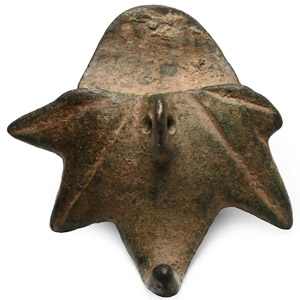
Roman Bronze Vine Leaf Horse Harness Fitting
1st-2nd century A.D.Sold for (Inc. bp): £46
Mount or harness fitting in the form of a vine leaf displaying simple stylised detailing to the front face, together with a raised perforated lug and scooped plaque above; suspension loop to the reverse. 55.5 grams, 58 mm
Found Cambridgeshire, UK, in the 1990s. -
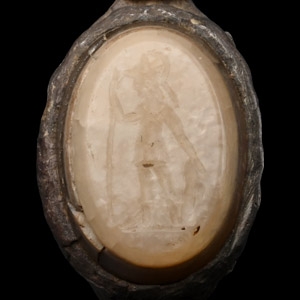
Roman Silver Ring with Mars Gemstone
2nd-3rd century A.D. and laterSold for (Inc. bp): £91
With D-section hoop expanding at the shoulders to snake's heads supporting oval bezel with indented sides; later large agate intaglio engraved with a standing figure of Mars (Ares) wearing a Corinthian helmet and holding spear and shield. 12.92 grams, 26.20 mm overall, 16.92 mm internal diameter (approximate size British H, USA 3 3/4, Europe 6.18, Japan 6)
Property of a private collector; acquired before 1975. -
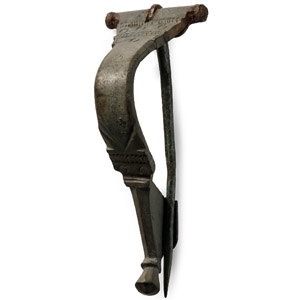
Large Roman Decorated Bronze Bow Brooch
3rd-4th century A.D.Sold for (Inc. bp): £46
Wide bow with annulet and linear decoration, keeled footplate with a facetted knop finial. 24.5 grams, 73 mm
Ex German art market, 2000s. Acquired from an EU collector living in London. From the collection of a Surrey, UK, gentleman.
