
Loading, please wait...
LOT 0872
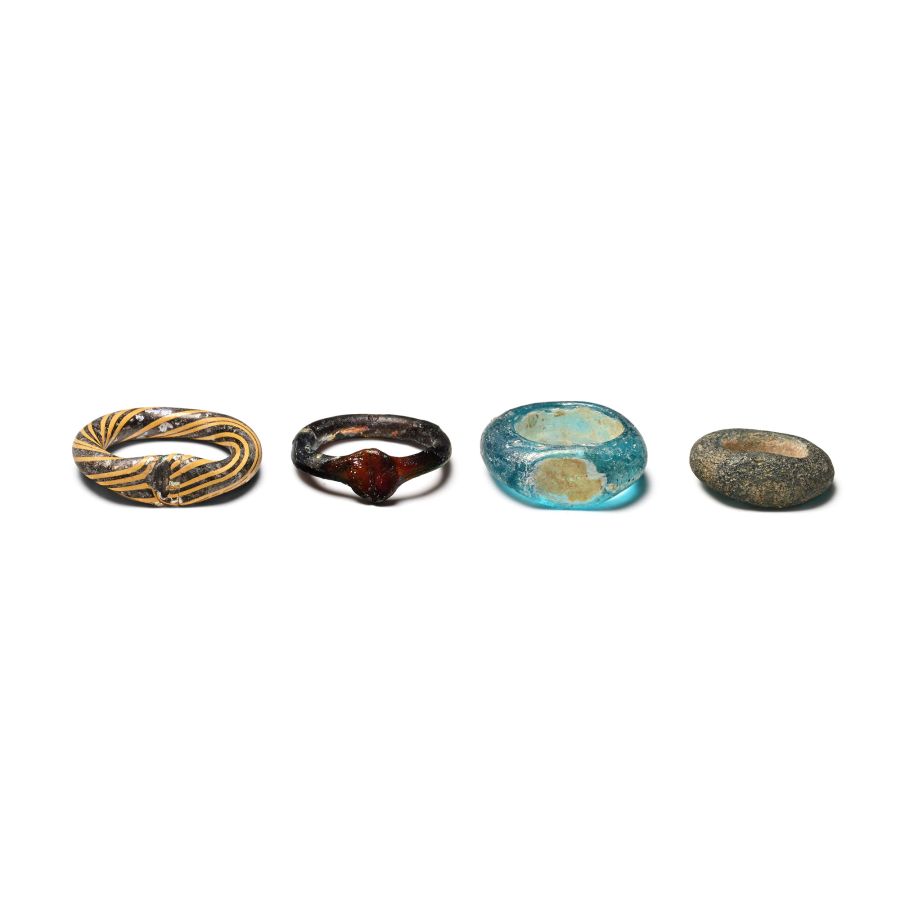
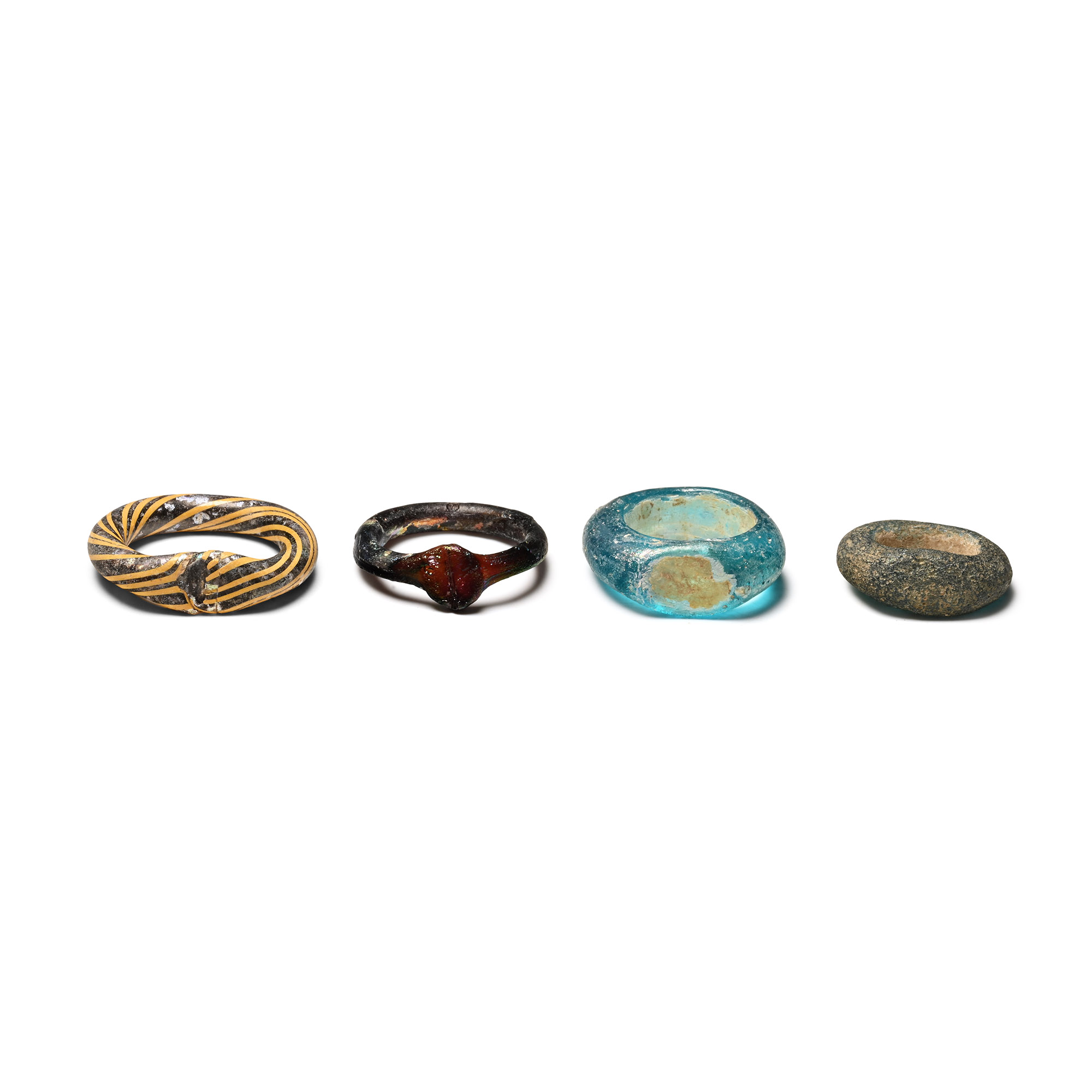
Roman Glass Finger Ring Collection
1ST-4TH CENTURY A.D.
5/8 - 3/4 in. (4.95 grams total, 16-21 mm).
Including twisted-trail, facetted and other types. [4, No Reserve]
ProvenanceFrom the private collection of the late Mr S.M., 1969-1999.
CONDITIONTimeLine Auctions follows a vetting process to ensure the authenticity and legality of all items, reinforcing our commitment to integrity and responsible trading. Each antiquity, antique, and coin lot undergoes thorough examination by a vetting committee of at least ten external specialists, professional trade association members, scientists, and archaeologists: Our Vetting Process
AUCTIONS:
TimeLine is a leading auction house specialising in antiquities, ancient art, collectables, natural history, coins, medals, and books. Our auctions offer museums, collectors, historians, and enthusiasts the opportunity to acquire unique and historically significant pieces.
-
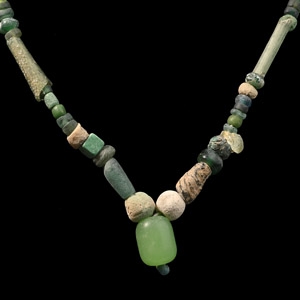
Roman Green Glass Bead Necklace String
1st-4th century A.D. and laterSold for (Inc. bp): £52
Restrung designer necklace string of tubular, oblate and other types with barrel-shaped pendant centrepiece. 20.3 grams, 37 cm
London, UK, collection, 2000s. -
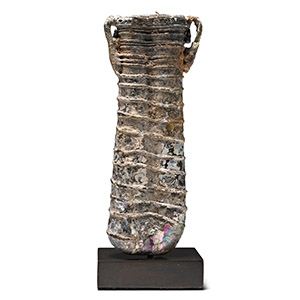
Late Roman Glass Double Unguentarium
5th-6th century A.D.Estimate: £350 - 450 (+bp*)
Opening Bid: £180
Composed of two conjoined tapering tubular cells, with lateral applied handles at the shoulder, decorated with applied trails; mounted on a custom-made stand. 53.7 grams, 11.6 cm (116 grams total, 13.5 cm including stand)
From an important London collection of glass, 1990s. This lot is accompanied by an illustrated lot declaration signed by the Head of the Antiquities Department, Dr Raffaele D'Amato.
These late Roman double cosmetic tubes were mainly produced in the Eastern provinces. They were formed as two tubes, side by side, made from a single bubble of glass by pinching the sides vertically to form a diaphragm. The decoration consisted of a trail wound once around the body just below the rim, and a further trail wound in a spiral several times around the body. -
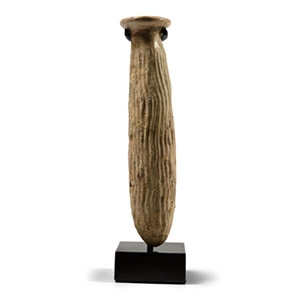
Roman White Elongated Glass Date Flask
1st century A.D.Sold for (Inc. bp): £598
Mould-blown with elliptical body, short neck and thick everted rim, with modelled wrinkles. 13 grams, 10.5 cm (46 grams total, 12 cm including stand)
From an important glass collection, London, UK, 1980-1990.
Bottles shaped like dates are among the most common varieties of 1st century mould-blows vessels. Examples have been discovered in most part of the Roman Empire, with a concentration of finds in the Eastern Mediterranean.
