
Loading, please wait...
LOT 0581
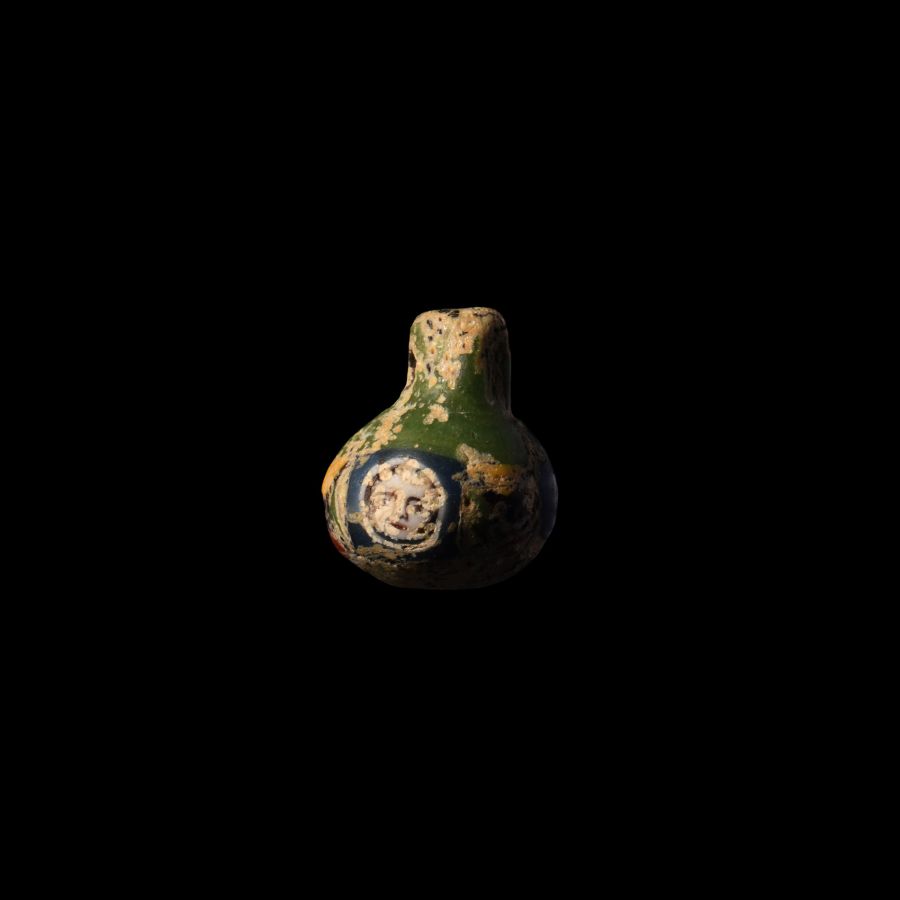
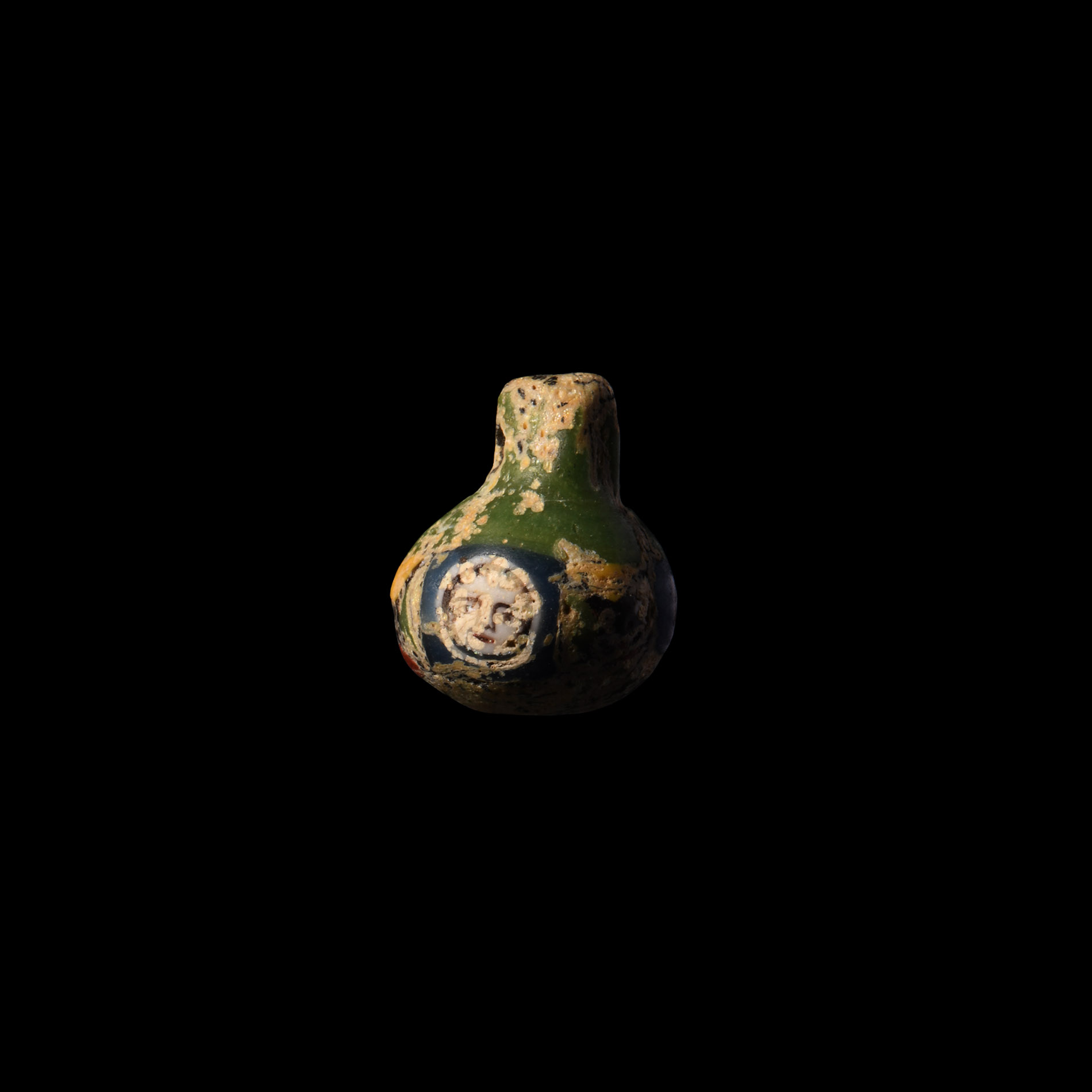
Roman Glass Face Bead
EASTERN MEDITERRANEAN, 1ST CENTURY B.C.-1ST CENTURY A.D.
5/8 in. (2.29 grams, 16 mm).
With integral suspension lug, decorated with millefiori face cane slices and geometric motifs.
ProvenanceAcquired 1970-2010.
Collection of a late Japanese gentleman.
See Sangiorgi, G., Collezione di Vetri Antichi, no.254; and Tomalin, S., Beads - a history and collector's guide, p.5.
CONDITIONTimeLine Auctions follows a vetting process to ensure the authenticity and legality of all items, reinforcing our commitment to integrity and responsible trading. Each antiquity, antique, and coin lot undergoes thorough examination by a vetting committee of at least ten external specialists, professional trade association members, scientists, and archaeologists: Our Vetting Process
AUCTIONS:
TimeLine is a leading auction house specialising in antiquities, ancient art, collectables, natural history, coins, medals, and books. Our auctions offer museums, collectors, historians, and enthusiasts the opportunity to acquire unique and historically significant pieces.
-
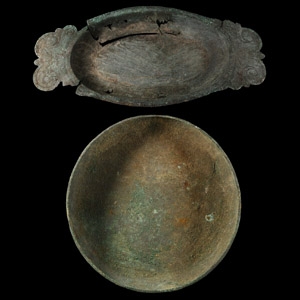
Roman Bronze Platter Group
Circa 2nd-4th century A.D.Sold for (Inc. bp): £234
Comprising: one shallow circular platter, one oval-shaped with lobed handles decorated with a flowering plant with scrolling leaves; both cracked. 1.4 kg total, 29.5-45 cm
Acquired 1990s-early 2000s. East Anglian private collection. -
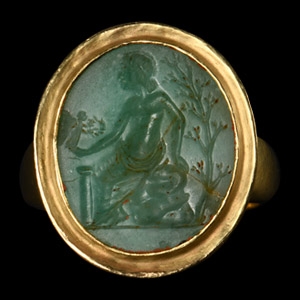
Venus with Victory Gemstone in Gold Ring
Roman, 1st -2nd century A.D. or laterSold for (Inc. bp): £2,470
The chrysoprase gemstone with intaglio Venus seated beside a tree, altar and miniature Victory before her; mounted in a later gold ring; accompanied by a museum-quality impression. 12.04 grams, 24.22 mm overall, 20.19 mm internal diameter (approximate size British T, USA 9 1/2, Europe 21.26, Japan 20)
Ex property of a London gentleman; acquired London art market, 1970-1980. -
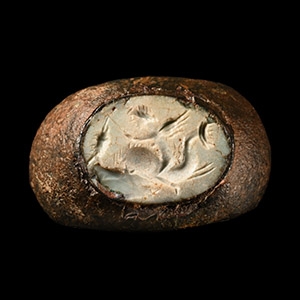
Roman Bronze Ring with Eros Riding a Dolphin Gemstone
2nd century A.D.Estimate: £200 - 300 (+bp*)
Opening Bid: £83
With inset burnt white stone cloison. 9.42 grams, 20.30 mm overall, 13.82 x 16.27 mm internal diameter (approximate size British H, USA 3 3/4, Europe 6.18, Japan 6)
Fine condition.
Acquired 1970's. Ex UK collection. Property of a Portsmouth, UK gentleman.
