
Loading, please wait...
LOT 0124
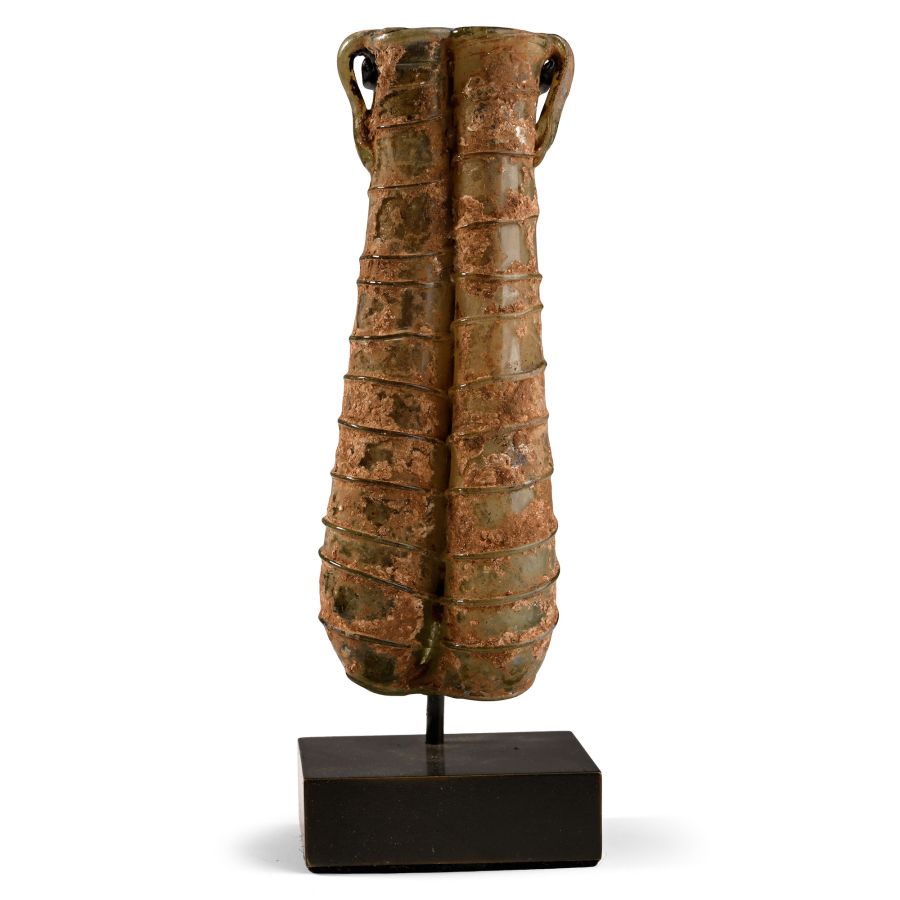
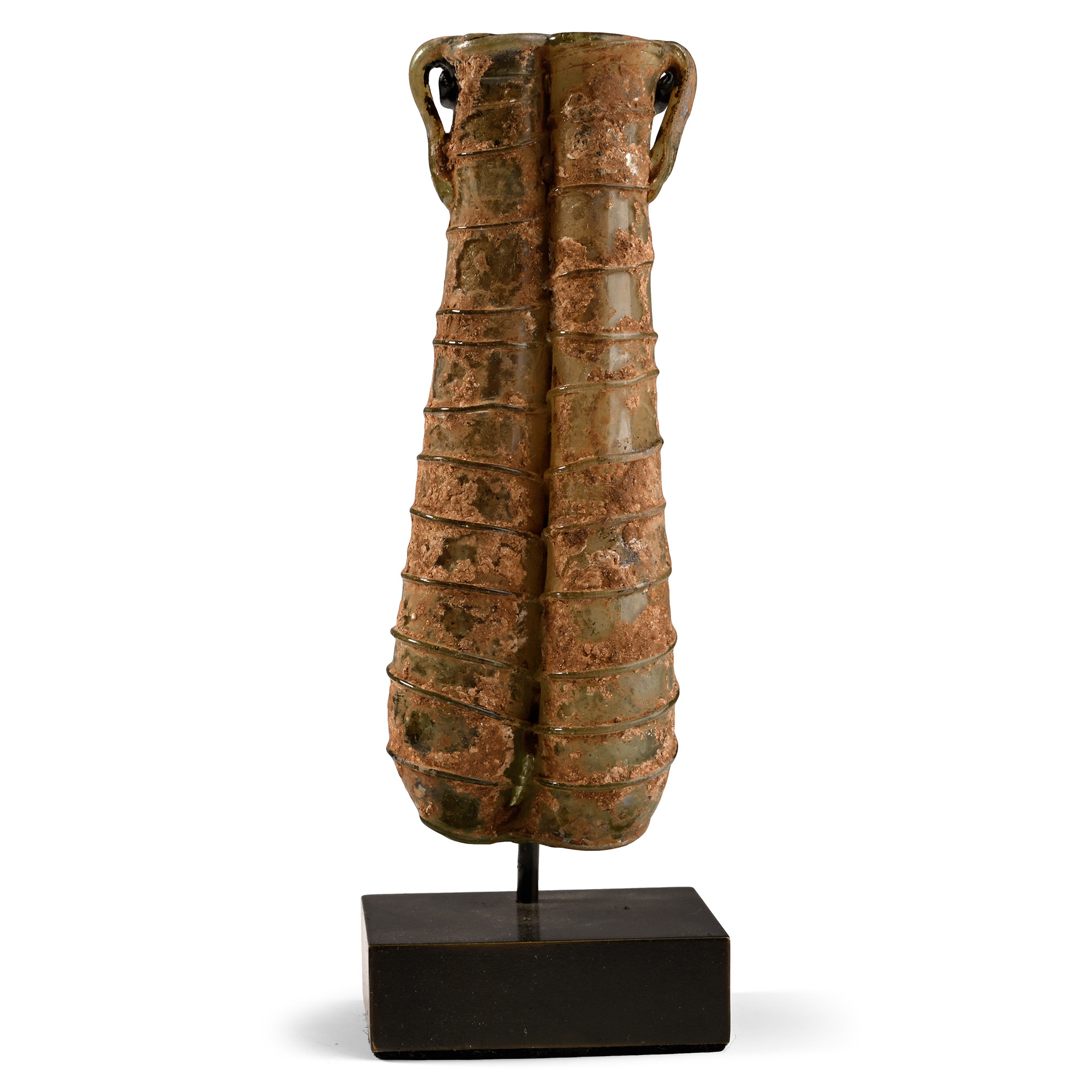
Roman Glass Double Unguentarium
4TH-5TH CENTURY A.D.
5 1/4 in. (89 grams total, 13.5 cm including stand).
Comprising two conjoined tapering tubular cells, with applied handles at the shoulder; mounted on a custom-made stand.
ProvenanceFrom an important collection of glass, London, UK, 1990s.
LiteratureCf. Bergman, M. et al., Ancient Glass in the Carnegie Museum of Natural History, Pittsburgh, 1980, items 194-198, for similar.
CONDITIONTimeLine Auctions follows a vetting process to ensure the authenticity and legality of all items, reinforcing our commitment to integrity and responsible trading. Each antiquity, antique, and coin lot undergoes thorough examination by a vetting committee of at least ten external specialists, professional trade association members, scientists, and archaeologists: Our Vetting Process
AUCTIONS:
TimeLine is a leading auction house specialising in antiquities, ancient art, collectables, natural history, coins, medals, and books. Our auctions offer museums, collectors, historians, and enthusiasts the opportunity to acquire unique and historically significant pieces.
LOT 0124
Roman Glass Double Unguentarium
Estimate £400 - 600€460 - 700 (for guidance only)$540 - 810 (for guidance only)
-
Roman Silver Ladle with Beast Finial
1st-3rd century A.D.Estimate: £800 - 1,000 (‡+bp*)
Opening Bid: £400
With broad bowl and in-turned rim, square-section long handle looped at the end with a beast-head finial; repaired and mounted on a custom-made display stand. 70 grams, 22.5 cm (317 grams total, 25.5 cm including stand)
Acquired in the mid 1980s-1990s. Private collection, Switzerland, thence by descent. Private collection, since the late 1990s. -
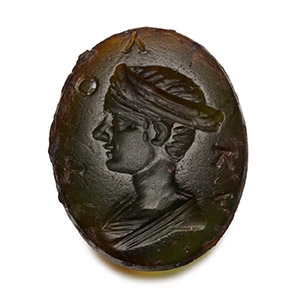
Roman Chrome Chalcedony Gemstone of a Noble Lady
2nd century A.D.Sold for (Inc. bp): £715
With intaglio profile bust of a wealthy lady facing left, possibly an empress; supplied with a museum-quality impression. 0.62 grams, 13 mm
Private English collection, formed between the late 1970s and early 1990s. Private collection, London, UK. -
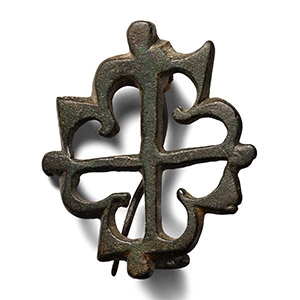
Roman Bronze Axe Wheel Plate Brooch
2nd century A.D.Sold for (Inc. bp): £52
With rim formed from four conjoined axe motifs; hinged pin and catchplate to the reverse. 7.74 grams, 37 mm
Ex DRG Coins and Antiquities, Bishops Stortford, Essex, UK. From the private collection of a West London, UK, gentleman, formed since the early 2000s. Accompanied by a handwritten dealer's ticket.
