
Loading, please wait...
LOT 0163
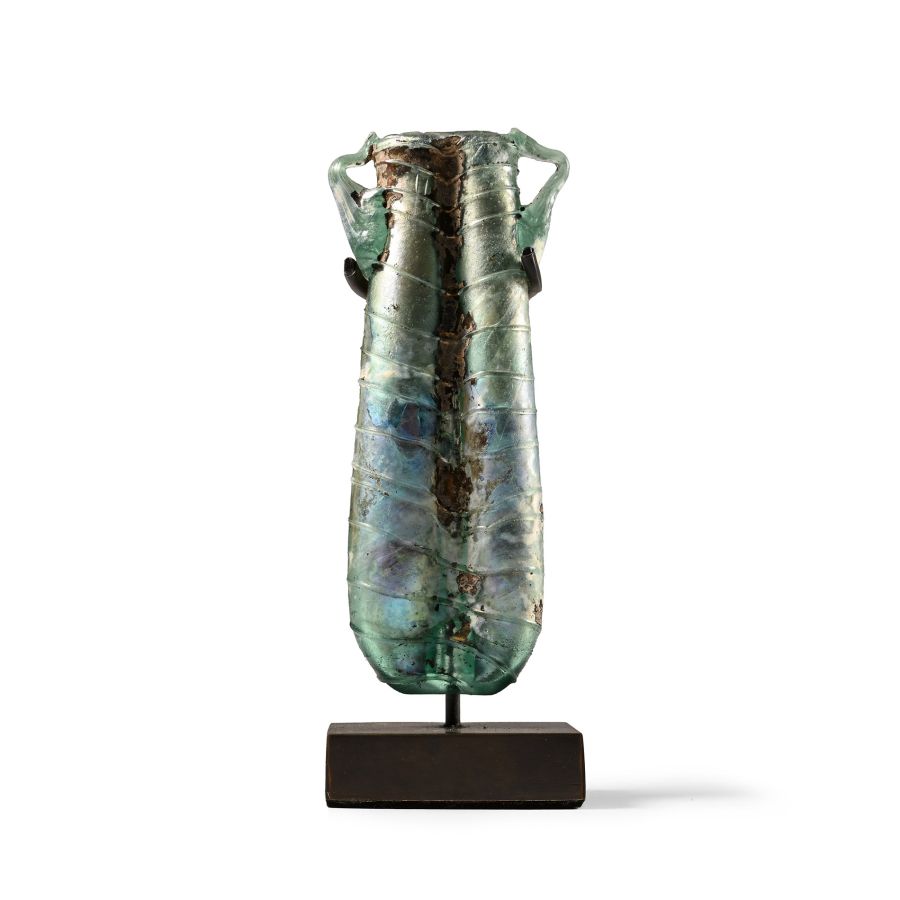
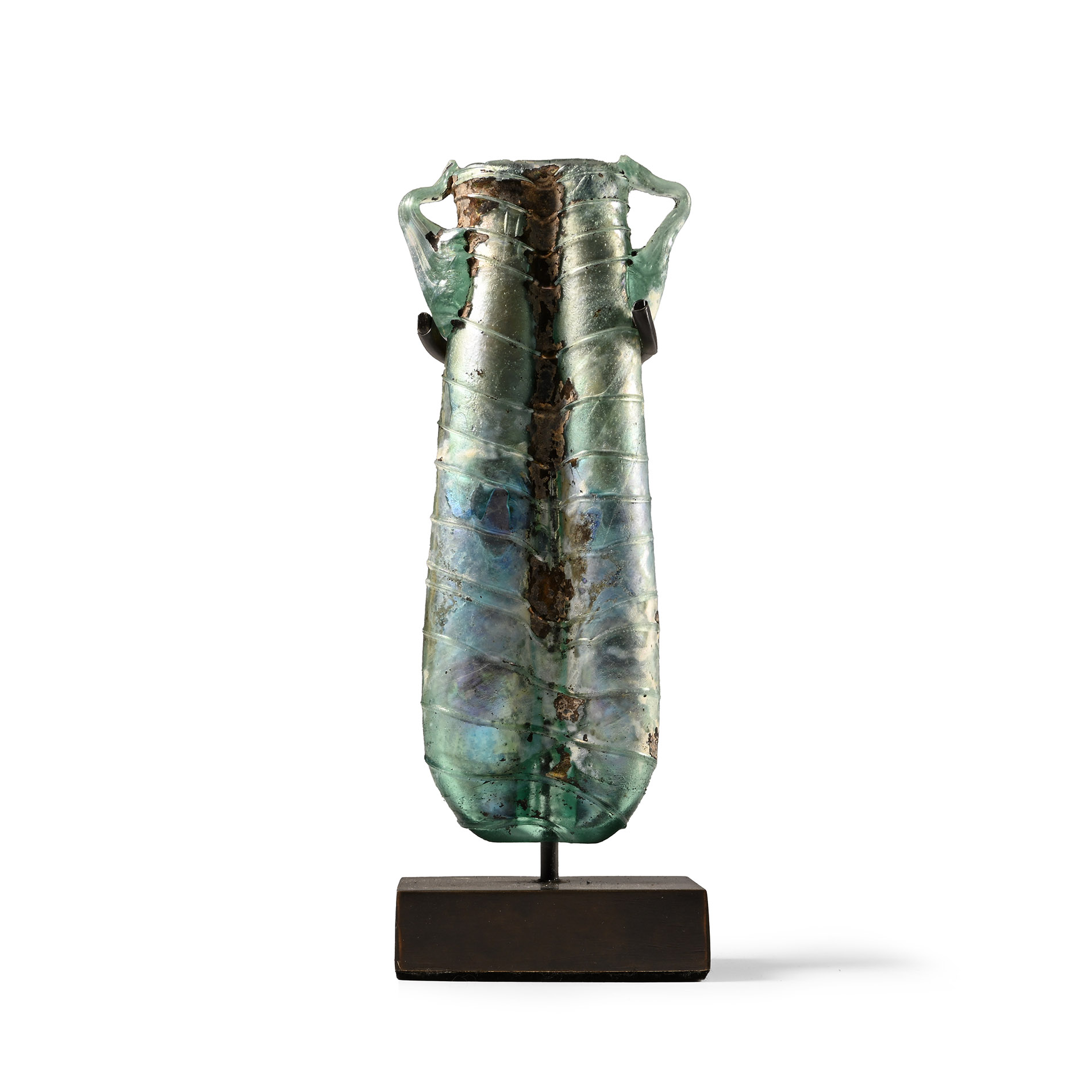
Roman Glass Double Unguentarium
3RD-5TH CENTURY A.D.
5 1/8 in. (78 grams total, 13 cm including stand).
Comprising two conjoined tapering tubular cells, with applied handles at the shoulder, decorated with applied trails; mounted on a custom-made stand.
ProvenanceFrom an important London, UK, collection, 1970-1990s.
LiteratureCf. Bergman, M. et al., Ancient Glass in the Carnegie Museum of Natural History, Pittsburgh, 1980, items 194-198, for similar.
CONDITIONTimeLine Auctions follows a vetting process to ensure the authenticity and legality of all items, reinforcing our commitment to integrity and responsible trading. Each antiquity, antique, and coin lot undergoes thorough examination by a vetting committee of at least ten external specialists, professional trade association members, scientists, and archaeologists: Our Vetting Process
AUCTIONS:
TimeLine is a leading auction house specialising in antiquities, ancient art, collectables, natural history, coins, medals, and books. Our auctions offer museums, collectors, historians, and enthusiasts the opportunity to acquire unique and historically significant pieces.
LOT 0163
Roman Glass Double Unguentarium
Estimate £500 - 700€580 - 810 (for guidance only)$680 - 950 (for guidance only)
-
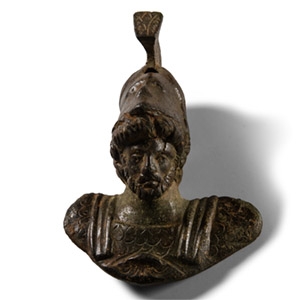
Roman Bronze Bust of Mars
Circa 2nd-3rd century A.D.Sold for (Inc. bp): £715
Highly detailed bearded head with thick hair locks surmounted by a pseudo-Corinthian helmet with high crest; the breast covered by a scale armour (squama) fitted with shoulder-guards. 82 grams, 75 mm
From the collection of the famous author, writer and speaker, Gordon Bailey, Essex, UK; formed since 1968.
The pseudo-Corinthian or Apulo-Corinthian helmet, here worn by the divinity, was originally a legionary helmet, which transformed in the late Consular Age into an officer's helmet, to become a typical attribute of the commanders and then of the war god. -
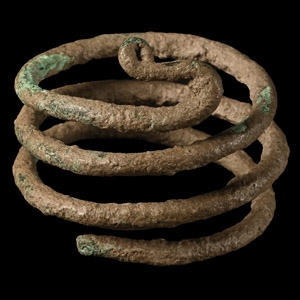
Roman Child's Coiled Bronze Snake Bracelet
1st-2nd century A.D.Sold for (Inc. bp): £33
Round-section rod with tapered ends, one reversed and with a loop finial. 23 grams, 41 mm
From a collection acquired on the UK art market from various auction houses and collections mostly before 2000. From an important Cambridgeshire estate; thence by descent. -
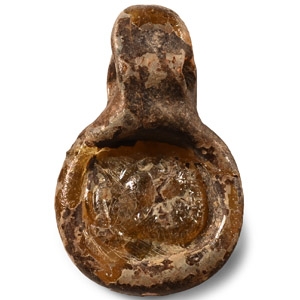
Late Roman Glass Pendant with Profile Bust
Mid 4th-early 5th century A.D.Sold for (Inc. bp): £117
Discoid in plan with pierced lug above, impressed profile bust with pointillé hair; repaired. 1.47 grams, 24 mm
Collected from 1970-1999. From the collection of the late Mr S.M., London, UK.
