
Loading, please wait...
LOT 0839
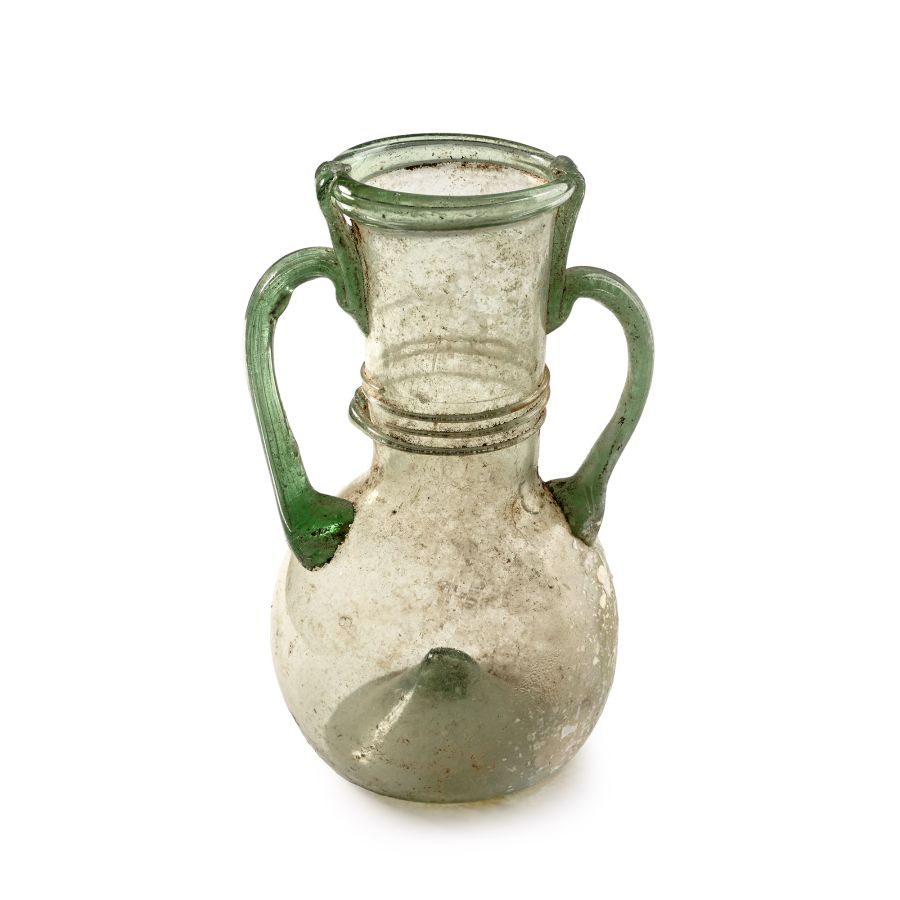
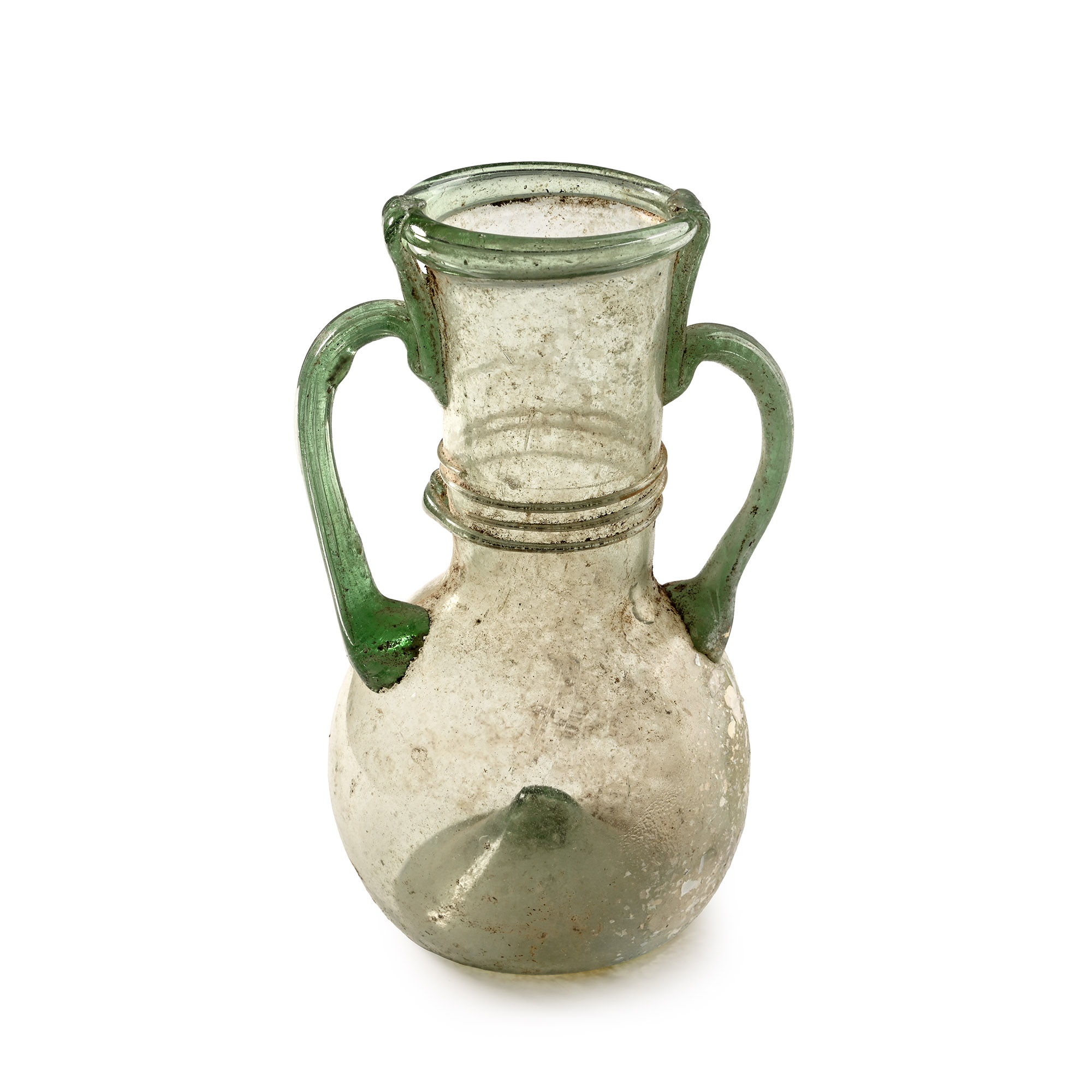
Roman Glass Double Handled Flask with Trailing
1ST CENTURY A.D.
4 7/8 in. (64 grams, 12.3 cm).
With oblate body and dimple base, tubular neck with rolled rim, two lateral knee-shaped handles to the shoulder; applied trail to the lower neck. [No Reserve]
ProvenanceEx London, UK, gentleman, 1990s.
LiteratureCf. Lightfoot, C.S., Ancient Glass in National Museums Scotland, Edinburgh, 2007, item 270, for type.
CONDITIONTimeLine Auctions follows a vetting process to ensure the authenticity and legality of all items, reinforcing our commitment to integrity and responsible trading. Each antiquity, antique, and coin lot undergoes thorough examination by a vetting committee of at least ten external specialists, professional trade association members, scientists, and archaeologists: Our Vetting Process
AUCTIONS:
TimeLine is a leading auction house specialising in antiquities, ancient art, collectables, natural history, coins, medals, and books. Our auctions offer museums, collectors, historians, and enthusiasts the opportunity to acquire unique and historically significant pieces.
-
Roman Light Brown Glass Bottle
1st century B.C.-1st century A.D.Estimate: £200 - 300 (+bp*)
Opening Bid: £100
Mould-blown, comprising a flat-based tubular body and short neck with returned flange rim. 69 grams, 14.4 cm
From an important collection of glass, London, UK, 1990s. -
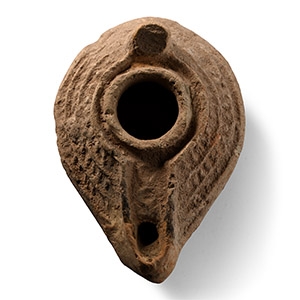
Late Roman Terracotta Oil Lamp
3rd-5th century A.D.Sold for (Inc. bp): £52
With raised hatching and contour lines to the discus, stub spout, lug handle to the rear. 67 grams, 83 mm
From a late private Buckinghamshire, UK, collector. Property of a West London, UK, gentleman. -
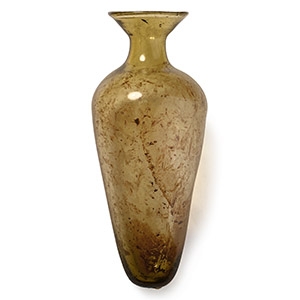
Roman Yellow Glass Bottle
1st-2nd century A.D.Sold for (Inc. bp): £234
Formed with a deep rounded base and broad shoulder, irregular everted rim. 116 grams, 19.2 cm
From an important collection of glass, London, UK, 1990s.
