
Loading, please wait...
LOT 0718
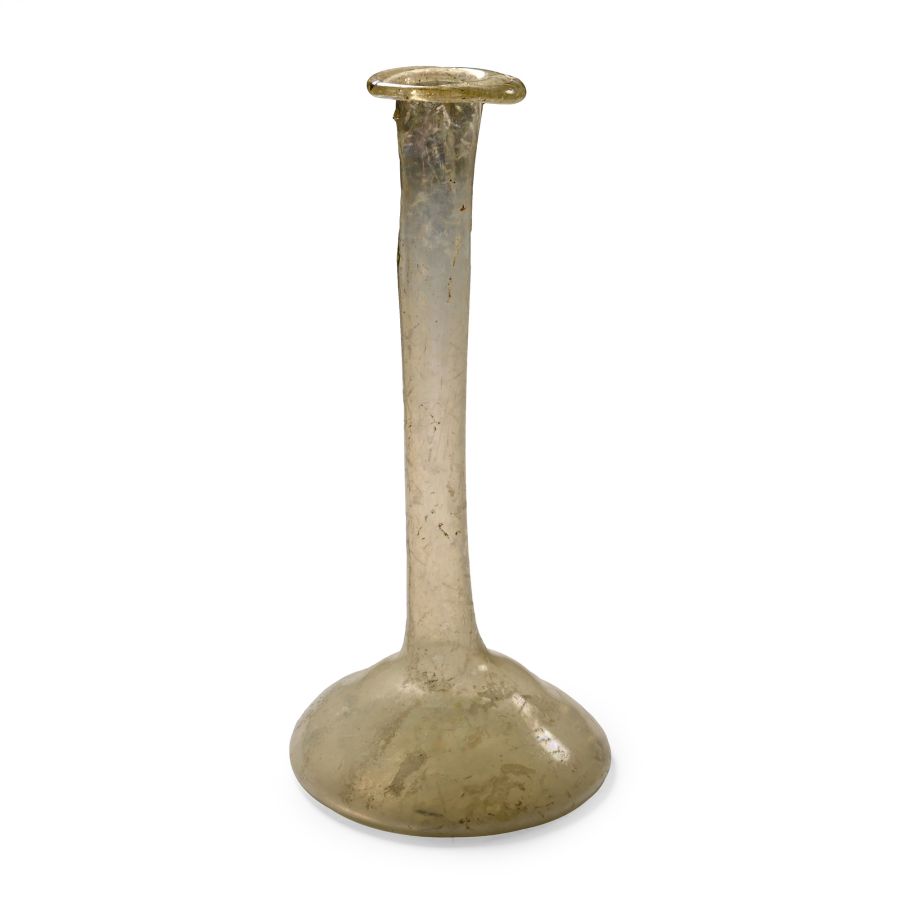
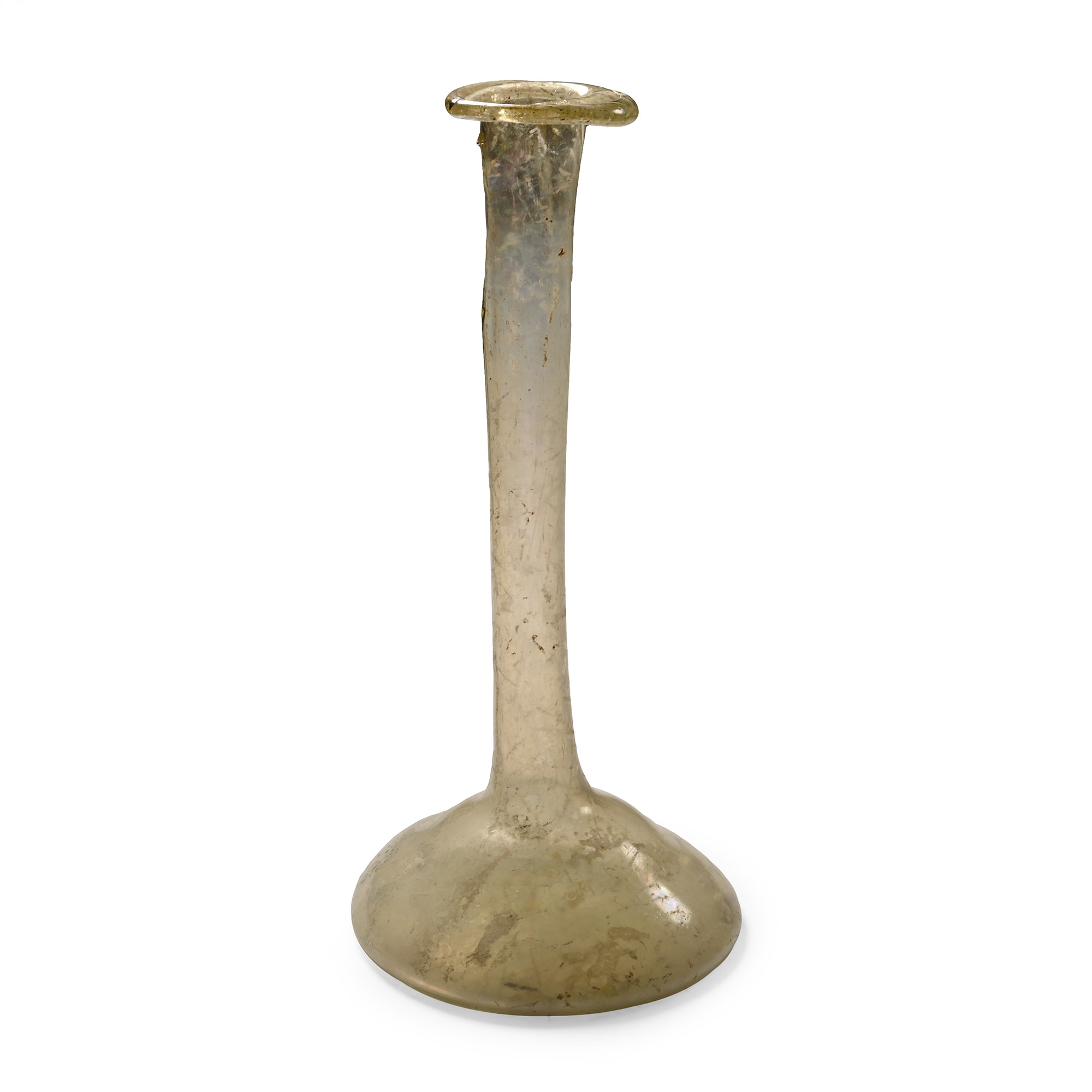
Roman Glass Candlestick Unguentarium
1ST-3RD CENTURY A.D.
6 7/8 in. (58 grams, 17.5 cm).
Comprising a low conical body and slightly convex wall, dimple base; tall cylindrical neck flaring to mouth with inward-folded rim; slightly iridescent surface.
ProvenanceFrom an important London collection of glass, 1990s.
This lot is accompanied by an illustrated lot declaration signed by the Head of the Antiquities Department, Dr Raffaele D'Amato.
Cf. Whitehouse, D., Roman Glass in the Corning Museum of Glass, vol.1, New York, 1997, item 261.
FootnotesThis kind of toilet bottle was called ‘candlestick unguentarium’ by the academics due to the shape of its neck. They are especially found in Roman Egypt (Karanis class XIII.A.I.).
CONDITIONTimeLine Auctions follows a vetting process to ensure the authenticity and legality of all items, reinforcing our commitment to integrity and responsible trading. Each antiquity, antique, and coin lot undergoes thorough examination by a vetting committee of at least ten external specialists, professional trade association members, scientists, and archaeologists: Our Vetting Process
AUCTIONS:
TimeLine is a leading auction house specialising in antiquities, ancient art, collectables, natural history, coins, medals, and books. Our auctions offer museums, collectors, historians, and enthusiasts the opportunity to acquire unique and historically significant pieces.
-
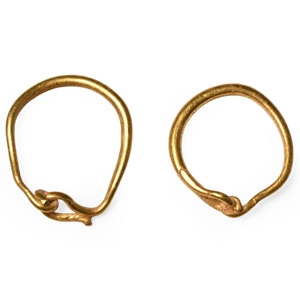
Roman Gold Hoop Earring Pair
1st-4th century A.D.Sold for (Inc. bp): £221
Matched pair of slender circular-section hoops with looped closures. 0.75 grams total, 10-12 mm
Ex Graham Slater collection, Cambridge, 1980s-1990s. -
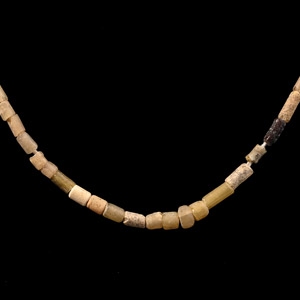
Roman Mixed Glass Bead Necklace String
1st-4th century A.D. and laterSold for (Inc. bp): £26
Restrung designer necklace string of tubular and other types. 6.53 grams, 45.5 cm
London, UK, collection, 2000s. -
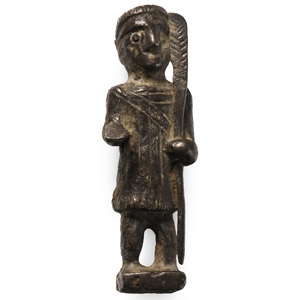
Roman Silver Statuette
2nd-1st century A.D.Sold for (Inc. bp): £312
Modelled in the round standing on a square base, wearing a knee-length chiton; right hand held out flat, left hand supporting a frond; short hair and exaggerated nose. 19.97 grams, 44 mm
From a private Tyneside collection, formed since the early 2000s.
