
Loading, please wait...
LOT 0772
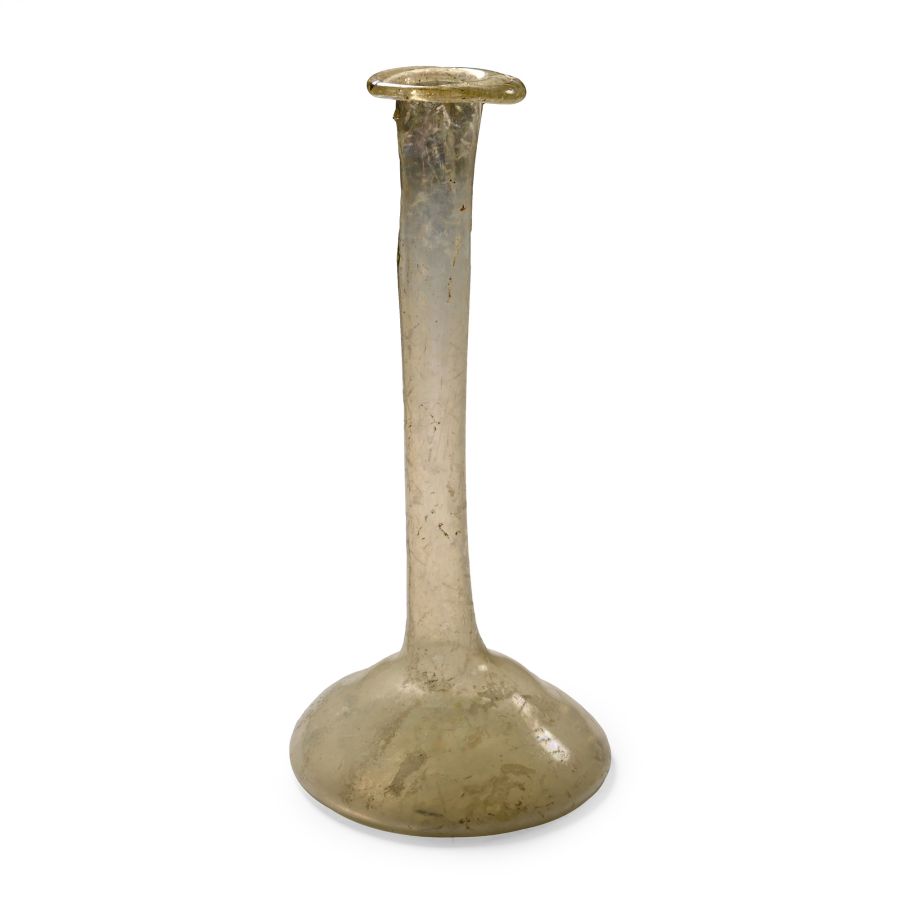
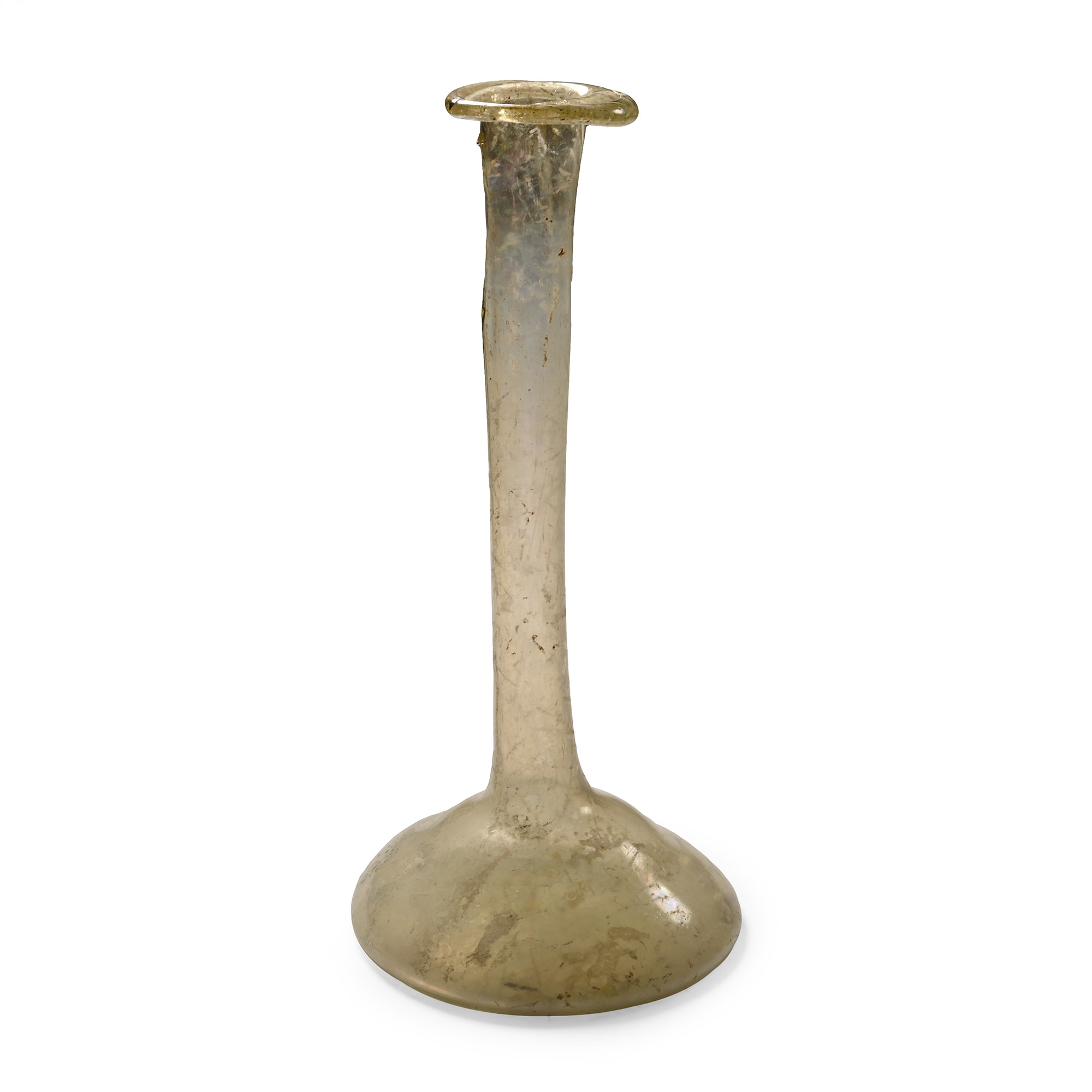
Roman Glass Candlestick Unguentarium
1ST-4TH CENTURY A.D.
6 7/8 in. (58 grams, 17.5 cm).
Comprising a low conical body and slightly convex wall, dimple base; tall cylindrical neck flaring to mouth with inward-folded rim; slightly iridescent surface.
ProvenanceFrom an important London collection of glass, 1990s.
This lot is accompanied by an illustrated lot declaration signed by the Head of the Antiquities Department, Dr Raffaele D'Amato.
Cf. Whitehouse, D., Roman Glass in the Corning Museum of Glass, vol.1, New York, 1997, item 259.
CONDITIONTimeLine Auctions follows a vetting process to ensure the authenticity and legality of all items, reinforcing our commitment to integrity and responsible trading. Each antiquity, antique, and coin lot undergoes thorough examination by a vetting committee of at least ten external specialists, professional trade association members, scientists, and archaeologists: Our Vetting Process
AUCTIONS:
TimeLine is a leading auction house specialising in antiquities, ancient art, collectables, natural history, coins, medals, and books. Our auctions offer museums, collectors, historians, and enthusiasts the opportunity to acquire unique and historically significant pieces.
LOT 0772
Roman Glass Candlestick Unguentarium
Estimate £200 - 300€230 - 350 (for guidance only)$270 - 410 (for guidance only)
-
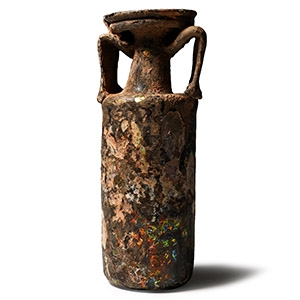
Large Roman Iridescent Glass Vessel
3rd-4th century A.D.Sold for (Inc. bp): £312
With broad shoulder, slender neck, stepped neck and upwards-flaring rim, two applied rectangular handles; iridescent surfaces. 143 grams, 17 cm high
Acquired early 1990s. Ex private American collection; thence by descent. Private collection since 1998. This lot is accompanied by an illustrated lot declaration signed by the Head of the Antiquities Department, Dr Raffaele D'Amato. -
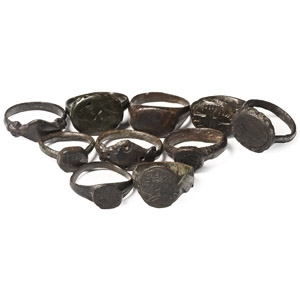
Roman to Medieval Bronze Ring Collection
1st-16th century A.D.Sold for (Inc. bp): £117
Comprising ten rings with bezels, some with decorative motifs including pellets, cross, and hatched lines. 53 grams total, 21-24 mm
Ex German art market, 2000s. Acquired from an EU collector living in London. From the collection of a Surrey, UK, gentleman. This lot is accompanied by an illustrated lot declaration signed by the Head of the Antiquities Department, Dr Raffaele D'Amato. -
.jpg)
Roman Bronze Statue of Mercury
1st century A.D.Sold for (Inc. bp): £3,380
A youthful and muscular figure of the god Mercury (Greek Hermes) standing nude with his weight resting on his right leg, left leg slightly bent and the heel raised; his hair dressed in short curls, wearing a winged petasos, and a cloak wrapped over his shoulder and left arm, naturalistic anatomical detailing; mounted on a custom-made display base. 298 grams total, 14.3 cm including stand
Swiss private collection, 1970. Private collection, Zurich, Switzerland. This lot has been checked against the Interpol Database of stolen works of art and is accompanied by a search certificate number no.12685-236368. This lot has been cleared against the Art Loss Register database, and is accompanied by an illustrated lot declaration signed by the Head of the Antiquities Department, Dr Raffaele D'Amato.
