
Loading, please wait...

LOT 0919
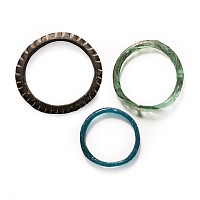
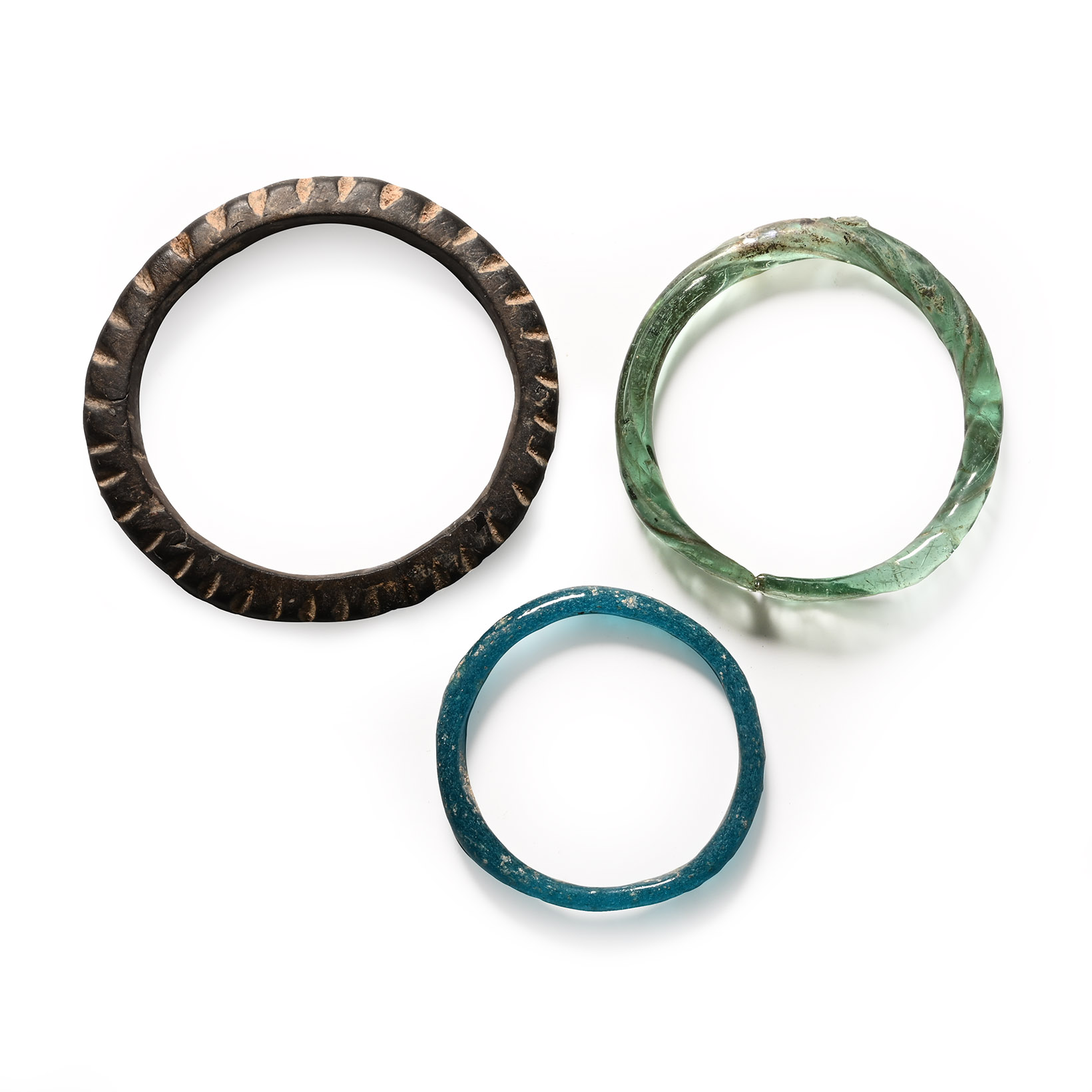
Roman Glass Bracelet Group
3RD-4TH CENTURY A.D.
2 - 2 3/4 in. (31.18 grams total, 50-70 mm).
Comprising: a turquoise D-section bangle with a flattened panel to the upper face; an opaque round-section twisted bracelet with flattened terminals; a dark brown ceramic(?) keeled bangle with notched edges. [3, No Reserve]
ProvenanceCollected from 1970-1999.
From the collection of the late Mr S.M., London, UK.
TimeLine Auctions follows a vetting process to ensure the authenticity and legality of all items, reinforcing our commitment to integrity and responsible trading. Each antiquity, antique, and coin lot undergoes thorough examination by a vetting committee of at least ten external specialists, professional trade association members, scientists, and archaeologists: Our Vetting Process
AUCTIONS:
TimeLine is a leading auction house specialising in antiquities, ancient art, collectables, natural history, coins, medals, and books. Our auctions offer museums, collectors, historians, and enthusiasts the opportunity to acquire unique and historically significant pieces.
-
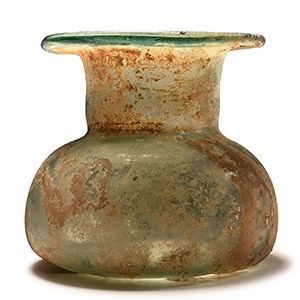
Roman Glass Candlestick Bottle
1st century B.C.-2nd century A.D.Sold for (Inc. bp): £221
A bulbous light blue bottle with dimpled base, wide neck and flared rim. 130 grams, 87 mm
Ex London, UK, collection, 1980-1990s.
A similar vessel was found in the cave 19-4 of Zikhron Yosef at Jerusalem. The shape suggests its use as candlestick or short jar. Small globular bottles, piriform bottles, or small bottles with long, narrow necks (today called candlestick bottles) held perfumes or other precious oils and replicated the shapes found in pottery, alabaster, and stone. -
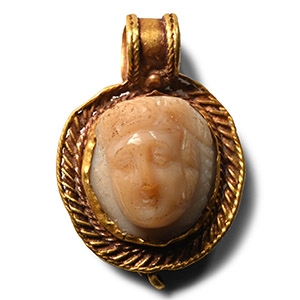
Roman Gold Pendant with Medusa Cameo
1st-2nd century A.D.Sold for (Inc. bp): £1,300
Discoid plaque with applied ropework wreath detailing, suspension loop with filigree borders and granule below, inset cameo gorgoneion; ring at bottom for attachment of a securing chain. 5.06 grams, 29 mm
From the collection of a gentleman, acquired on the London art market in the 1990s. -
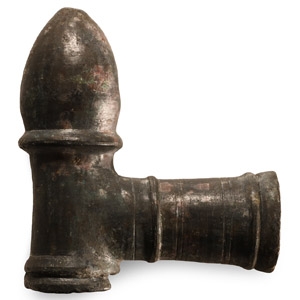
Roman Bronze Acorn-Shaped Chair Back Finial
3rd-4th century A.D. or laterSold for (Inc. bp): £20
Comprising a tubular vertical fitting with perpendicular tube and flared socket, acorn finial. 155 grams, 86 mm
From the private collection of M. Cummings, Lincolnshire, UK, 1990s.
