
Loading, please wait...
LOT 0668
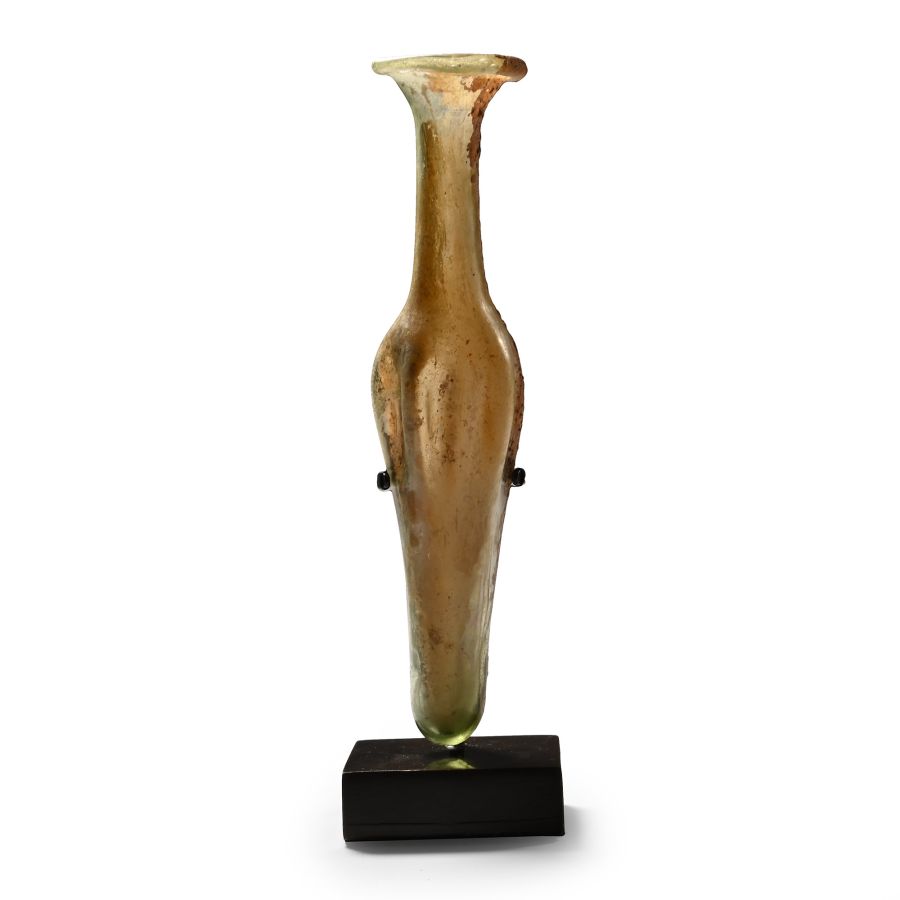
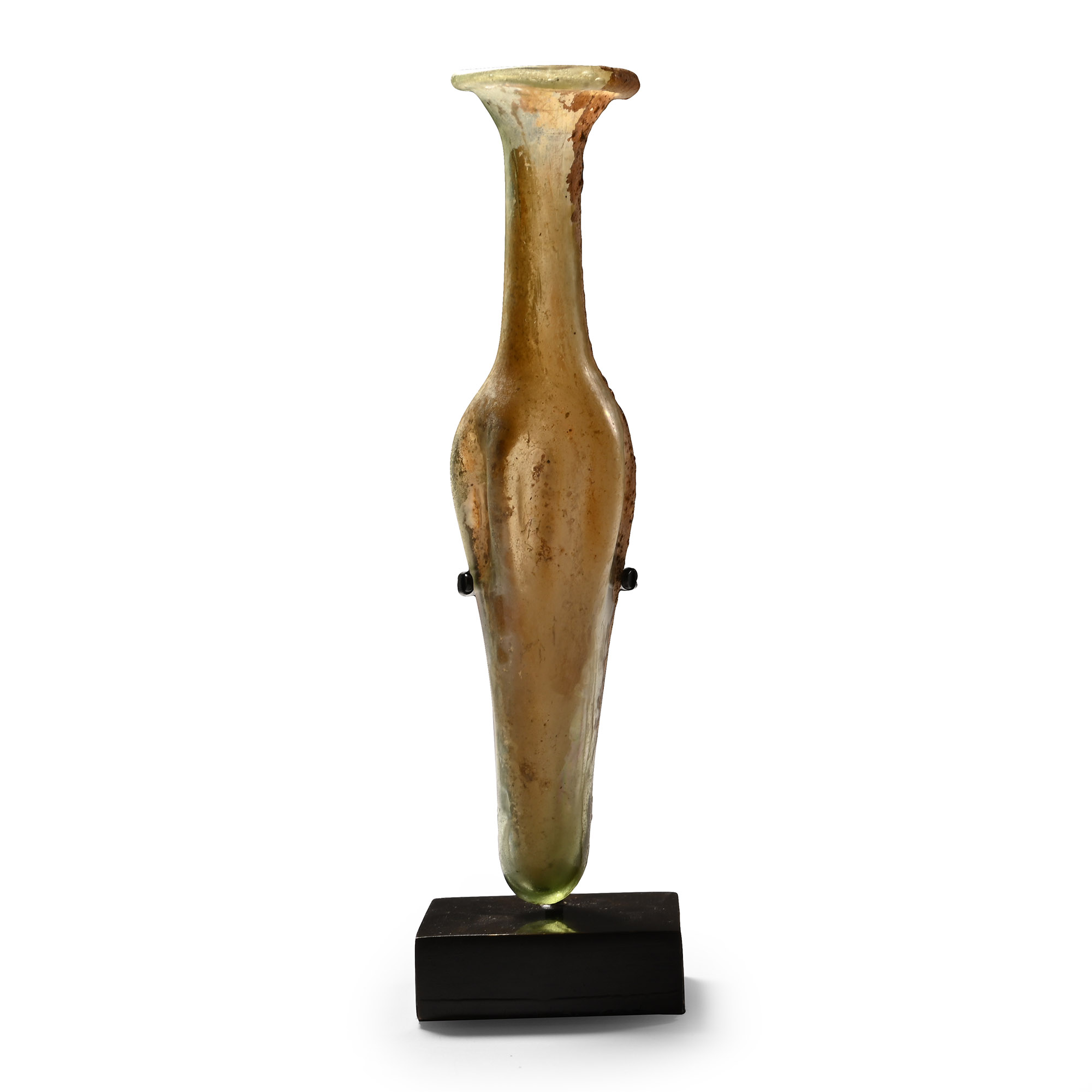
Roman Glass Bottle
1ST CENTURY A.D.
5 1/4 in. (6 in.) (20.5 grams, 13.4 cm (82.2 grams total, 15.2 cm including stand)).
Comprising a tapering round-section body with narrow shoulder and flared neck, median bulb with pinched flanges; supplied with a custom-made stand.
ProvenanceFrom an important London collection of glass, 1990s.
This lot is accompanied by an illustrated lot declaration signed by the Head of the Antiquities Department, Dr Raffaele D'Amato.
Cf. Whitehouse, D., Roman Glass in the Corning Museum of Glass, vol.2, New York, 2001, item 770, for type.
FootnotesExamples of similar form have been found in the Western Provinces of the Roman Empire, particularly from the grave 12 in the Liverpool Sotto Cemetery at Muralto Locarno, Canton Ticino, Switzerland. The archaeologist assign it to the period between A.D.20 and 50.
CONDITIONTimeLine Auctions follows a vetting process to ensure the authenticity and legality of all items, reinforcing our commitment to integrity and responsible trading. Each antiquity, antique, and coin lot undergoes thorough examination by a vetting committee of at least ten external specialists, professional trade association members, scientists, and archaeologists: Our Vetting Process
AUCTIONS:
TimeLine is a leading auction house specialising in antiquities, ancient art, collectables, natural history, coins, medals, and books. Our auctions offer museums, collectors, historians, and enthusiasts the opportunity to acquire unique and historically significant pieces.
-
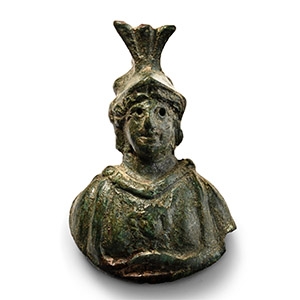
Roman Bronze Bust of Athena
1st century A.D. or laterSold for (Inc. bp): £293
Helmetted bust with segmented crest, braided collar with pendant; eyes with shallow sockets to accept glass inserts; mounting socket to reverse. 171 grams, 77 mm
London art market, 1999. Private collection, London, UK. -
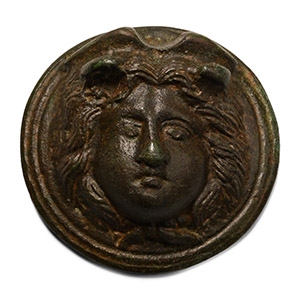
Roman Bronze Phalera
2nd-4th century A.D.Sold for (Inc. bp): £416
Discoid in plan with raised lip to the rim, central gorgoneion motif in high relief. 203 grams, 73 mm
From a private Tyneside collection, formed since the early 2000s. -
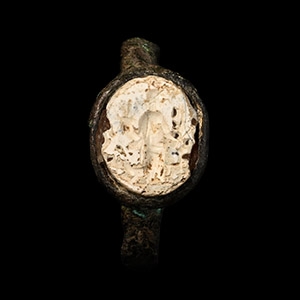
Roman Bronze Ring with Seated Fortuna Gemstone
2nd-3rd century A.D.Sold for (Inc. bp): £33
D-section hoop and ellipsoid bezel with inset gemstone, intaglio motif of a seated goddess holding a sword blade-uppermost. 2.03 grams, 21.6 mm overall, 15.7 mm internal diameter (approximate size British J 1/2, USA 5, Europe 9.32, Japan 9)
with Archaeologia, Switzerland, before 1983. Ex private North American collection. London private collection, 2016.
