
Loading, please wait...
LOT 1041
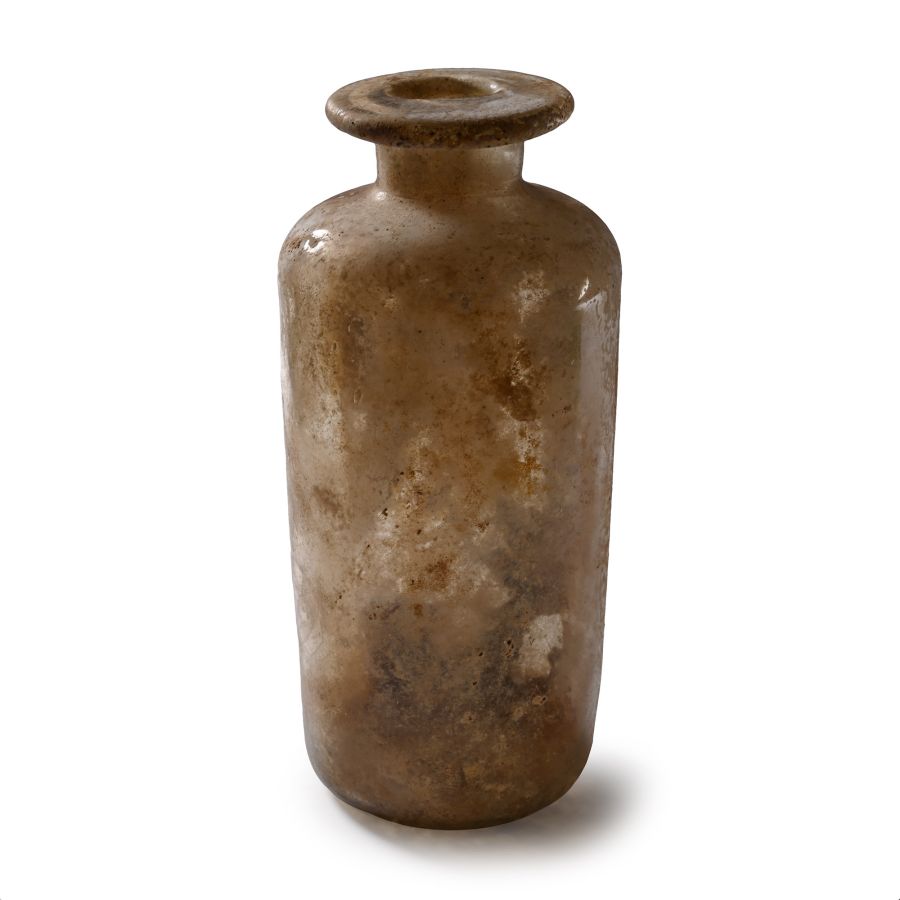
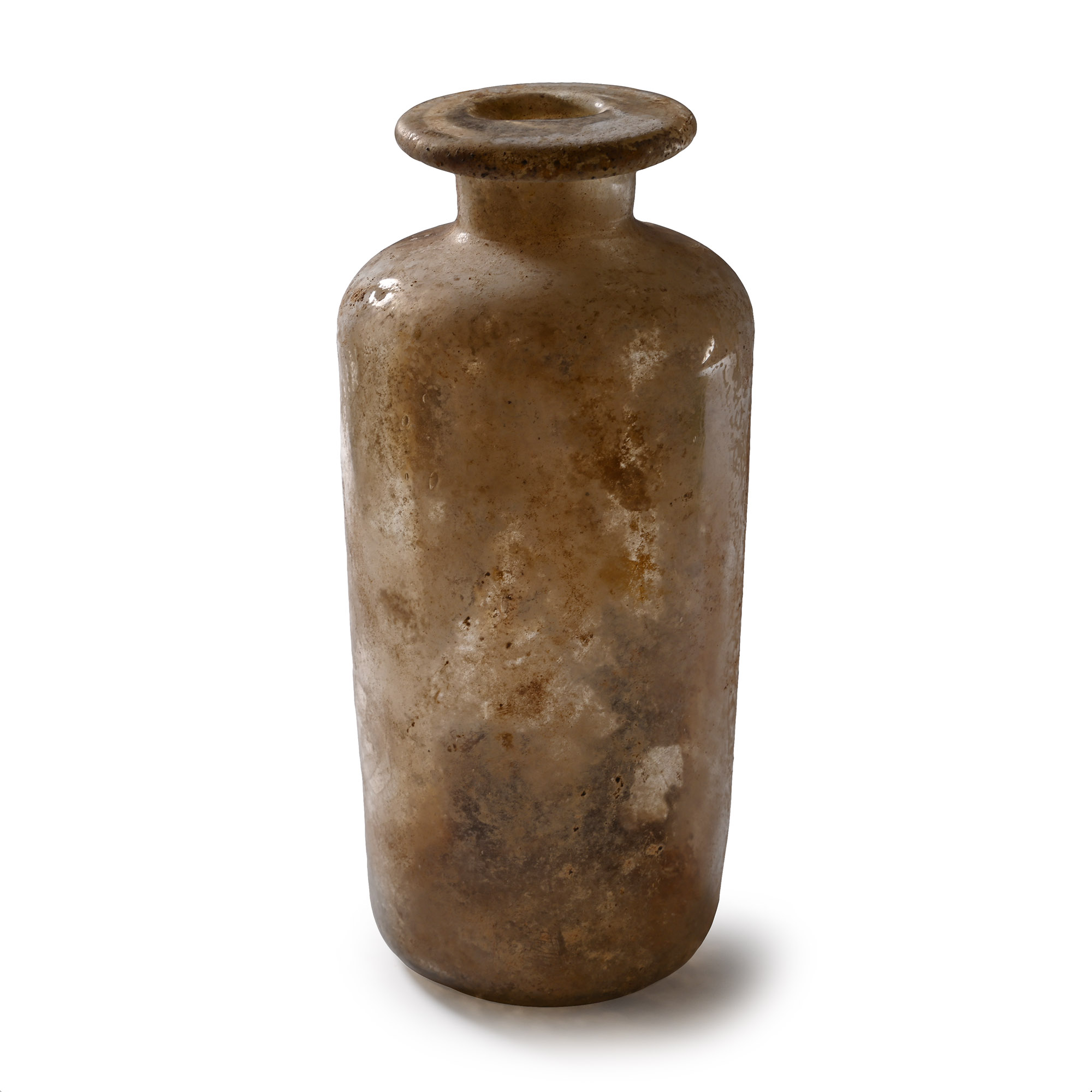
Roman Glass Bottle
3RD-4TH CENTURY A.D.
5 1/2 in. (94.2 grams, 14 cm).
Mould-blown bottle comprising a flat-based tubular body and short neck with returned flange rim.
ProvenanceFrom an important London collection of glass, 1990s.
This lot is accompanied by an illustrated lot declaration signed by the Head of the Antiquities Department, Dr Raffaele D'Amato.
See Harden, D.B. et al, Masterpieces of Glass, London, 1968, item 78, for type; Whitehouse, D., Roman Glass: The Corning Museum of Glass, volume I, New York, 1997, item 308, for similar.
FootnotesMost of similar examples of Roman bottles have been found in the Eastern Mediterranean. Earliest examples have been found in Roman Lusitania (Pombalinho-Santarem). The type lasted until the 4th century A.D. (Samaria-Sebaste, Israel).
CONDITIONTimeLine Auctions follows a vetting process to ensure the authenticity and legality of all items, reinforcing our commitment to integrity and responsible trading. Each antiquity, antique, and coin lot undergoes thorough examination by a vetting committee of at least ten external specialists, professional trade association members, scientists, and archaeologists: Our Vetting Process
AUCTIONS:
TimeLine is a leading auction house specialising in antiquities, ancient art, collectables, natural history, coins, medals, and books. Our auctions offer museums, collectors, historians, and enthusiasts the opportunity to acquire unique and historically significant pieces.
LOT 1041
Roman Glass Bottle
Estimate £200 - 300€230 - 350 (for guidance only)$270 - 410 (for guidance only)
-
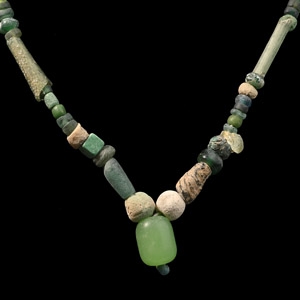
Roman Green Glass Bead Necklace String
1st-4th century A.D. and laterSold for (Inc. bp): £52
Restrung designer necklace string of tubular, oblate and other types with barrel-shaped pendant centrepiece. 20.3 grams, 37 cm
London, UK, collection, 2000s. -
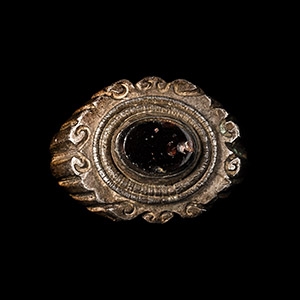
Roman Silver Ring with Garnet
Circa 3rd century A.D.Sold for (Inc. bp): £364
A D-section silver hoop expanding to ribbed shoulders forming the scrolled borders of the plaque, tiered beaded wire collars surrounding an elliptical cell with inset garnet cloison. 40.50 grams, 33.15 mm overall, 22.58 mm internal diameter (approximate size British Z+1 1/2, USA 13, Europe 30.69, Japan 29)
Ex property of a gentleman; acquired in the late 1960s-early 1970s. -
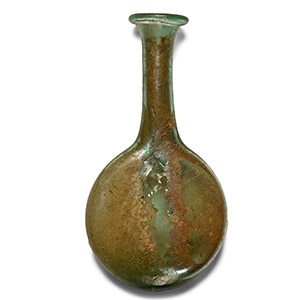
Roman Glass Vessel
2nd-3rd century A.D.Sold for (Inc. bp): £91
With flattened discoid body and tall neck with flared mouth, applied rim. 20.5 grams, 10.6 cm
From a London, UK, collection, 1990s. This lot is accompanied by an illustrated lot declaration signed by the Head of the Antiquities Department, Dr Raffaele D’Amato.
Glass flasks, such as this example, were used as containers for ointments, powders, balms, and other expensive liquids such as perfumes. These flattened spherical vessels were often utilised by pilgrims to carry water on their travels. This particular form appears to be a predecessor to twin-handled pilgrim flasks, which became commonplace later in the 3rd and 4th centuries.
