
Loading, please wait...
LOT 0910
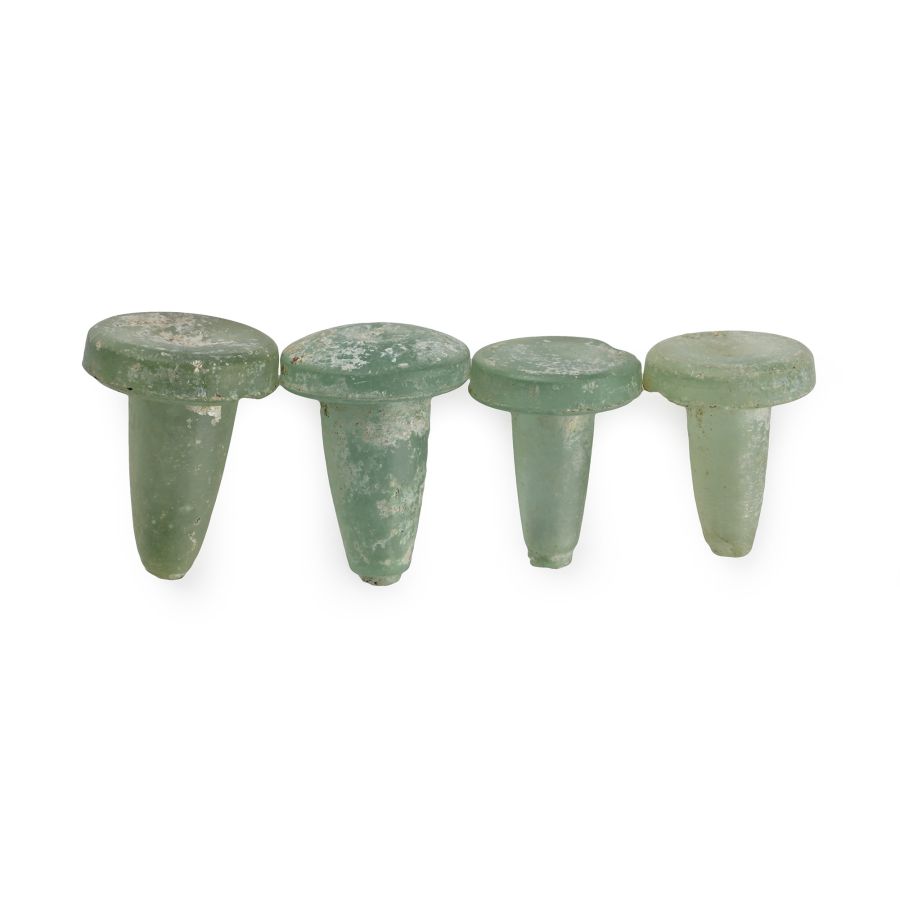
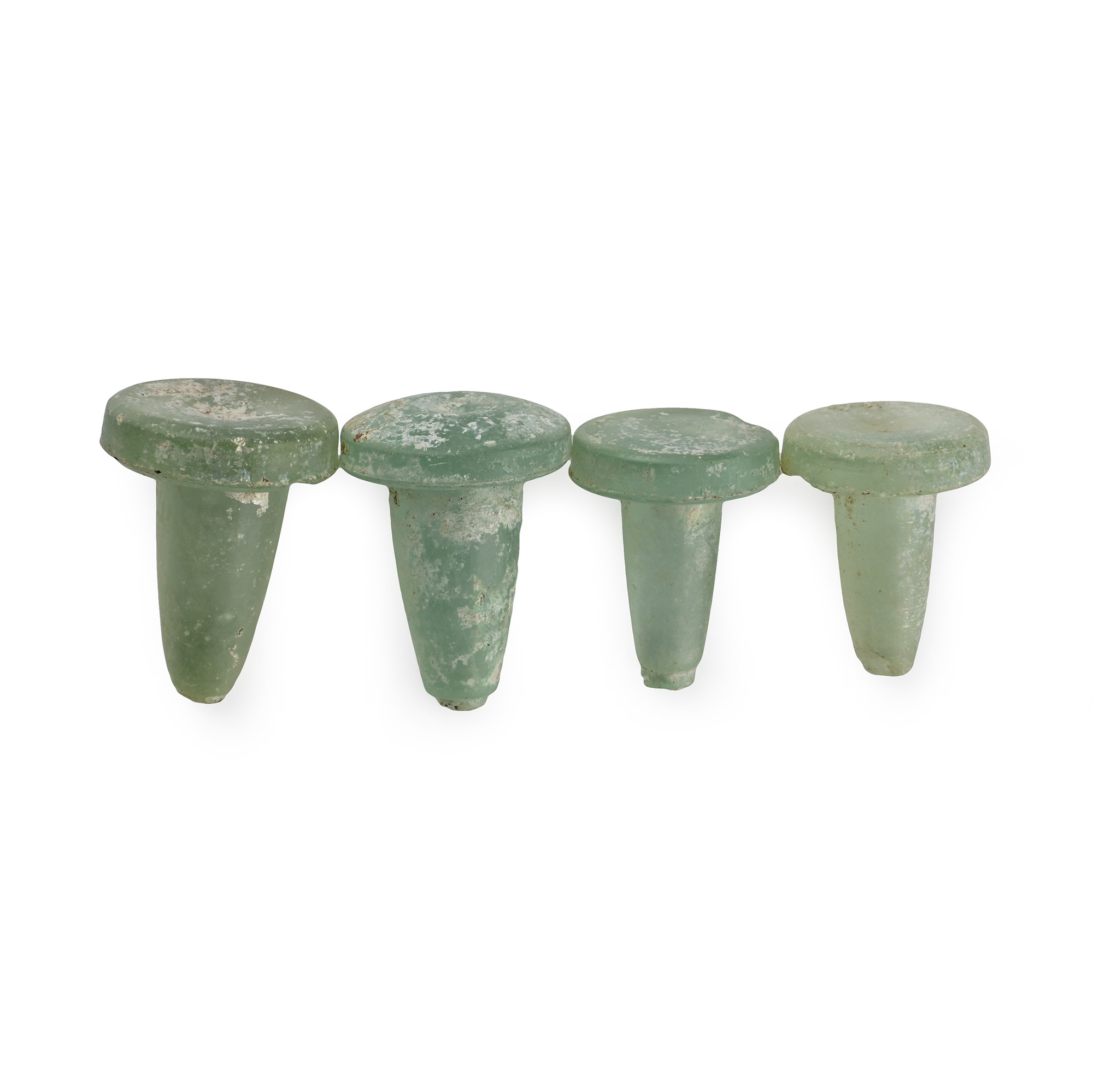
Roman Glass Bottle Stopper Collection
2ND-3RD CENTURY A.D.
1 1/4 -1 1/2 in. (68 grams total, 32.5-39 mm).
Each an aqua glass disc with shallow depression, integral tapering shank. [4, No Reserve]
Provenancewith Archaeologia, Switzerland, before 1983.
Ex private North American collection.
London private collection, 2016.
TimeLine Auctions follows a vetting process to ensure the authenticity and legality of all items, reinforcing our commitment to integrity and responsible trading. Each antiquity, antique, and coin lot undergoes thorough examination by a vetting committee of at least ten external specialists, professional trade association members, scientists, and archaeologists: Our Vetting Process
AUCTIONS:
TimeLine is a leading auction house specialising in antiquities, ancient art, collectables, natural history, coins, medals, and books. Our auctions offer museums, collectors, historians, and enthusiasts the opportunity to acquire unique and historically significant pieces.
-
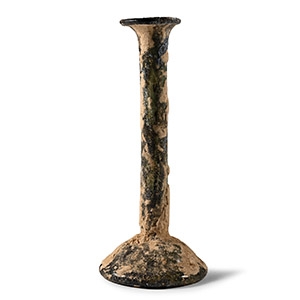
Roman Glass Vessel
1st-3rd century A.D.Estimate: £100 - 140 (+bp*)
Opening Bid: £50
Tall thin translucent pale green vessel with wide foot and dimpled base, tapering stem and flared rim. 27.6 grams, 12.5 cm
From a London, UK, collection, 1990s. This lot is accompanied by an illustrated lot declaration signed by the Head of the Antiquities Department, Dr Raffaele D’Amato.
Similar bottles were produced in Roman Cyprus, mainly. Hayes had divided the Cypriot products into three classes on the basis of the character of the glass. This example belongs to the third class, i.e. ‘very thin walled pieces in a pale fabric, almost colorless in parts’. -
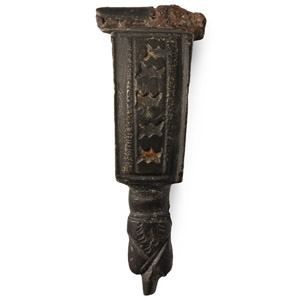
Romano-British Bronze Bow Brooch with Bird Terminal
2nd century A.D.Sold for (Inc. bp): £52
Wide bow with a raised decorative panel with polygonal cells for enamel, zoomorphic finial. 4.66 grams, 37 mm
Found Norfolk, UK. From a Kent collection formed in the 1990s. -
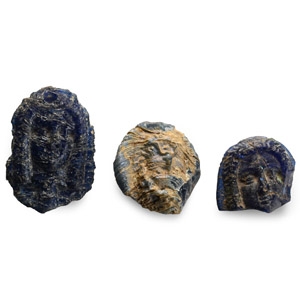
Roman and Later Glass Head Group
1st-4th century A.D. and laterSold for (Inc. bp): £59
Group of three moulded janiform heads, one possibly Hercules. 5.71 grams total, 15-24 mm
with Archaeologia, Switzerland, before 1983. Ex private North American collection. London private collection, 2016.
