
Loading, please wait...
LOT 0741
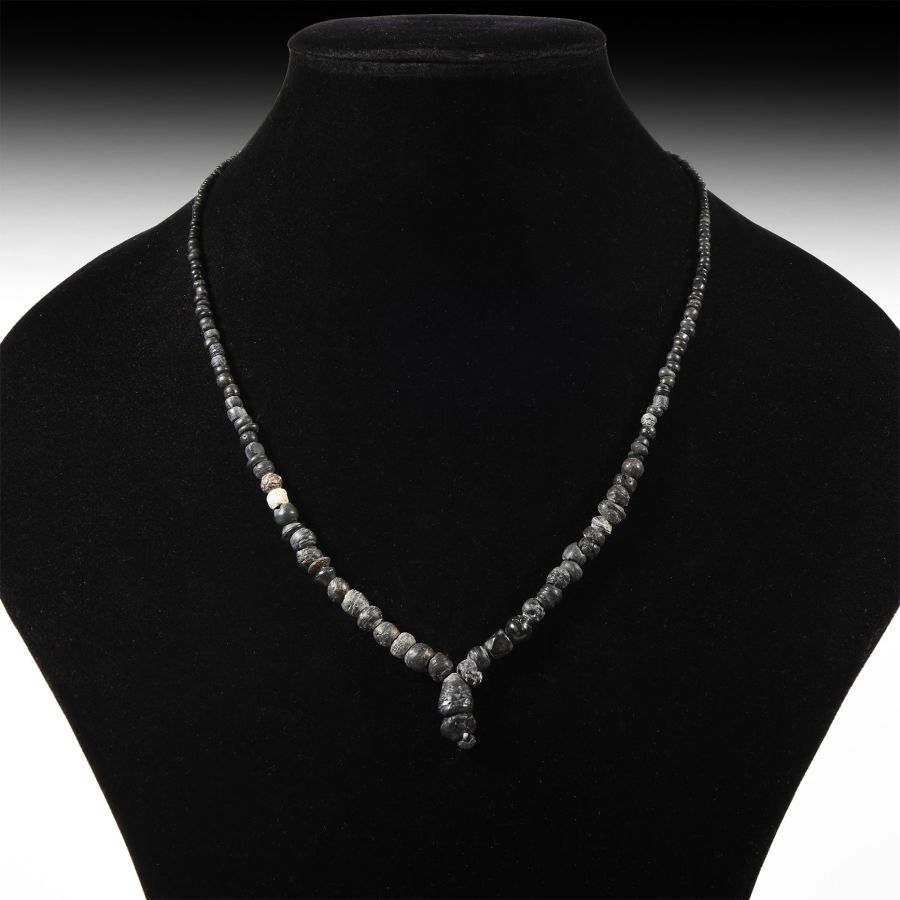
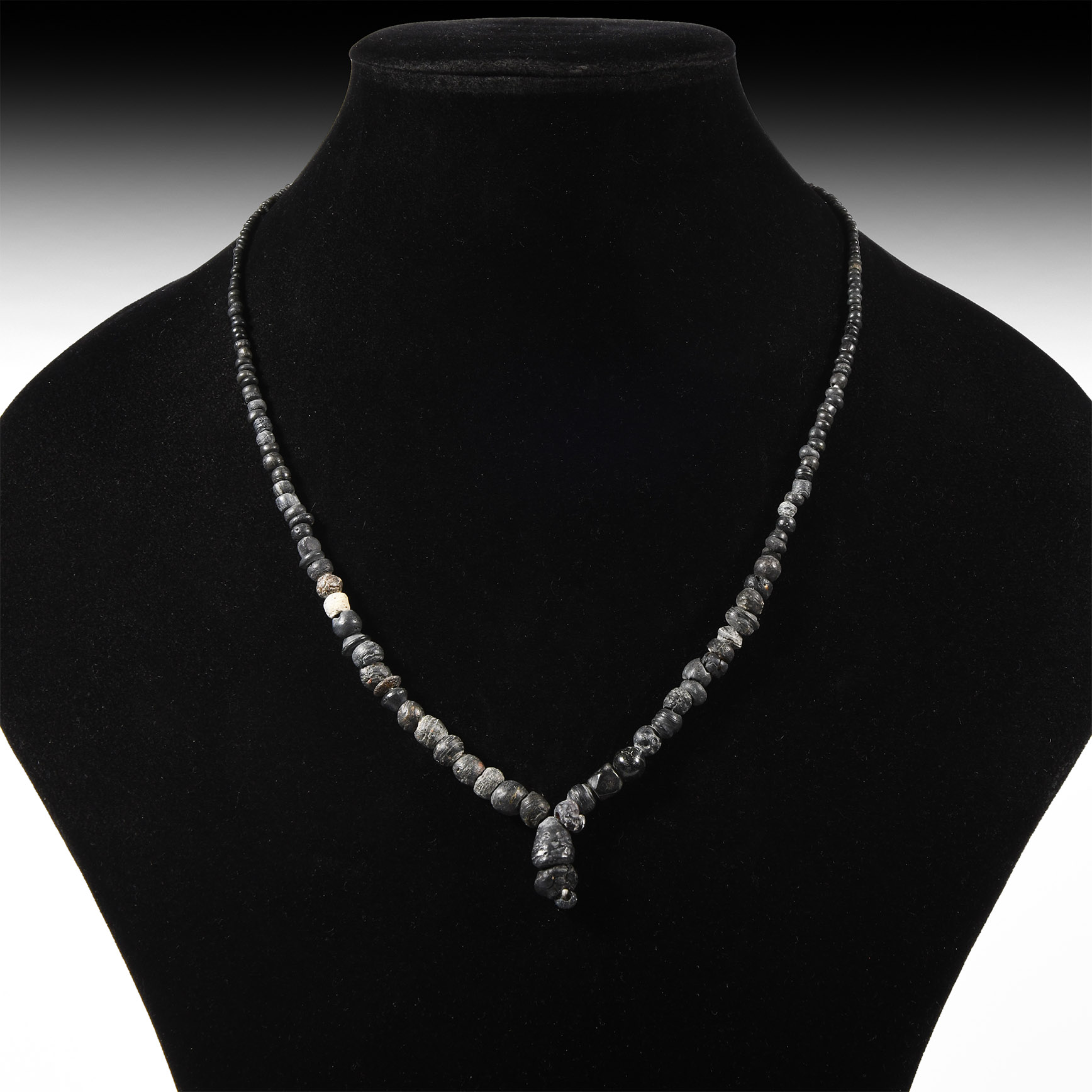
Roman Glass Bead Necklace
2ND-5TH CENTURY A.D. OR LATER
31 1/2 in. (16.8 grams, 80 cm long).
Composed of graduated monochrome opaque black glass beads of various types, including amorphous, facetted, spherical, carinated and other types; restrung. [No Reserve]
ProvenanceEx W.J. collection, 1990s.
CONDITIONTimeLine Auctions follows a vetting process to ensure the authenticity and legality of all items, reinforcing our commitment to integrity and responsible trading. Each antiquity, antique, and coin lot undergoes thorough examination by a vetting committee of at least ten external specialists, professional trade association members, scientists, and archaeologists: Our Vetting Process
AUCTIONS:
TimeLine is a leading auction house specialising in antiquities, ancient art, collectables, natural history, coins, medals, and books. Our auctions offer museums, collectors, historians, and enthusiasts the opportunity to acquire unique and historically significant pieces.
-
.jpg)
Roman Bronze Animal Collection
1st-4th century A.D.Estimate: £600 - 800 (+bp*)
Opening Bid: £333
Comprising: a squirrel nibbling a nut; a rabbit; a monkey with its hands covering its eyes; a mounting lug formed as a beast with outstretched legs; with an earlier Eastern ladle finial terminating in a beast's head. 119 grams total, 28-50 mm
‘The Ancient Menagerie Collection’ formerly the property of a Cambridgeshire lady, collected since the 1990s and acquired from auctions and dealers throughout Europe and the USA, now ex London collection. -
Roman Life-Size Statue Finger Group
1st-3rd century A.D.Sold for (Inc. bp): £390
The trio formed with semi-naturalistic detailing to the nail beds; hollow-formed; including larger-than-life examples. 210 grams total, 45-73 mm
Acquired on the EU art market around 2000. From the collection of a North American gentleman. -
.jpg)
Roman Gemstone with Fisherman
Circa 1st century A.D.Estimate: £150 - 200 (+bp*)
Opening Bid: £75
Engraved on a circular carnelian stone, displaying a seated fisherman with a fish on his line; accompanied by a museum-quality impression. 1.15 grams, 13 mm
Acquired on the European art market in the late 1960s-early 1970s.
