
Loading, please wait...
LOT 0657
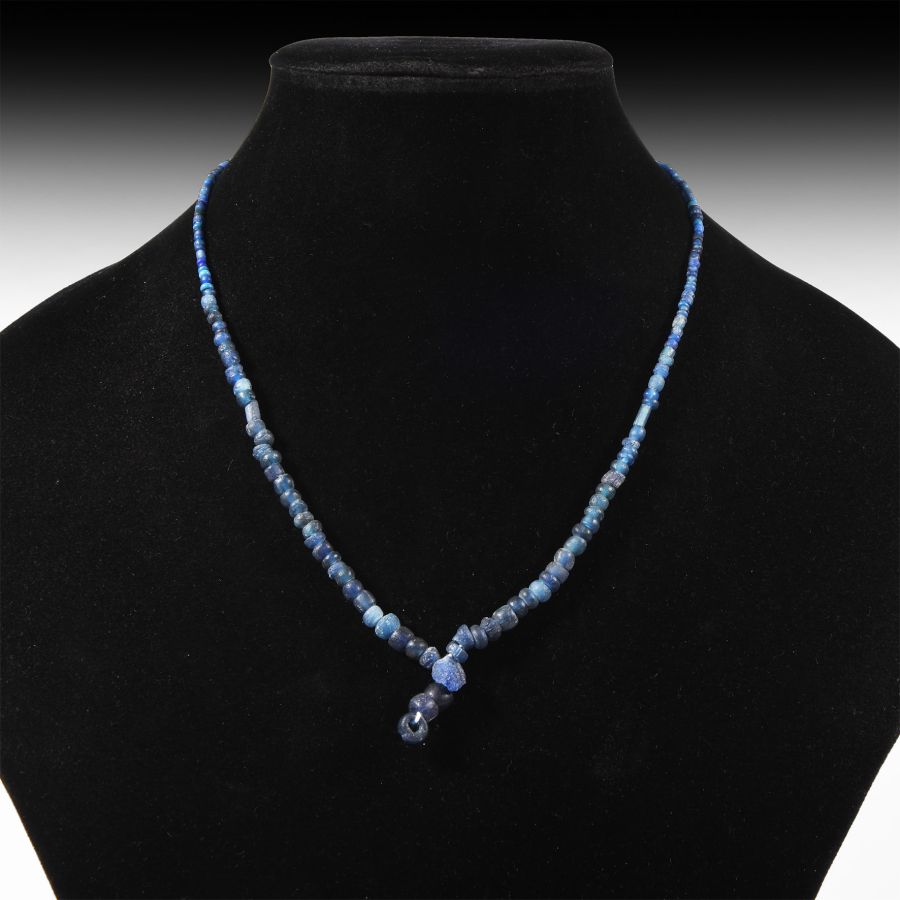
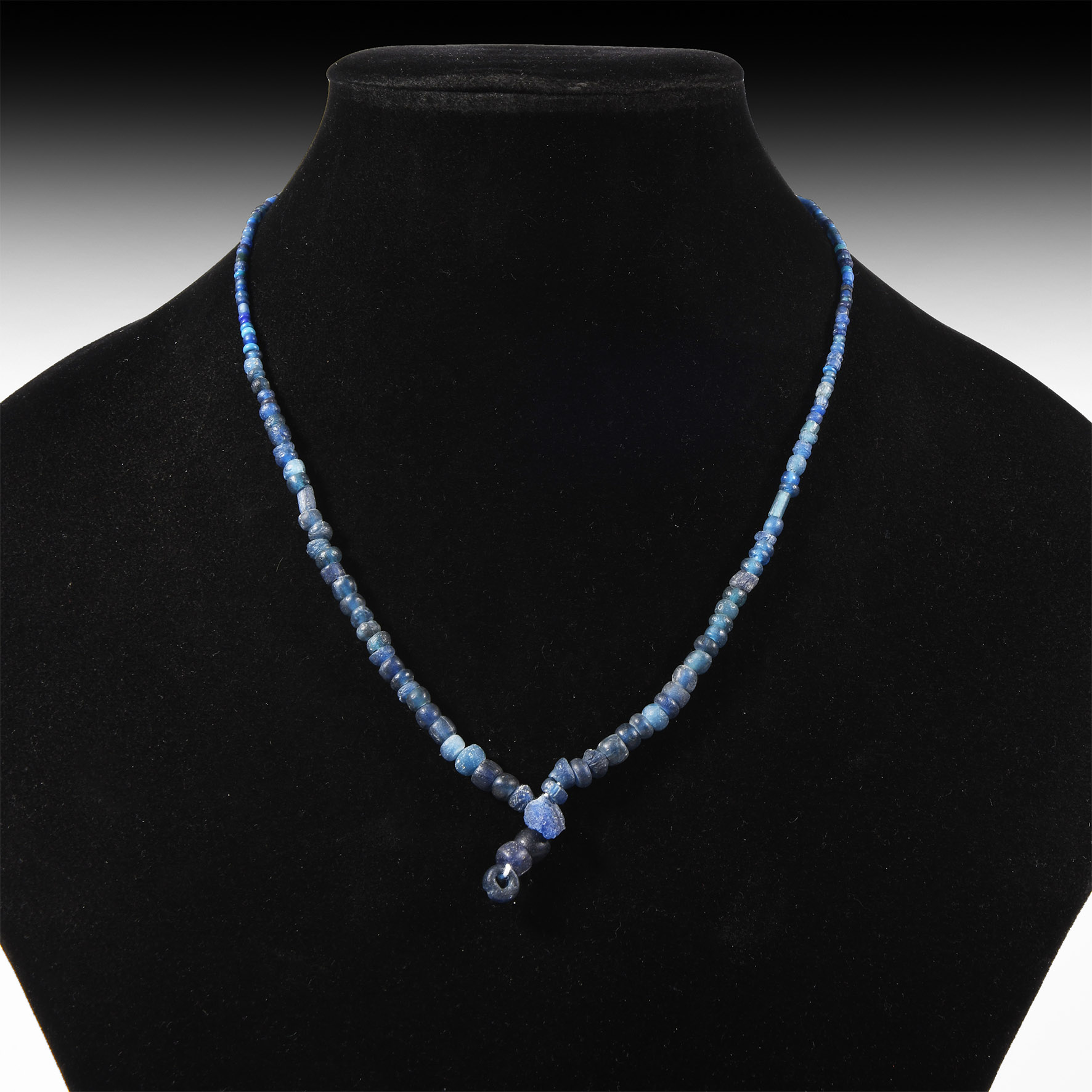
Roman Glass Bead Necklace
2ND-5TH CENTURY A.D. OR LATER
28 in. (11.2 grams, 71 cm long).
Composed of graduated blue glass beads of various types, including oblate, tubular, barrel-shaped and other types. [No Reserve]
ProvenanceEx W.J. collection, 1990s.
CONDITIONTimeLine Auctions follows a vetting process to ensure the authenticity and legality of all items, reinforcing our commitment to integrity and responsible trading. Each antiquity, antique, and coin lot undergoes thorough examination by a vetting committee of at least ten external specialists, professional trade association members, scientists, and archaeologists: Our Vetting Process
AUCTIONS:
TimeLine is a leading auction house specialising in antiquities, ancient art, collectables, natural history, coins, medals, and books. Our auctions offer museums, collectors, historians, and enthusiasts the opportunity to acquire unique and historically significant pieces.
-
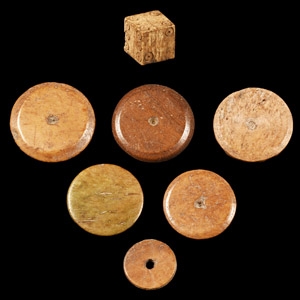
Roman 'Thames' Bone Gaming Piece and Dice Group
1st-4th century A.D.Sold for (Inc. bp): £124
Comprising six polished discoid counters and a single dice, the latter configured: 1:6; 2:5; 3:4 in punched ring-and-dot markers. 8 grams total, 7-18 mm
Found Billingsgate spoil from the Thames foreshore, London, UK. -
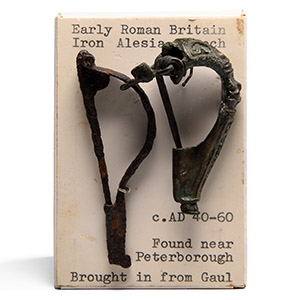
Roman Bronze Hattatt Collection Brooch Group
1st century B.C.-1st century A.D.Sold for (Inc. bp): £182
Comprising: an iron Alesia-type brooch with deep tapering bow, long foot with recurved integral knop, curled hinge; the type of Gaulish origin; mounted on a custom-made display panel stand with Hattatt collection description and further information on a label to the reverse; inked collection number to the reverse of the bow; the other a bronze trumpet brooch with moulded arc decorations on the head, sprung pin moving freely, tapering body with acanthus motif; horizontal ribbing and zigzag motifs, plain underfoot; retaining swivel chain loop with traces of red enamel; collection number to the reverse of the bow. 25.6 grams total, 63-70 mm (82 grams total, 85 mm high including stand)
Alesia type found near Peterborough, Cambridgeshire, UK; trumpet type found in Northamptonshire, UK.
Hattatt remarks of the Alesia brooch: 'In remarkably fine condition for iron, this could well have been worn by one of the Roman invaders.' -
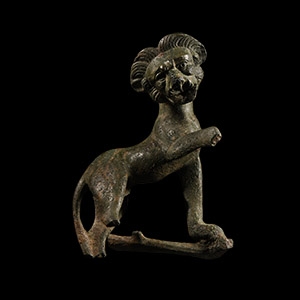
Roman Bronze Lion Statuette
2nd-4th century A.D.Estimate: £800 - 1,000 (+bp*)
Opening Bid: £444
Of slender form, modelled standing right on a bar, right paw held aloft, stylised face and mane detailing. 104 grams, 84 mm
‘The Ancient Menagerie Collection’ formerly the property of a Cambridgeshire lady, collected since the 1990s and acquired from auctions and dealers throughout Europe and the USA, now ex London collection.
