
Loading, please wait...
LOT 0718
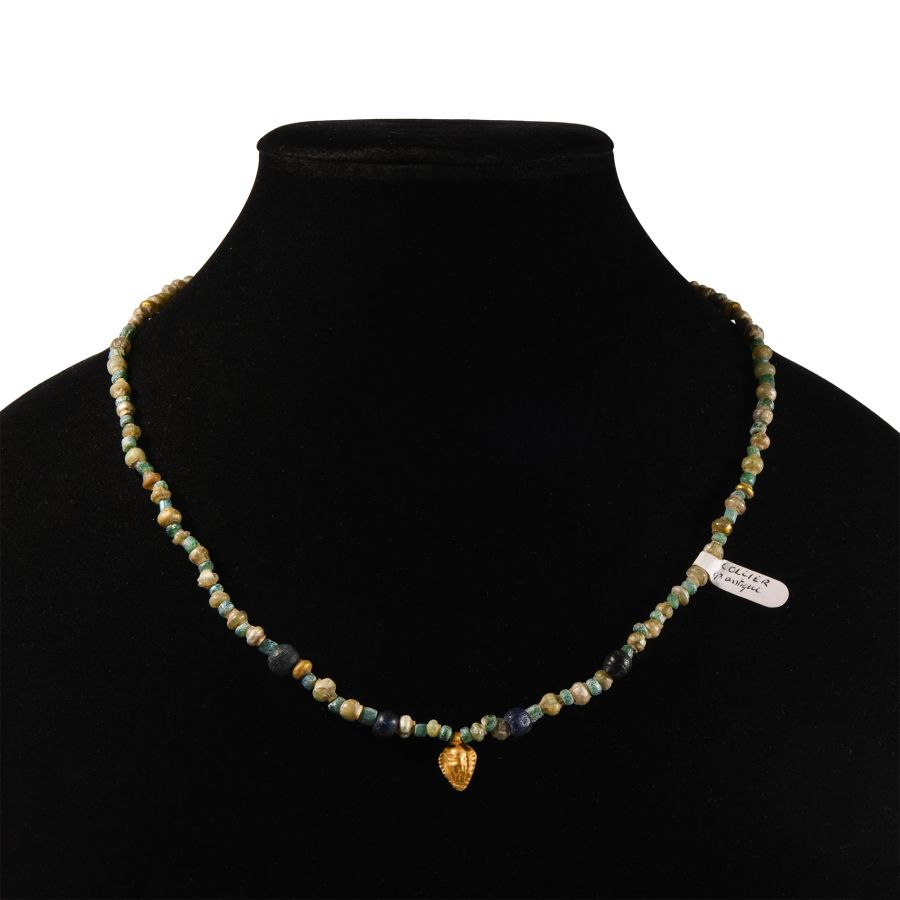
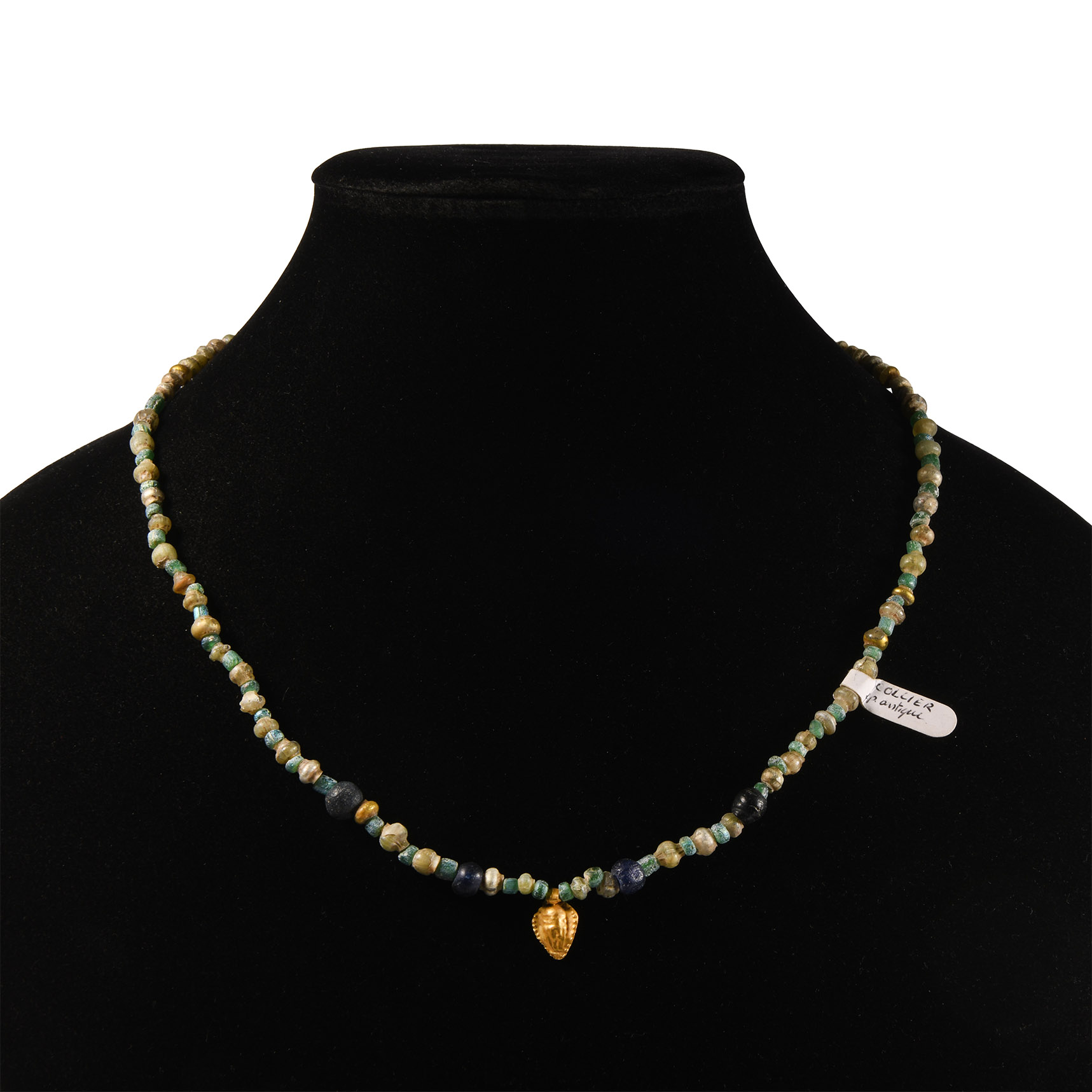
Roman Glass Bead Necklace with Gold Pendant
1ST-4TH CENTURY A.D.
19 1/4 in. (15.3 grams, 49 cm long).
Composed mainly of semi-opaque beads of tubular, spherical, carinated and other types, including gold in glass and examples with iridescence, together with a sheet-gold repoussé bead; restrung.
ProvenanceEx Garcia collection, France, 1990s.
CONDITIONTimeLine Auctions follows a vetting process to ensure the authenticity and legality of all items, reinforcing our commitment to integrity and responsible trading. Each antiquity, antique, and coin lot undergoes thorough examination by a vetting committee of at least ten external specialists, professional trade association members, scientists, and archaeologists: Our Vetting Process
AUCTIONS:
TimeLine is a leading auction house specialising in antiquities, ancient art, collectables, natural history, coins, medals, and books. Our auctions offer museums, collectors, historians, and enthusiasts the opportunity to acquire unique and historically significant pieces.
-
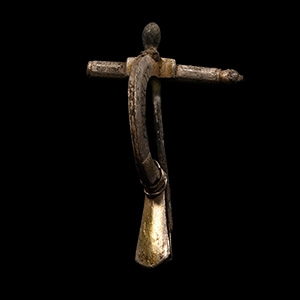
Roman Silver Crossbow Brooch with Dedicatory Inscription
4th century A.D.Estimate: £500 - 700 (+bp*)
Opening Bid: £278
Featuring rounded knops to the head, the bow with a dedicatory inscription in Latin letters 'VTER FELIX IURE VICTO'. 19.5 grams, 62 mm
Acquire in the 1990s. Ex Cambridgeshire, UK, collection.
The dedicatory inscription 'VTERE FELIX', 'use it with good luck' or 'with happiness' is often found on Roman military artefacts, like belt fittings, brooches, and armlets; but it is rarely accompanied by 'IURE VICTO' inscription ([being the] rightful winner). The inscription is typical of the late Roman military world, but it can also refer to people using the brooch in civil duties, these fibulae being ordinarily gifted to the militia armata and non armata. -
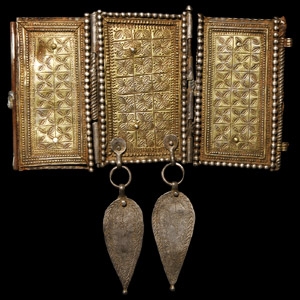
Roman Silver-Gilt Military Belt Plate Group for an Elite Imperial Officer
4th-5th century A.D.Sold for (Inc. bp): £4,160
Comprising three rectangular belt fittings: two with similar laurel leaf decoration and raised border, the third central plaque with two foliate pendants with punched decoration. 243 grams, 17 cm
Very fine, excellent condition
Acquired before the 1970s. Ex J.L. collection, Surrey, U.K., thence by descent.
Most precious military belts were reserved for soldiers belonging to Legiones Palatinae, i.e. the legions forming part of the imperial Comitatus, accompanying the emperor in his military expeditions. -
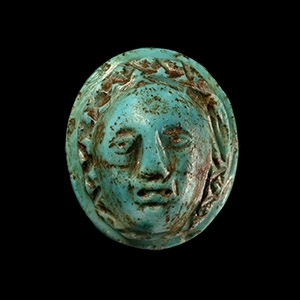
Roman Turquoise Cameo with Head of Medusa
1st-2nd century A.D.Sold for (Inc. bp): £845
Carved in relief in oval form, with stylised features. 0.89 grams, 11 mm
Ex private collection, 1980s. Acquired on the UK art market in the 1990s.
Turquoise is a very rare material for Roman cameos.
