
Loading, please wait...
LOT 0802
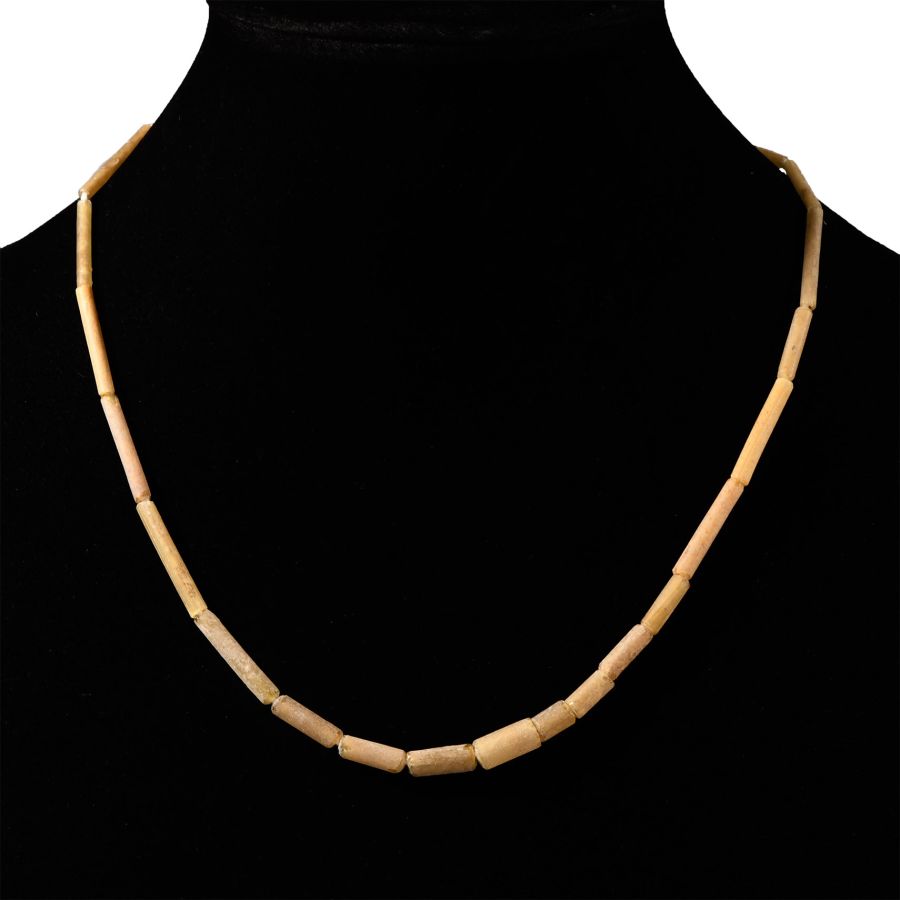
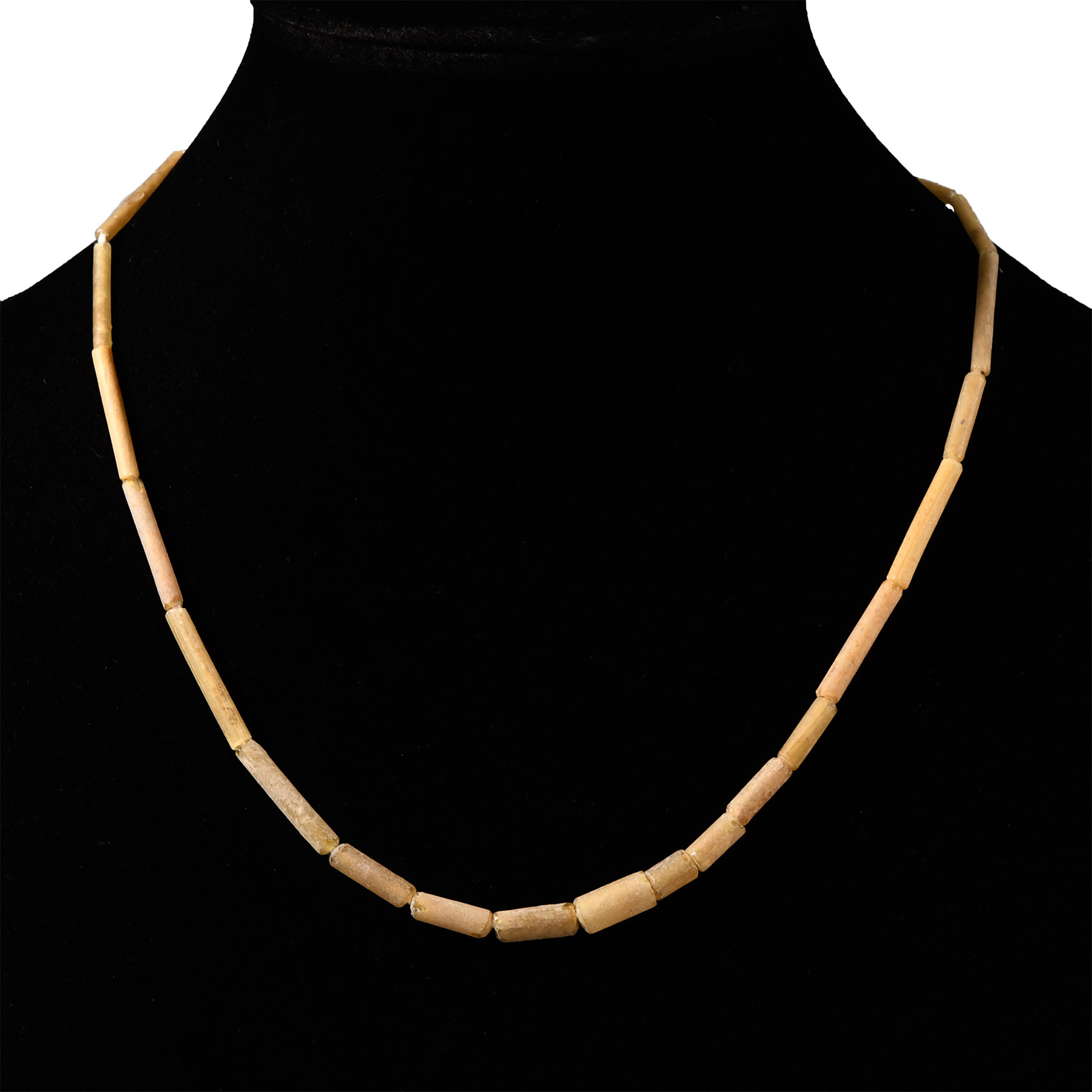
Roman Glass Bead Necklace String
1ST-4TH CENTURY A.D. AND LATER
18 1/2 in. (8.76 grams, 46.5 cm).
Restrung group of graduated tubular beads. [No Reserve]
ProvenanceAcquired 1980-2015.
Ex Abelita family collection.
TimeLine Auctions follows a vetting process to ensure the authenticity and legality of all items, reinforcing our commitment to integrity and responsible trading. Each antiquity, antique, and coin lot undergoes thorough examination by a vetting committee of at least ten external specialists, professional trade association members, scientists, and archaeologists: Our Vetting Process
AUCTIONS:
TimeLine is a leading auction house specialising in antiquities, ancient art, collectables, natural history, coins, medals, and books. Our auctions offer museums, collectors, historians, and enthusiasts the opportunity to acquire unique and historically significant pieces.
-
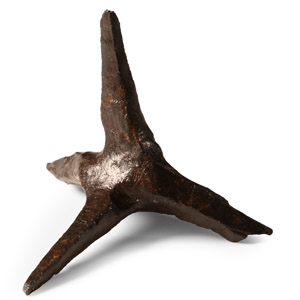
Roman Iron Caltrop
4th century A.D. or laterSold for (Inc. bp): £143
Hand-forged with square-section spikes. 8.74 grams, 42 mm
From the collection of the famous author, writer and speaker, Gordon Bailey, Essex, UK; formed since 1968.
Caltrops have been recovered from Roman sites where military action took place, and from medieval fortresses areas. Caltrops were used to slow down an enemy infantry attack, and were a deterrent to mounted soldiers. -
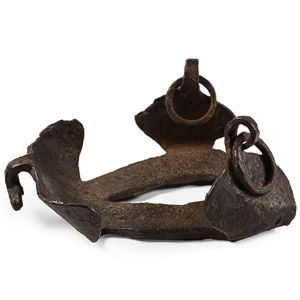
Iron 'Hippo Sandal' Military Horse Shoe
1st-4th century A.D.Sold for (Inc. bp): £286
Iron shoe with lateral curved plates with attachment rings rear panel with bar also for attachment. 363 grams, 15 cm
From the collection of the famous author, writer and speaker, Gordon Bailey, Essex, UK; formed since 1968.
Hipposandals (soleae ferreae) were used on horses with injured hooves, a sort of equine orthopaedic shoe used by the mulomedicus, i.e. a Roman military veterinarian. Another important function was that to protect the hooves of the horse from injuries and damages from hard objects. The hippo sandal of type 1 was formed from a sub-oval plate which tapered towards the front and rear with projections at the front, back and on either side. The heel was upturned at about 45 degrees and flared outwards. It would have terminated with a downward facing hook, now missing. The base of the sole was flat. -
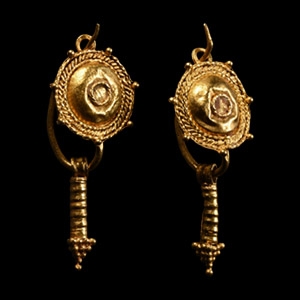
Roman Gold Earrings with Pillar Drops
1st-2nd century A.D.Sold for (Inc. bp): £520
Matched pair, each a wire hoop with hook-and-eye closure, domed shield with central filigree ring, radiating granules and braided filigree to the rim; corrugated tubular dangle with granule cluster finial. 5.40 grams Total, 40.15-16.55 mm
Property of an Essex, UK, lady; received by descent from her grandfather.
