
Loading, please wait...
_900x900.jpg "Roman Glass and Other Mixed Bead String")
_200x200.jpg "Roman Glass and Other Mixed Bead String")
.jpg "Roman Glass and Other Mixed Bead String")
LOT 0589
Roman Glass and Other Mixed Bead String
CIRCA 1ST CENTURY A.D. AND LATER
35 5/8 in. (21.6 grams, 90.5 cm long).
A restrung designer necklace composed of graduated translucent yellow glass beads of various types. [No Reserve]
ProvenanceAcquired 1980-2015.
Ex Abelita family collection.
TimeLine Auctions follows a vetting process to ensure the authenticity and legality of all items, reinforcing our commitment to integrity and responsible trading. Each antiquity, antique, and coin lot undergoes thorough examination by a vetting committee of at least ten external specialists, professional trade association members, scientists, and archaeologists: Our Vetting Process
AUCTIONS:
TimeLine is a leading auction house specialising in antiquities, ancient art, collectables, natural history, coins, medals, and books. Our auctions offer museums, collectors, historians, and enthusiasts the opportunity to acquire unique and historically significant pieces.
-
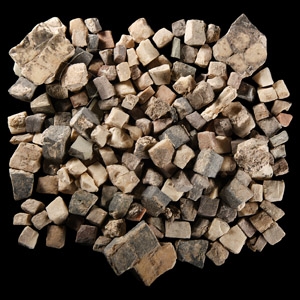
Roman Stone Mosaic Fragments and Tesserae
1st-4th century A.D.Sold for (Inc. bp): £286
Including examples of various sizes and colours and sections still set in Roman cement. 139 grams total, 7-27 mm
Acquired 1980-2015. Ex Abelita family collection. -
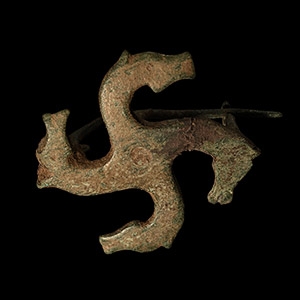
Roman Bronze Horse-Headed Brooch
3rd century A.D.Sold for (Inc. bp): £78
Plate brooch with four radiating horse-heads on curved neck, central rosette motif, pin and catch to the reverse. 7.4 grams, 37 mm
Ex Cambridgeshire, UK, collection, 1980s. -
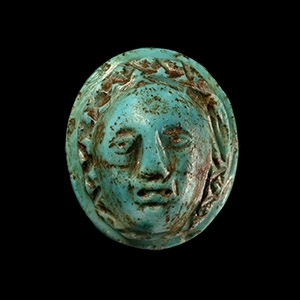
Roman Turquoise Cameo with Head of Medusa
1st-2nd century A.D.Sold for (Inc. bp): £845
Carved in relief in oval form, with stylised features. 0.89 grams, 11 mm
Ex private collection, 1980s. Acquired on the UK art market in the 1990s.
Turquoise is a very rare material for Roman cameos.
