
Loading, please wait...
LOT 0597
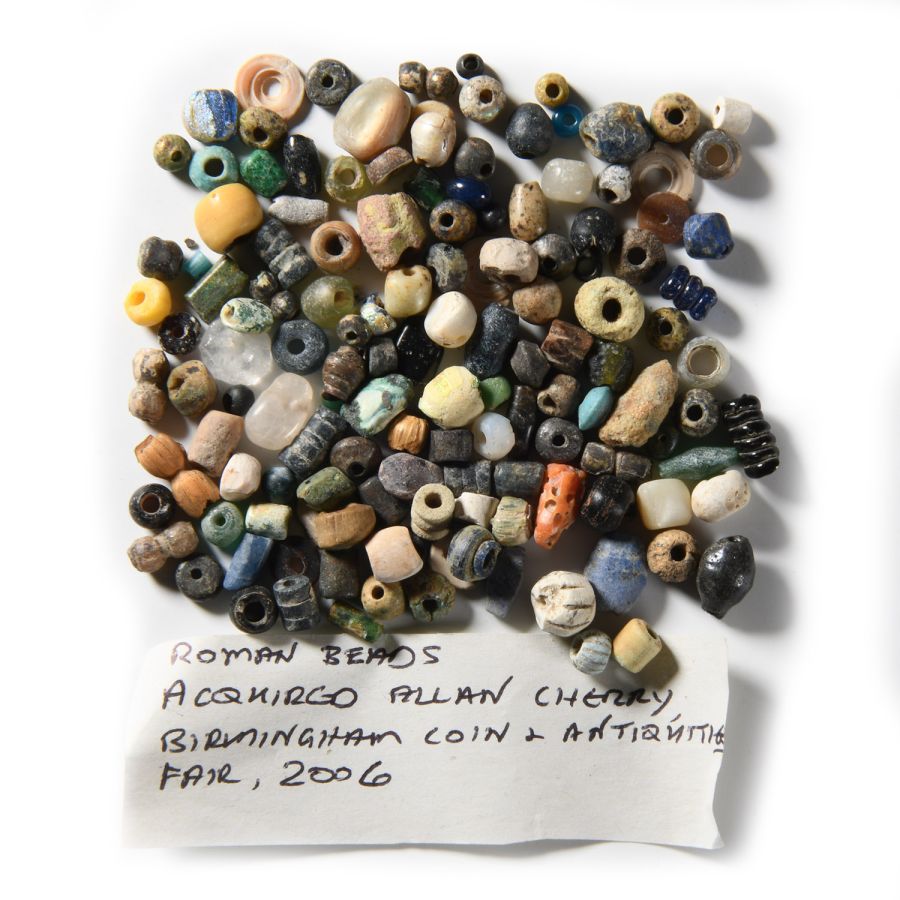
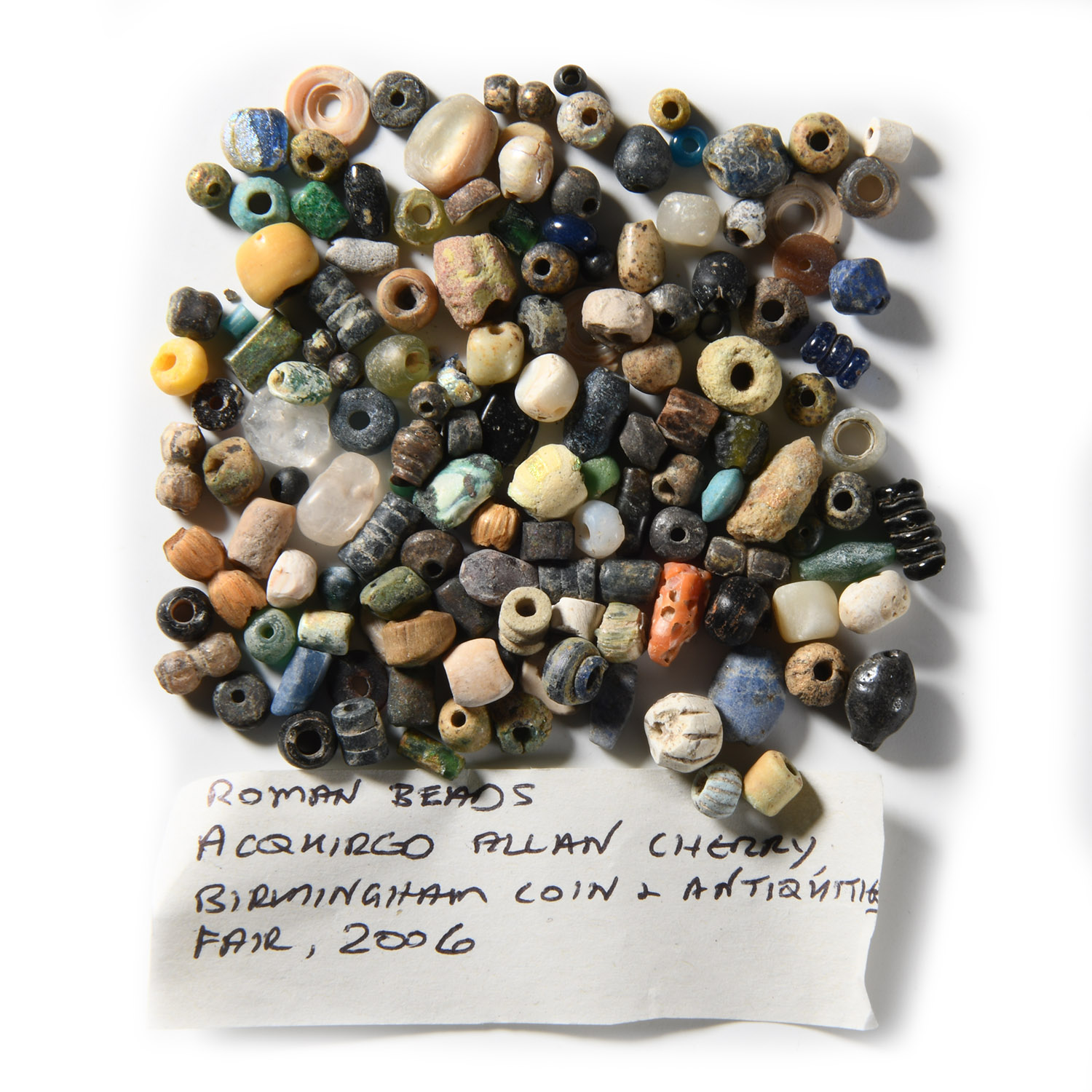
Roman Glass and Other Bead Group
1ST-4TH CENTURY A.D.
1/8 - 3/8 in. (29 grams total, 2-11 mm).
Including oblate, melon, tubular, fusiform and other types. [127, No Reserve]
ProvenanceAcquired from Allan Cherry at the Birmingham Coin & Antiquities Fair, UK, in 2006.
Ian Wilkinson collection, Nottinghamshire, UK.
TimeLine Auctions follows a vetting process to ensure the authenticity and legality of all items, reinforcing our commitment to integrity and responsible trading. Each antiquity, antique, and coin lot undergoes thorough examination by a vetting committee of at least ten external specialists, professional trade association members, scientists, and archaeologists: Our Vetting Process
AUCTIONS:
TimeLine is a leading auction house specialising in antiquities, ancient art, collectables, natural history, coins, medals, and books. Our auctions offer museums, collectors, historians, and enthusiasts the opportunity to acquire unique and historically significant pieces.
-
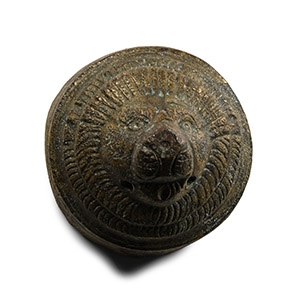
Roman Bronze Lion's Head Casket Mount
2nd-3rd century A.D.Sold for (Inc. bp): £91
Domed in profile with concentric stepped tiers and hatched fur texture, central lion-mask with lateral piercings for the muzzle, slightly flared rim; lead plug to interior. 168 grams, 55 mm
Found Wiltshire, UK, before 1974. -
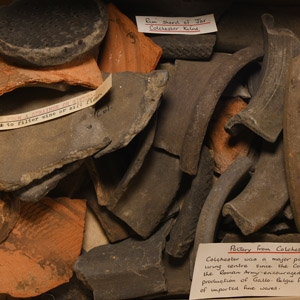
Romano-British Decorated 'Colchester' Pottery Sherds
1st-4th century A.D.Sold for (Inc. bp): £52
Including rim- and base-fragments with moulded or applied decorative detailing, some with inked inscriptions including: 'Col' for Colchester. 1.42 kg total, 3-11.4 cm
Found Colchester, UK. From the collection of a late East Anglian teacher and antiquarian who retired to the Isle of Wight in Hampshire, UK. He amassed a large collection of objects between the 1960s-1980s. Accompanied by a hand written information display card entitled 'Pottery from Colchester ...', and two other display cards, one typed one handwritten. -
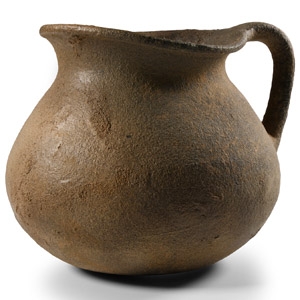
Romano-British Grey Ware Vessel
2nd-3rd century A.D.Sold for (Inc. bp): £65
Squat ceramic jug with dimple base, broad shoulder, flared mouth and single strap handle. 188 grams, 13 cm wide
Found UK. From the collection of a late East Anglian teacher and antiquarian who retired to the Isle of Wight in Hampshire, UK. He amassed a large collection of objects between the 1960s-1980s.
