
Loading, please wait...
LOT 0833
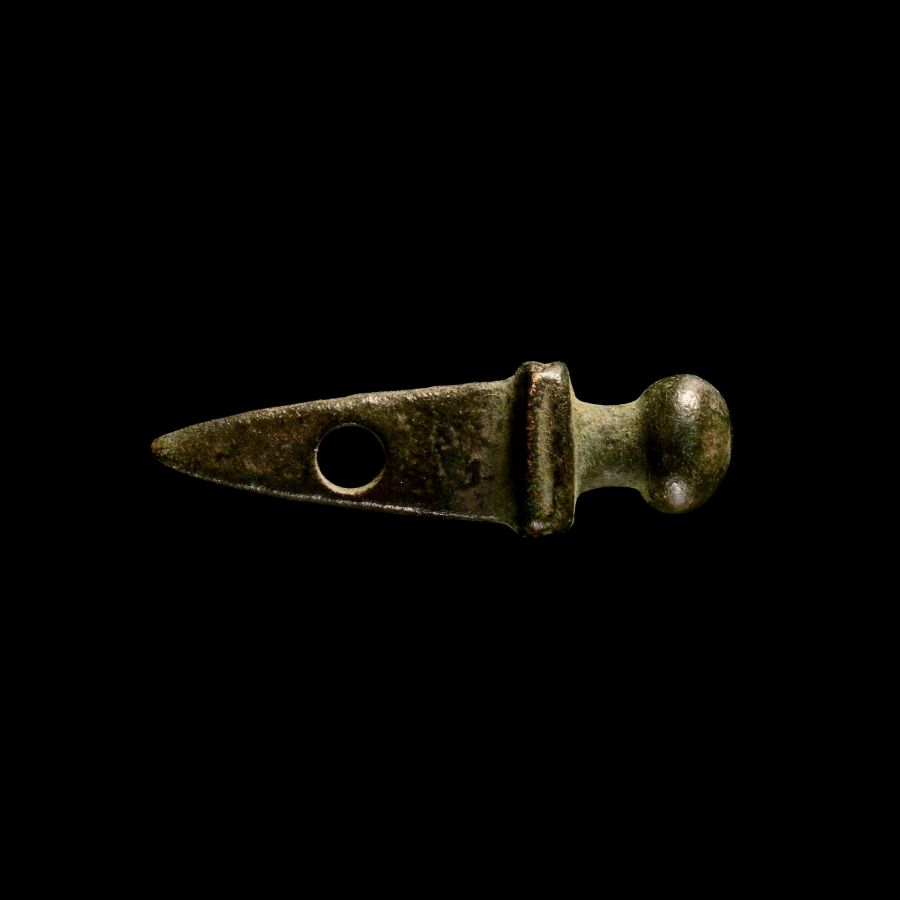
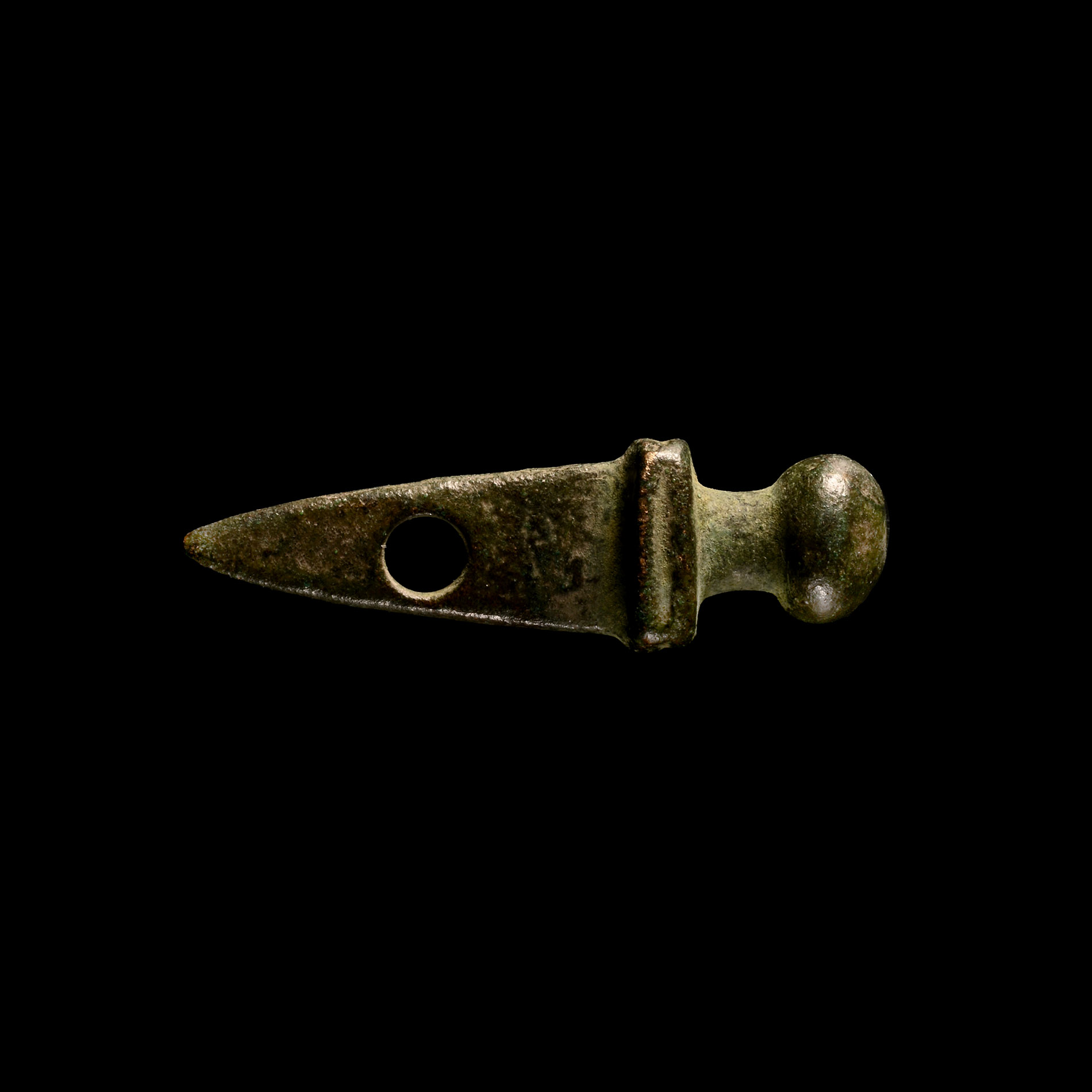
Roman Gladius Sword Amulet
CIRCA 1ST CENTURY B.C.-1ST CENTURY A.D.
1 1/4 in. (4.50 grams, 31 mm).
A miniature sword-shaped votive or amulet with ribbed guard and knop finial; pierced through the blade. [No Reserve]
ProvenanceEx property of a North West London gallery; formerly in a 1980s collection.
CONDITIONTimeLine Auctions follows a vetting process to ensure the authenticity and legality of all items, reinforcing our commitment to integrity and responsible trading. Each antiquity, antique, and coin lot undergoes thorough examination by a vetting committee of at least ten external specialists, professional trade association members, scientists, and archaeologists: Our Vetting Process
AUCTIONS:
TimeLine is a leading auction house specialising in antiquities, ancient art, collectables, natural history, coins, medals, and books. Our auctions offer museums, collectors, historians, and enthusiasts the opportunity to acquire unique and historically significant pieces.
-
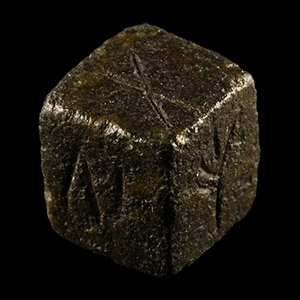
Romano-British Bronze Military 'Caister Fort' Gaming Dice with Mystical Symbols
Circa 1st century A.D.Sold for (Inc. bp): £546
Cuboid die with five sides bearing incised symbols: ring-and-dot (or theta Θ), 'IV' (for 'four'), saltire (or 'X' for 'ten'), frond with four spurs to each side, similar with one spur to each side. 4.5 grams, 8.7 mm
Found by the Roman fort at Caister, east of Norwich, Norfolk, UK, prior to 1998. Acquired from Richard Gladdle, 9th June 1998. From the important private collection of dice and gaming pieces of Colin Narbeth, London, UK, collection no.42. Accompanied by a Colin Narbeth catalogue identification card. Accompanied by a copy of the relevant Celtic & Roman Artefacts book pages where this object is published.
The conventional Roman dice were made in bone or lead, with dots representing numbers from 1 to 6. Roman dice from the Romano-British settlements are often poorly made and often had opposite sides that do not add up to 7. This dice is unique in the panorama of the Romano-British dice, because the symbols probably represent an alternative to the simple numerical dimples which appear on most dices. -
.jpg)
'The Anglesey' Romano-British Marble Head of a Celtic Warrior
1st-2nd century A.D.Sold for (Inc. bp): £7,150
Carved with comma-leaf detailing to the hair, a low brow over almond-shaped eyes, broad triangular nose and thick moustache obscuring the mouth; mounted on a custom-made stand. 7.3 kg total, 28.5 cm high including stand
Found Anglesey, Wales, 1978. From a collection acquired on the UK art market from various auction houses and collections mostly before 2000. From an important Cambridgeshire estate; thence by descent. Accompanied by a newspaper article on the find.
The style of execution is rather more refined than for the majority of stone heads, and lacks the characteristic slit mouth. Same elements of the design are seen on the figure from Otley (Jackson, no.25) and especially that from Bradford-Heaton (no.16) which shares the prominent moustache. -
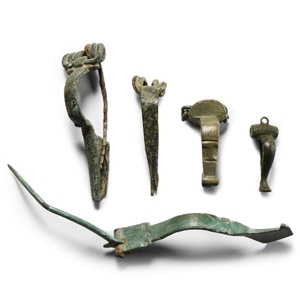
Roman Bronze Brooch Group
1st century A.D.Sold for (Inc. bp): £65
Including P-shaped, T-shaped, La Tène III, and other types. 39 grams total, 2.9-11.1 cm
Ex property of an Essex gentleman. Property of a Scottish collector, acquired in 2013.
