
Loading, please wait...
LOT 0702
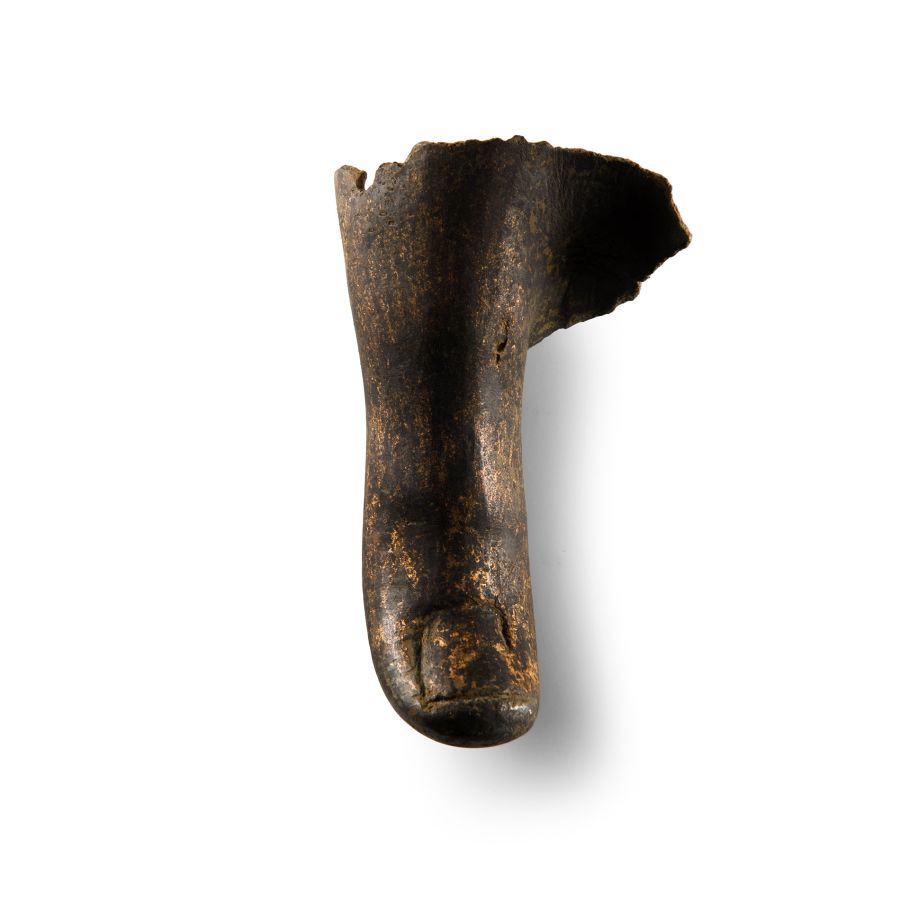
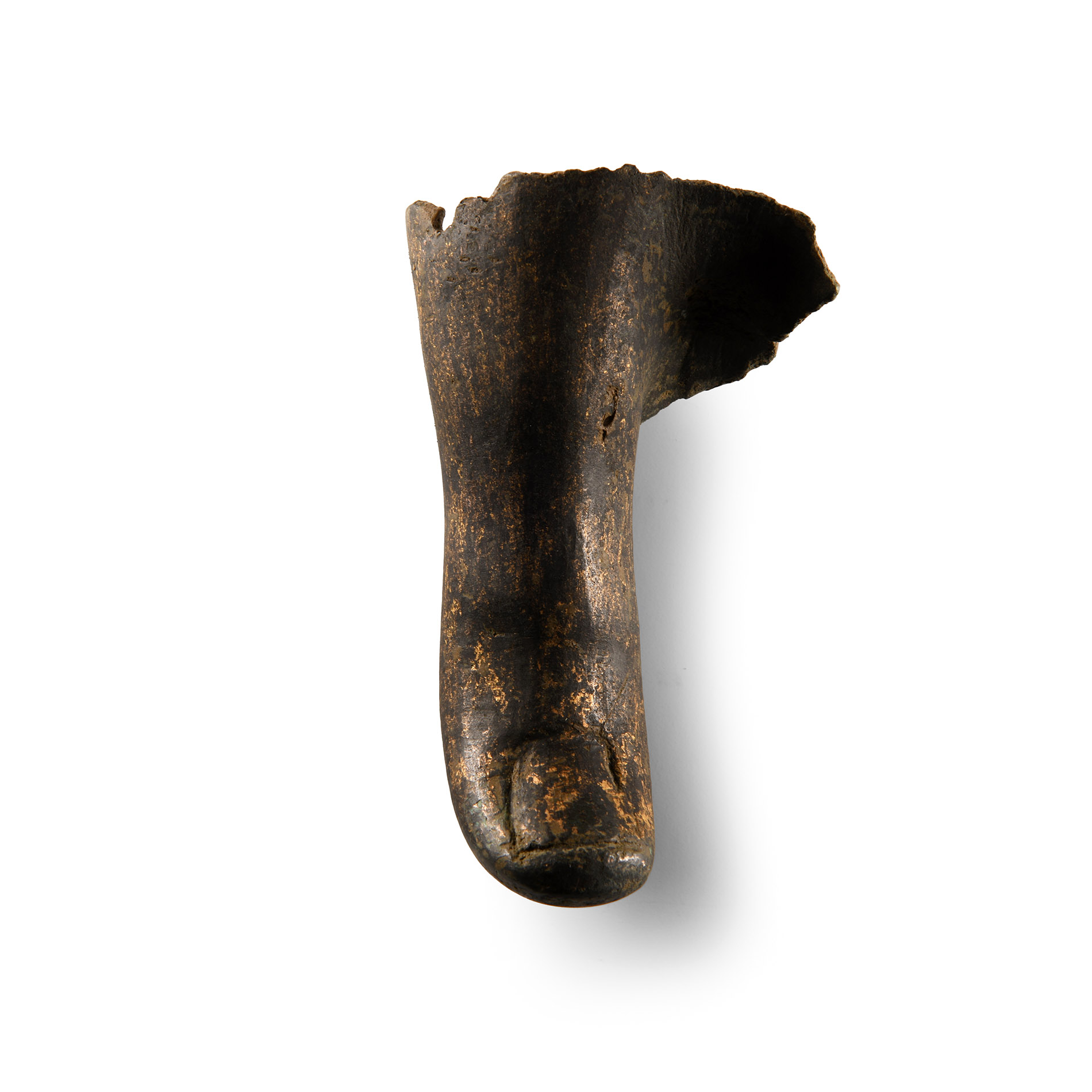
Roman Gilt Bronze Statue Thumb
3RD CENTURY A.D.
3 3/4 in. (178 grams, 95 mm).
Hollow-formed left thumb with detailed nail.
ProvenanceAcquired in Europe before 2001.
European private collection.
TimeLine Auctions follows a vetting process to ensure the authenticity and legality of all items, reinforcing our commitment to integrity and responsible trading. Each antiquity, antique, and coin lot undergoes thorough examination by a vetting committee of at least ten external specialists, professional trade association members, scientists, and archaeologists: Our Vetting Process
AUCTIONS:
TimeLine is a leading auction house specialising in antiquities, ancient art, collectables, natural history, coins, medals, and books. Our auctions offer museums, collectors, historians, and enthusiasts the opportunity to acquire unique and historically significant pieces.
-
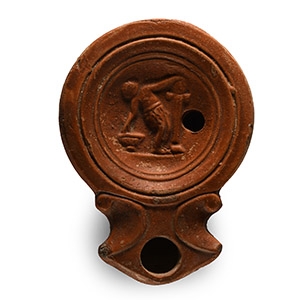
Roman Terracotta Oil Lamp with Figure
1st-2nd century A.D.Sold for (Inc. bp): £286
Comprising a shallow discus framed by concentric lines, low-relief image of a standing male reaching for a bowl with his right hand whilst supporting himself by grasping a low pillar with his left hand, filling hole flanking the pillar; volute to each side of the nozzle; maker's mark 'SVRIEPII'. 80 grams, 10.5 cm
Acquired on the European art market, 1980s. English private collection.
The period of activity of several well-known workshops—L M A D I E C , L M V N S V C , E R O T I S , G A B M E R C , and L M S V —is late Flavian to Trajanic, possibly Hadrianic.Based on this, we will not refer to the broader and too approximate dating given by Bailey to his group IV: Claudian to Trajanic. -
.jpg)
Roman 'Essex' Bronze Brooch Collection
1st-4th century A.D.Sold for (Inc. bp): £59
Six brooches of various types, including one example with remains of polychrome enamelling; incomplete. 46 grams total, 22-62 mm
Found Essex, UK. -
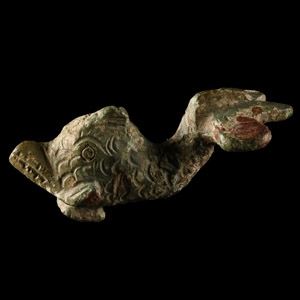
Roman Bronze Dolphin Statuette
Circa 2nd-3rd century A.D.Sold for (Inc. bp): £98
Modelled in the round with scale detailing, pellet eyes, rectangular mounting lug. 25.4 grams, 44 mm
Property of the vendor's grandfather, thence by family descent, circa 1985. From the private collection of a New York, USA gentleman.
