
Loading, please wait...
LOT 0635
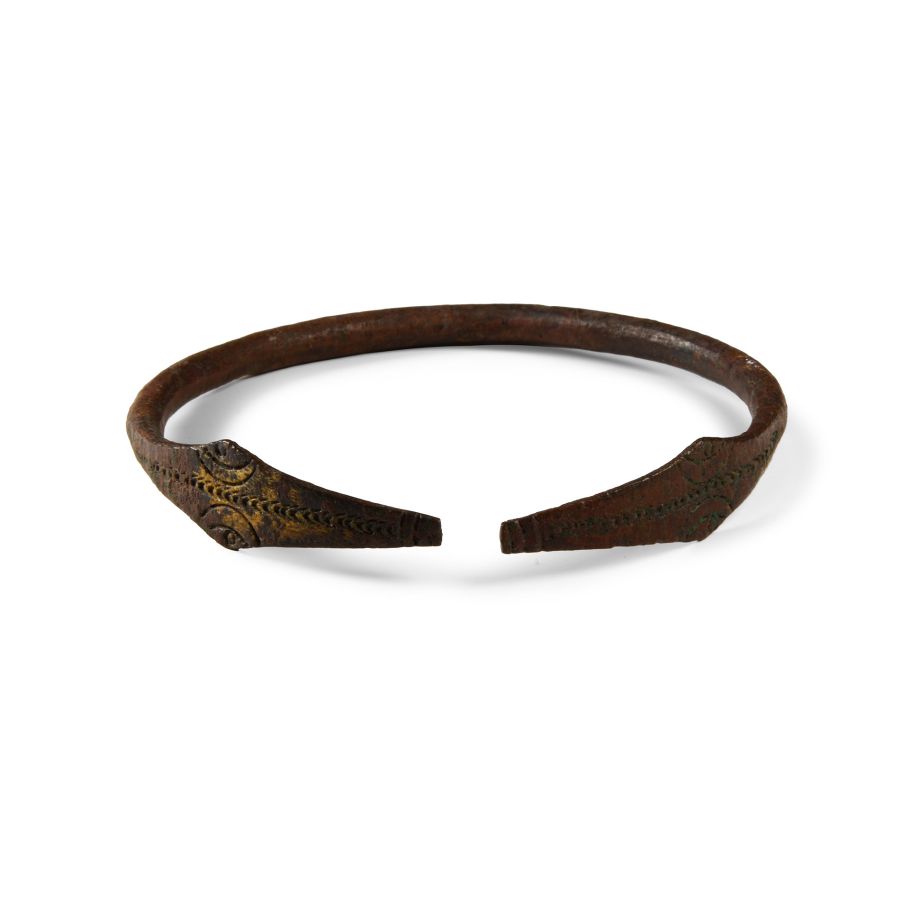
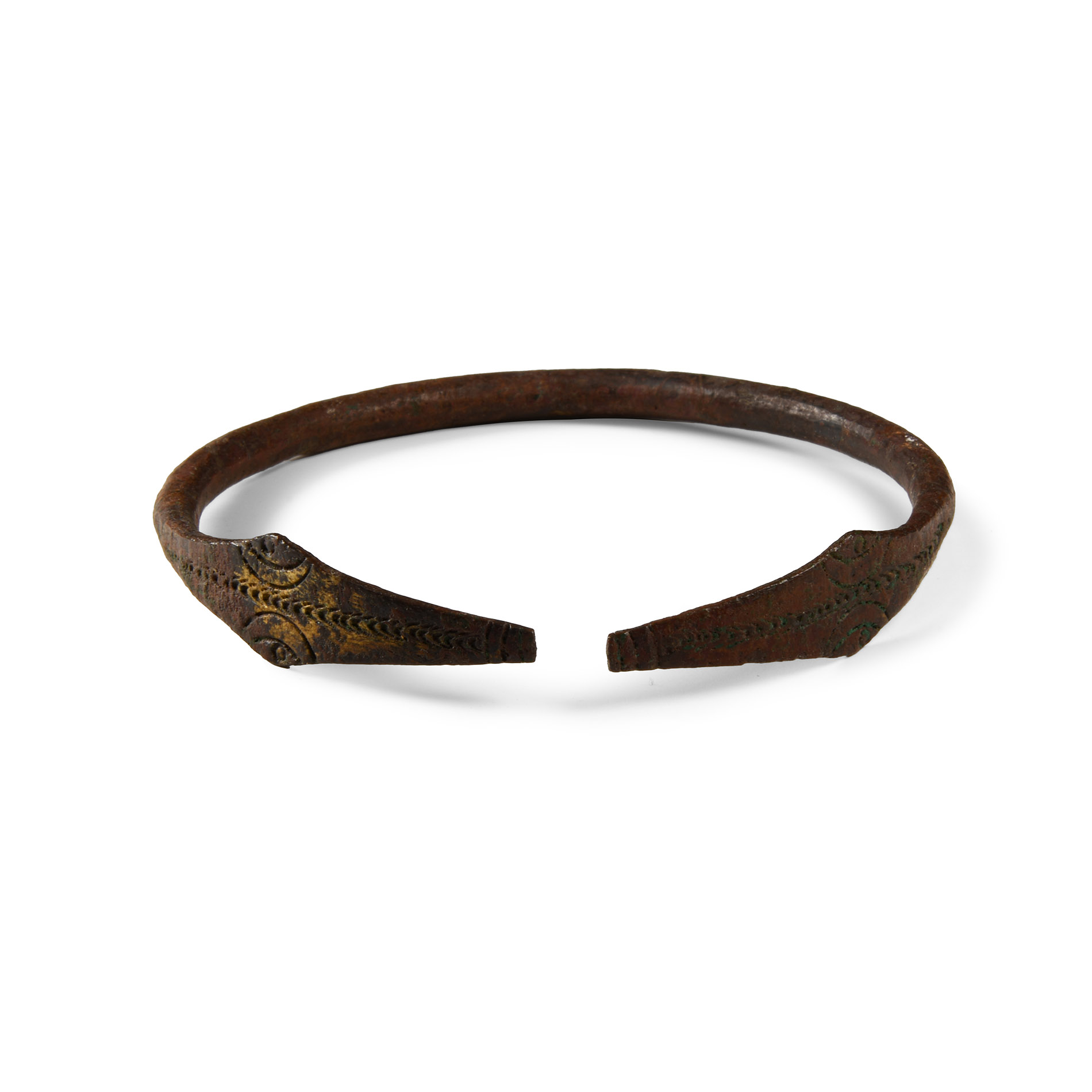
Roman Gilt Bronze Snake-Headed Bracelet
1ST-4TH CENTURY A.D.
2 7/8 in. (24.6 grams, 74 mm).
Round-section shank and lozenge-shaped finials with serpent detailing. [No Reserve]
ProvenanceFrom a collection acquired on the UK art market from various auction houses and collections mostly before 2000.
From an important Cambridgeshire estate; thence by descent.
TimeLine Auctions follows a vetting process to ensure the authenticity and legality of all items, reinforcing our commitment to integrity and responsible trading. Each antiquity, antique, and coin lot undergoes thorough examination by a vetting committee of at least ten external specialists, professional trade association members, scientists, and archaeologists: Our Vetting Process
AUCTIONS:
TimeLine is a leading auction house specialising in antiquities, ancient art, collectables, natural history, coins, medals, and books. Our auctions offer museums, collectors, historians, and enthusiasts the opportunity to acquire unique and historically significant pieces.
-
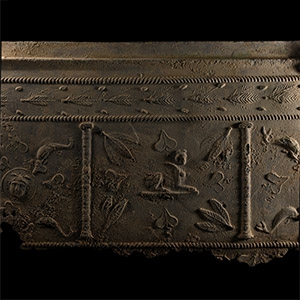
Roman Lead Coffin Panel with Sphinx, Medusa and Dolphins
2nd-3rd century A.DSold for (Inc. bp): £1,430
Decorated with a high-relief pattern comprising sphinxes surrounded by dolphins and masks of Medusa surrounded by laurel leaves all between Corinthian columns; ropework and floral border strips with laurel leaves above and lip below the upper edge. 13.65 kg, 80 cm
Acquired 1970s-early 1990s. Property of a North American collector. London collection, 2016. -
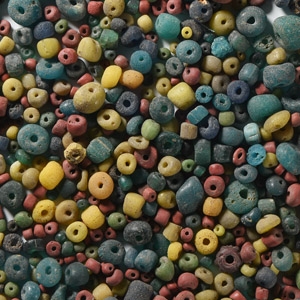
Roman and Other Mixed Glass Bead Group
1st-4th century A.D. and laterSold for (Inc. bp): £130
Mainly spherical, drum-shaped, annular and other types, including some 'trade wind beads'. 160 grams total, 2-12 mm
From the private collection of the late Mrs Belinda Ellison, a long time member of the Egyptian Exploration Society, c.1940-2020. -
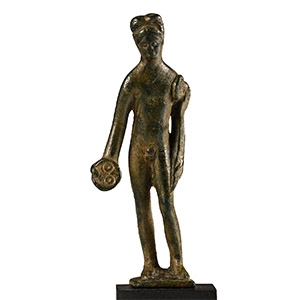
Roman Bronze Statuette of Mercury
2nd-3rd century A.D.Sold for (Inc. bp): £260
Shown standing nude with caduceus resting against the left forearm, a patera in the right hand, bunched lobes and centre-parted hairstyle; mounted on a custom-made display stand. 69 grams total, 98 mm including stand
From a collection acquired on the UK art market from various auction houses and collections mostly before 2000. From an important Cambridgeshire estate; thence by descent.
Mercury is one of the most widespread divinities among the votive statuettes of Roman Age. The god of the Roman pantheon was similar to the Greek Hermes and the Etruscan Turms.
