
Loading, please wait...
LOT 0737
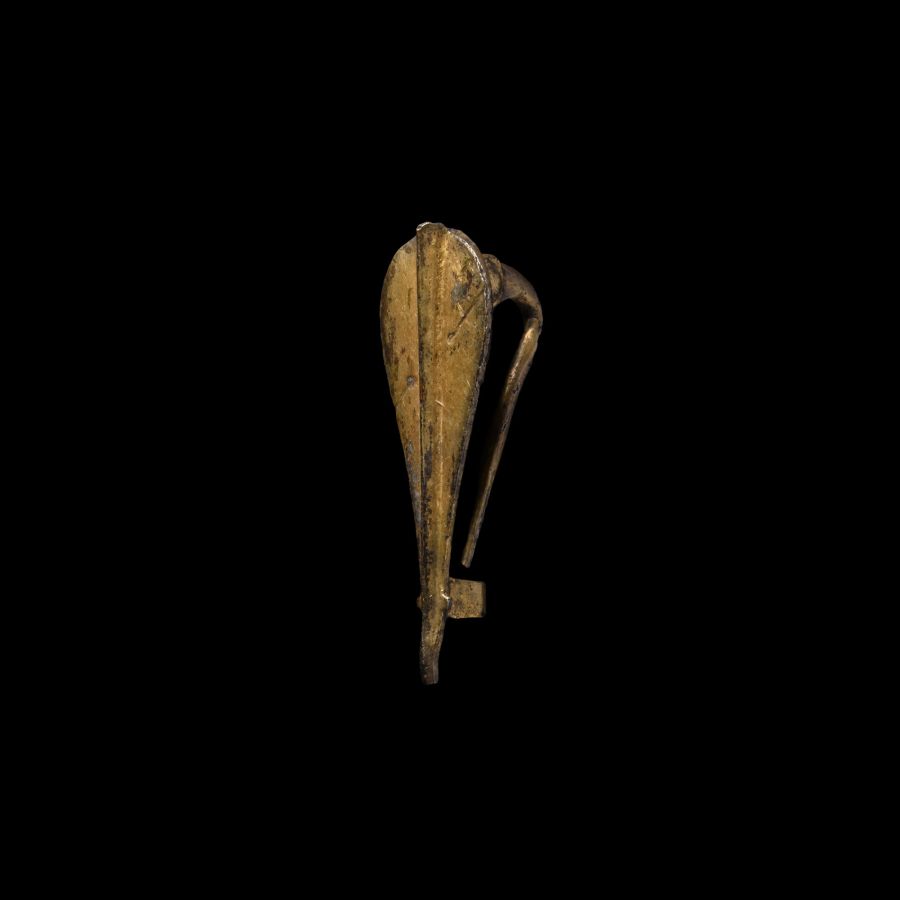
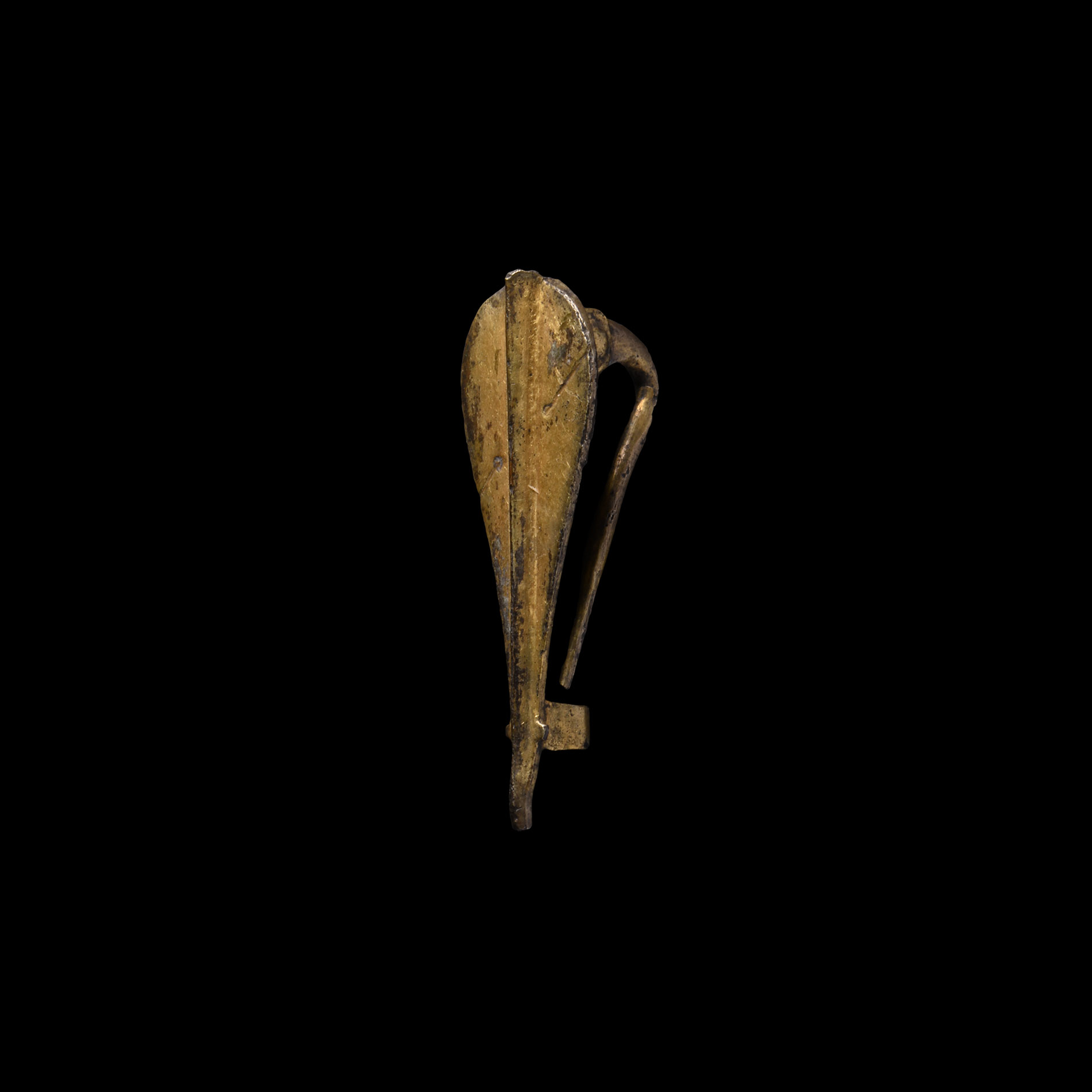
Roman Gilt Bronze Plate Brooch
CIRCA 2ND CENTURY A.D.
1 1/4 in. (3.06 grams 31 mm).
Of piriform shape, central vertical rib; complete with pin and catchplate to reverse. [No Reserve]
ProvenanceAcquired from York Antiques Centre.
Accompanied by a certificate of authenticity from Gary Edwards.
TimeLine Auctions follows a vetting process to ensure the authenticity and legality of all items, reinforcing our commitment to integrity and responsible trading. Each antiquity, antique, and coin lot undergoes thorough examination by a vetting committee of at least ten external specialists, professional trade association members, scientists, and archaeologists: Our Vetting Process
AUCTIONS:
TimeLine is a leading auction house specialising in antiquities, ancient art, collectables, natural history, coins, medals, and books. Our auctions offer museums, collectors, historians, and enthusiasts the opportunity to acquire unique and historically significant pieces.
-
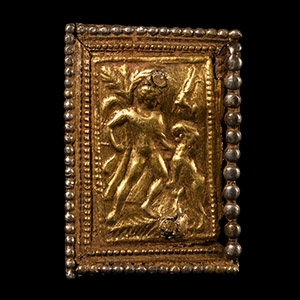
Roman Silver-Gilt Military Belt Plate with Hercules Killing the Nemean Lion
4th century A.D.Sold for (Inc. bp): £910
Comprising a repoussé panel with the nude hero wearing a mantle and killing the beast, a palm of victory underneath his feet, a dog attacking the lion from above, foliage around the scene; two fixing studs to the reverse; accompanied by a frame. 234 grams total, 53 x 37 mm (13 x 13 cm including frame)
Acquired 1980-2015. Ex Abelita family collection.
The belt fitting finds parallels with belt parts from Asia Minor, today in the British Museum, inv. EC 252-254. These kind of plates, decorative and engraved with classical scenes, can possibly be dated to the age of Theodosius I. The quality of decoration can support the thesis that they belonged to the officers of the Comitatus (the Imperial mobile army). -
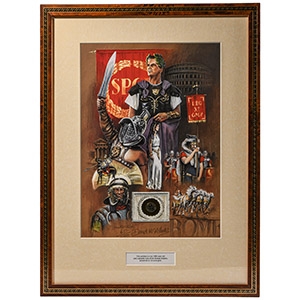
Roman Coin and Limited Edition Framed Print
3rd century A.D. and laterSold for (Inc. bp): £13
The coin mounted on 22 carat gold foil, framed with an art print signed by the artist David McAllister, depicting scenes of Roman military activity; limited edition number 65/1150. 1.3 kg, 36.5 x 49 cm
Essex gallery, early 2000s.
David McAllister's exciting design is a 'one of a kind' work that portrays the might and riches of the Roman civilisation. This limited edition print is a celebration of the award winning artist's lifetime dedication to historical paintings of the ancient world. To enhance appreciation of this rare and historic work, each individual print is signed and numbered by the artist. -
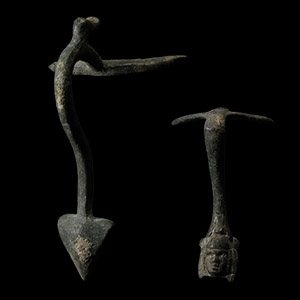
Roman Bronze Tankard Handle Group
Circa 1st-4th century A.D.Estimate: £100 - 140 (+bp*)
Opening Bid: £40
Comprising two differently sized handles, one featuring a female mask, the other with a leaf-shaped terminal and stylised duck's head to the apex of the bow. 411 grams total, 11.4-18 cm
Acquired 1990s-early 2000s. East Anglian private collection.
