
Loading, please wait...
LOT 0706
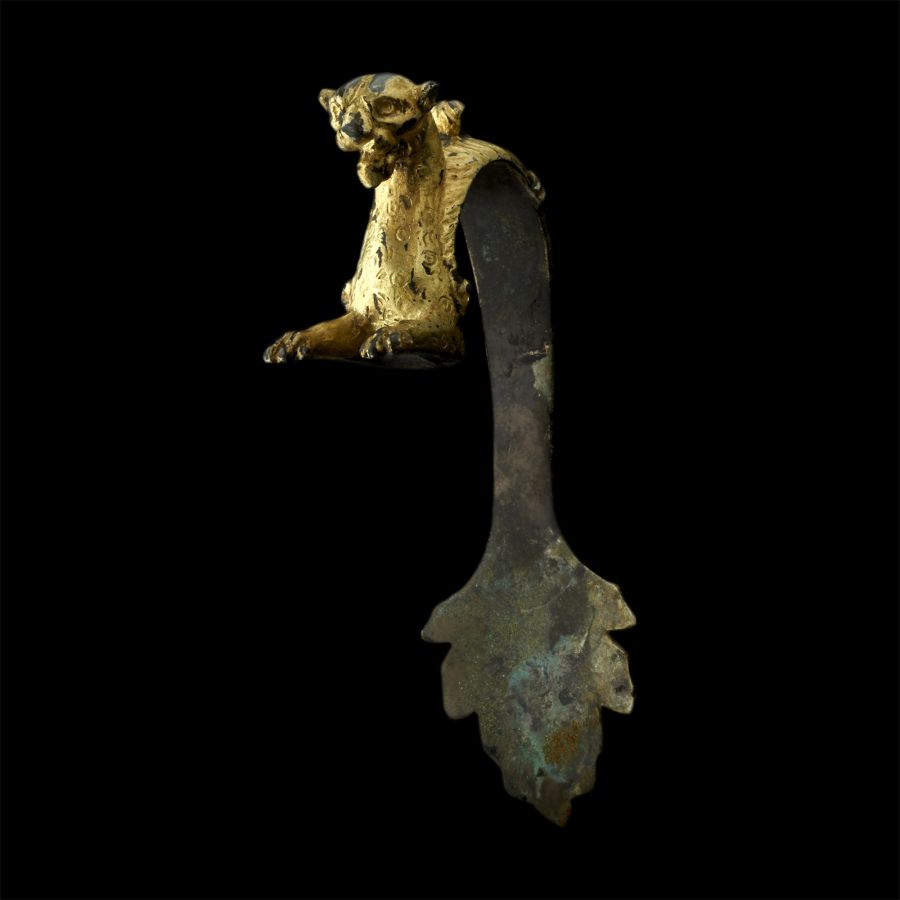
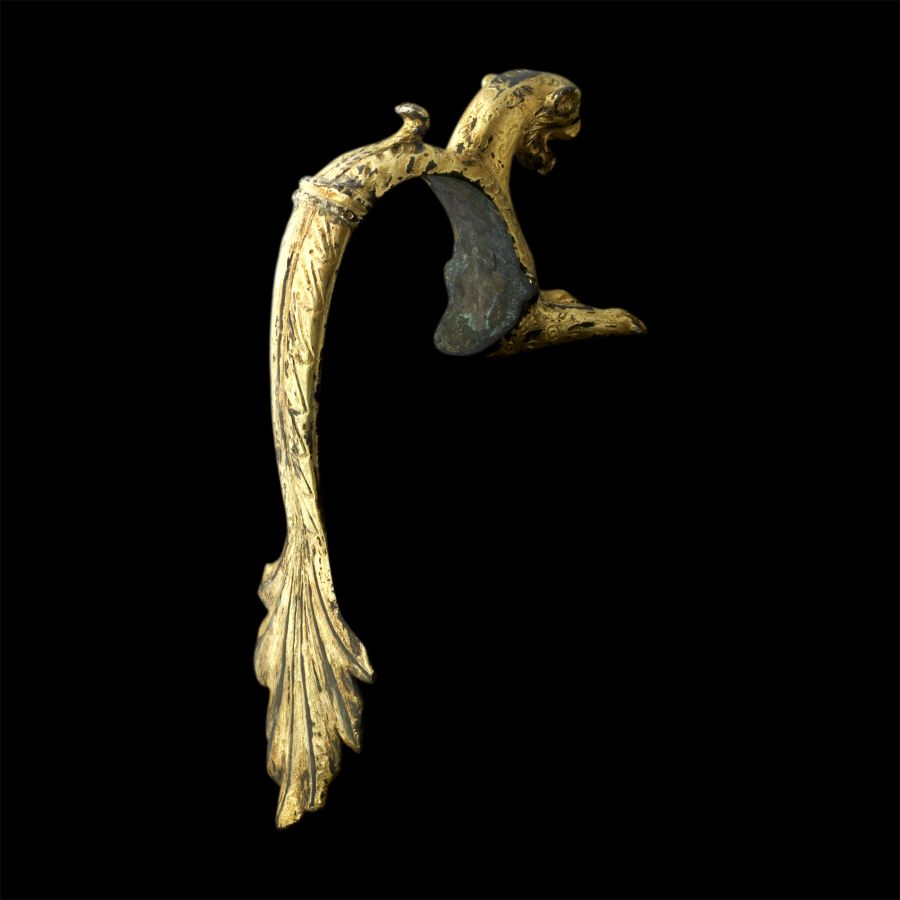
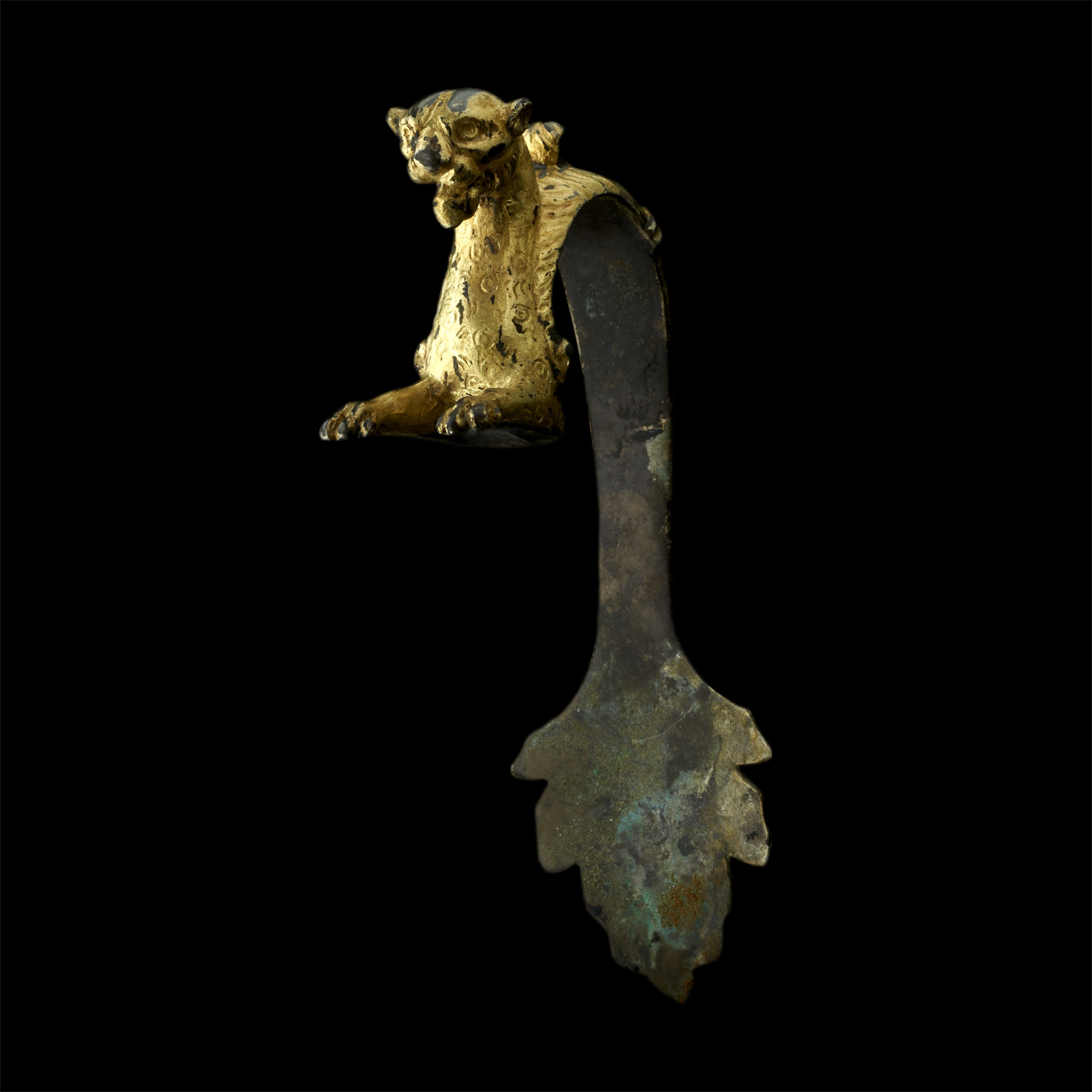
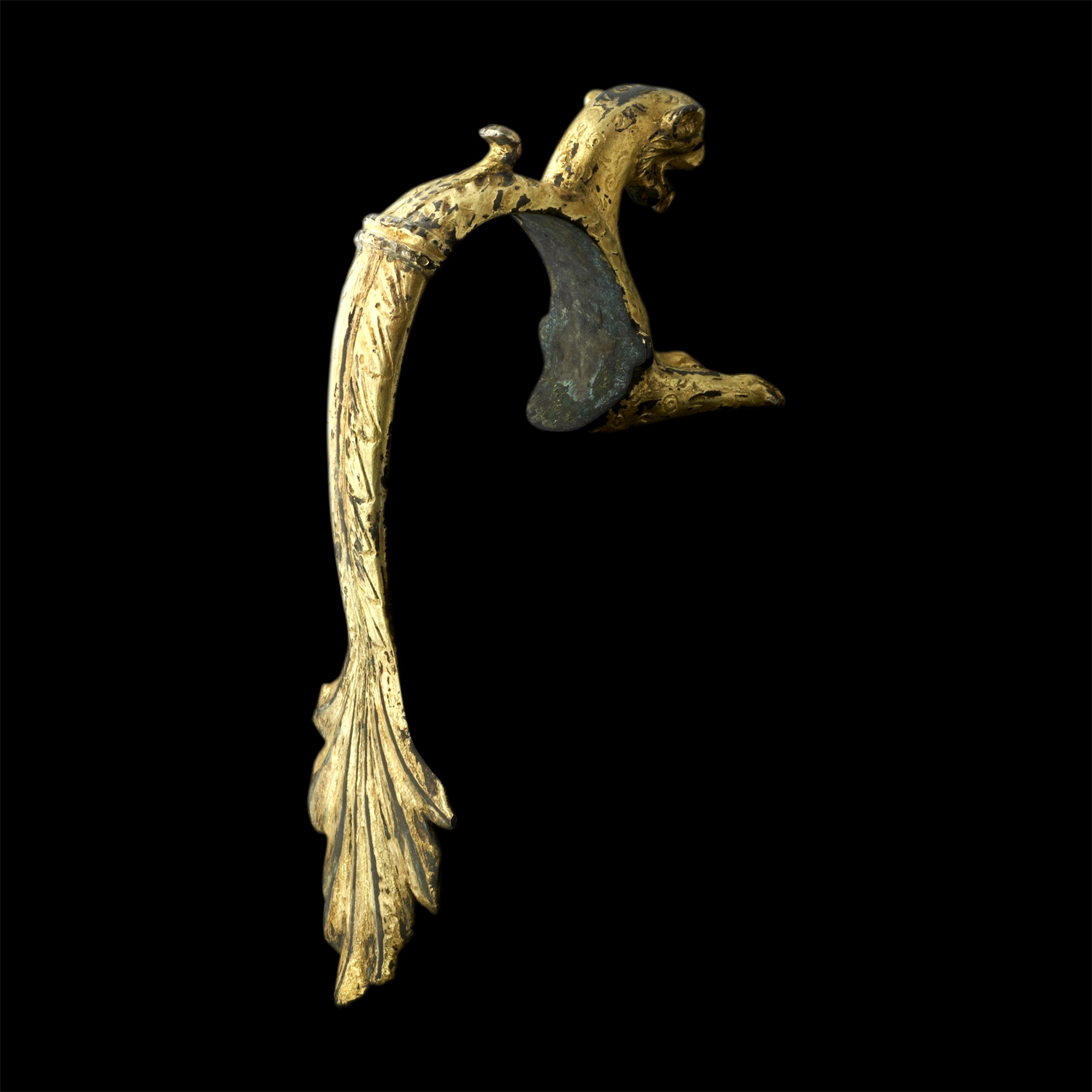
Roman Gilt Bronze Panther Handle
1ST-2ND CENTURY A.D.
4 3/8 in. (128 grams, 11 cm).
D-section strap handle with palmate finial below, transverse bar and thumb-pad, upper end developing to the foreparts of a panther with forelegs spread.
ProvenanceAcquired in the late 1960s-early 1970s.
Private collection, England.
TimeLine Auctions follows a vetting process to ensure the authenticity and legality of all items, reinforcing our commitment to integrity and responsible trading. Each antiquity, antique, and coin lot undergoes thorough examination by a vetting committee of at least ten external specialists, professional trade association members, scientists, and archaeologists: Our Vetting Process
AUCTIONS:
TimeLine is a leading auction house specialising in antiquities, ancient art, collectables, natural history, coins, medals, and books. Our auctions offer museums, collectors, historians, and enthusiasts the opportunity to acquire unique and historically significant pieces.
LOT 0706
Roman Gilt Bronze Panther Handle
Estimate £800 - 1,000€930 - 1,160 (for guidance only)$1,080 - 1,350 (for guidance only)
-
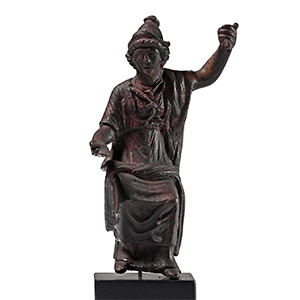
Roman Bronze Statuette of Minerva
2nd-3rd century A.D.Sold for (Inc. bp): £1,105
Modelled in seated pose, wearing a stylised Corinthian helmet, breastplate with gorgoneion motif, draped stola; right hand extended to support a patera, left hand raised holding the shaft of a spear (absent); hollow to the reverse underside; repaired; mounted on a custom-made stand. 717 grams total, 91 mm including stand
From a collection acquired on the UK art market from various auction houses and collections mostly before 2000. From an important Cambridgeshire estate; thence by descent. -
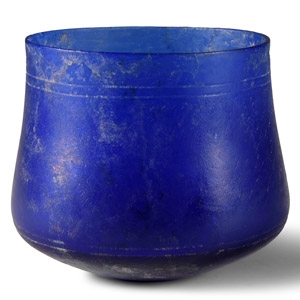
Roman Cobalt Blue Glass Wine Beaker
Circa 1st century A.D.Sold for (Inc. bp): £2,340
Wheel-cut with a narrow base and cylindrical body with gently tapering walls, concentric line decoration to the rim, body and around the base; in exquisite deep colour. 67.6 grams, 56 mm
Previously with a London, UK, gallery, 1990s. Ex JL collection Surrey, UK, early 2000s. This lot has been checked against the Interpol Database of stolen works of art and is accompanied by search certificate no.12035-214140. -
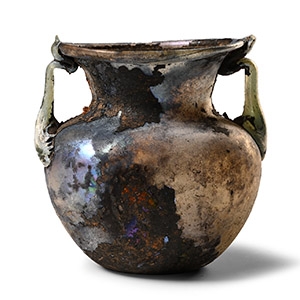
Roman Glass Double-Handled Iridescent Flask
4th century A.D.Estimate: £800 - 1,000 (+bp*)
Opening Bid: £400
With squat bulbous body, dimple base, flared trumpet neck; applied trails to the shoulder, applied strap handles to the shoulders. 47 grams, 72 mm
From an important London, UK, collection, 1970-1990s.
