
Loading, please wait...
LOT 0866
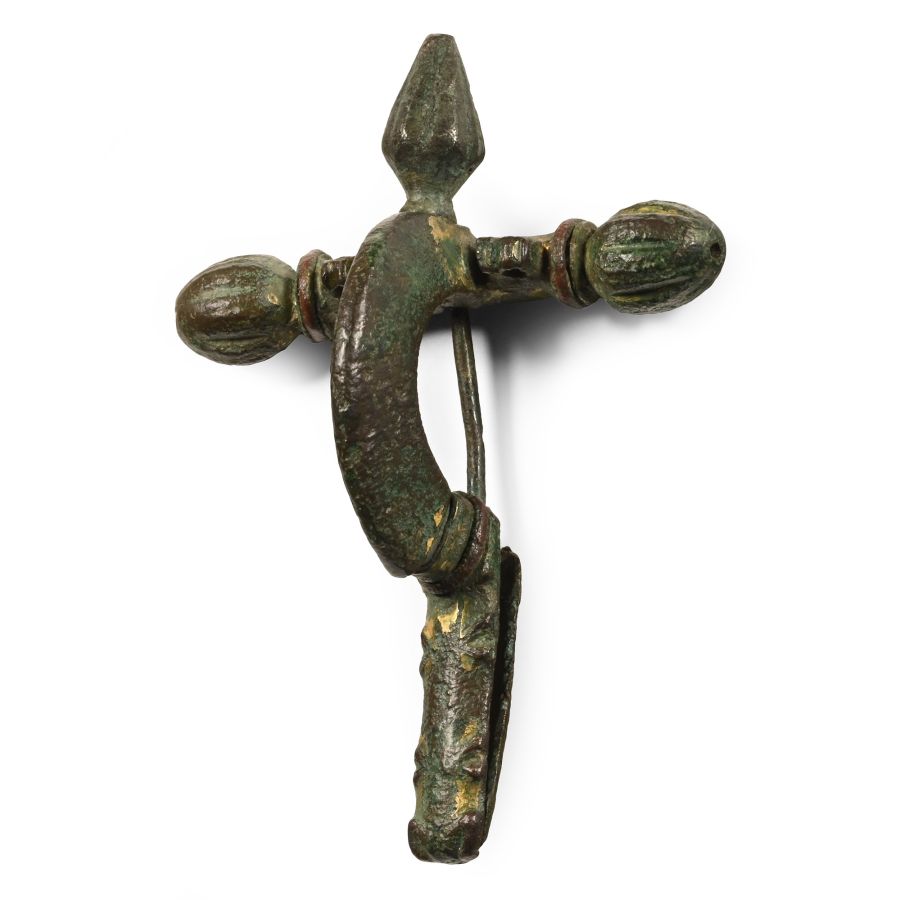
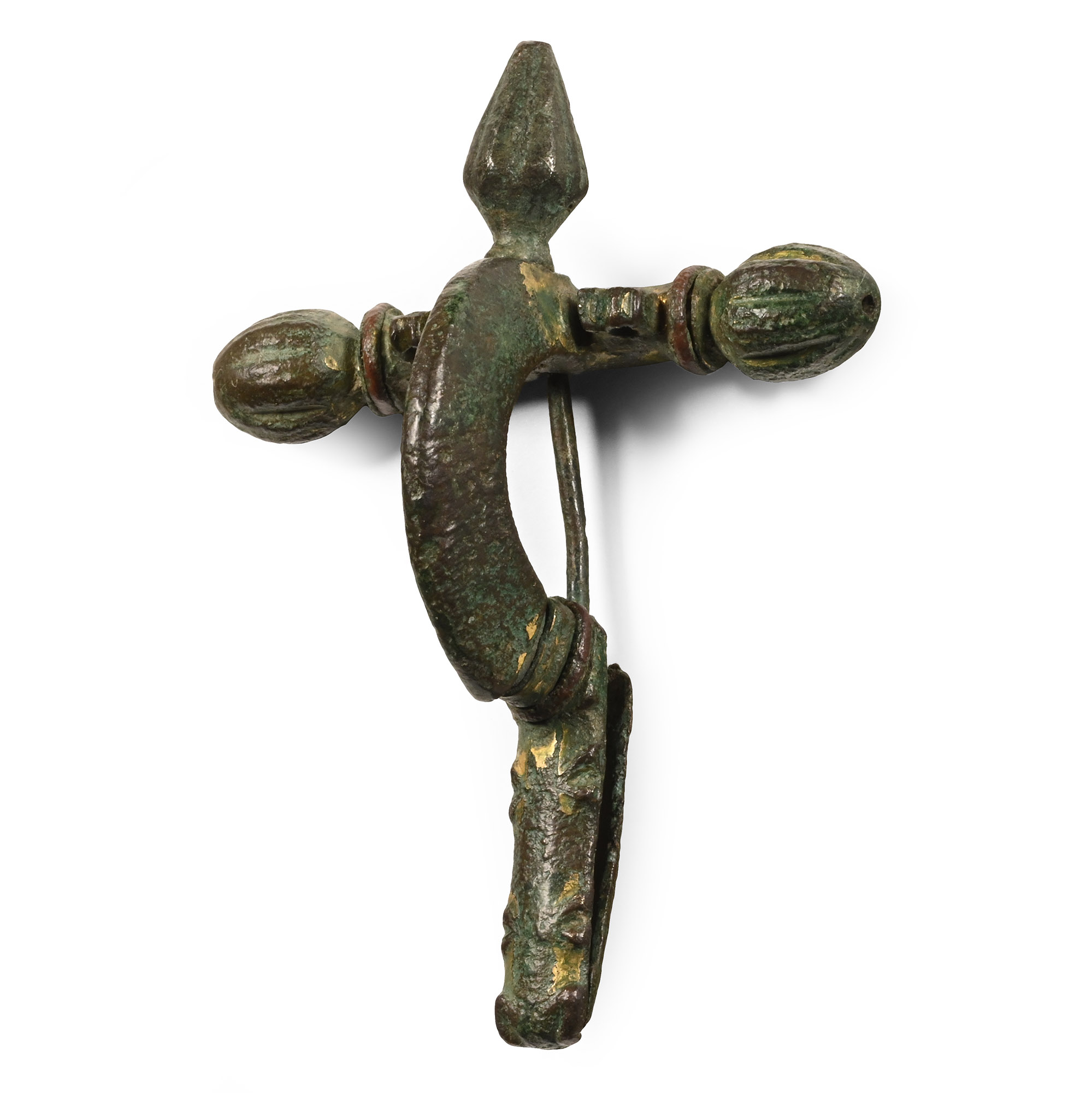
Roman Gilt Bronze Crossbow Brooch
4TH CENTURY A.D.
3 1/4 in. (59.7 grams, 81 mm).
Keeled bow and grooved finials, applied collar to the base of the bow, ornamented footplate with integral catch. [No Reserve]
ProvenanceAcquired on the UK art market before 2000.
Property of an Essex, UK, gentleman.
This lot is accompanied by an illustrated lot declaration signed by the Head of the Antiquities Department, Dr Raffaele D'Amato.
TimeLine Auctions follows a vetting process to ensure the authenticity and legality of all items, reinforcing our commitment to integrity and responsible trading. Each antiquity, antique, and coin lot undergoes thorough examination by a vetting committee of at least ten external specialists, professional trade association members, scientists, and archaeologists: Our Vetting Process
AUCTIONS:
TimeLine is a leading auction house specialising in antiquities, ancient art, collectables, natural history, coins, medals, and books. Our auctions offer museums, collectors, historians, and enthusiasts the opportunity to acquire unique and historically significant pieces.
-
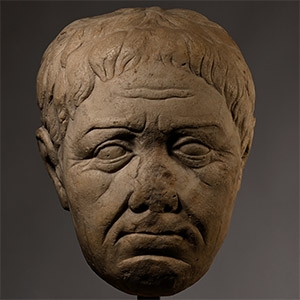
Life-Size Roman Republican Marble Portrait Head of a Man
2nd-1st century B.C.Estimate: £5,000 - 7,000 (‡+bp*)
Opening Bid: £2,778
Private portrait head of a beardless but aged man sculpted in provincial style to be full of character with pinched mouth and furrowed brow; the short hairstyle of the Late Republican Rome; nose abraded; socket to underside for mounting on the display stand. 25.75 kg total, 50 cm including stand
Private collection, Auvergne, France, 1970s. Accompanied by a copy of an Art Loss Register certificate no.S00131545. This lot has been checked against the Interpol Database of stolen works of art and is accompanied by search certificate number no.12477-228801. This lot has been cleared against the Art Loss Register database, and is accompanied by an illustrated lot declaration signed by the Head of the Antiquities Department, Dr Raffaele D'Amato.
In view of the fact that visual conventions (i.e. the Julian hairstyle) developed in the capital reached the “Romanised” provinces with a certain time lag, this portrait head was probably created in the Late Republican or Early Imperial Period. -
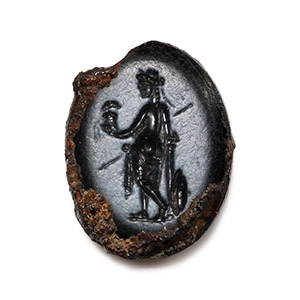
Roman Nicolo Gemstone with Venus
2nd-3rd century A.D.Sold for (Inc. bp): £1,040
With intaglio standing Venus (Greek Aphrodite) with shield and spear; supplied with a museum-quality impression. 0.68 grams, 12 mm
Ex Parisian collection, Mr A., 1990s. Acquired in 2010. This lot is accompanied by an illustrated lot declaration signed by the Head of the Antiquities Department, Dr Raffaele D'Amato. -
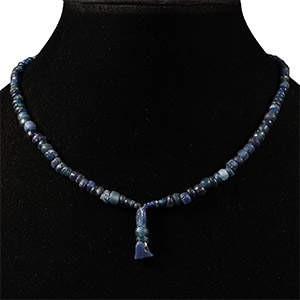
Roman Blue Glass Bead Necklace String
1st-4th century A.D. and laterSold for (Inc. bp): £98
Composed mainly of oblate and annular beads; restrung. 13.1 grams, 37.2 cm
Ex London, UK, collection, 1990s. This lot is accompanied by an illustrated lot declaration signed by the Head of the Antiquities Department, Dr Raffaele D'Amato.
