
Loading, please wait...


LOT 0705
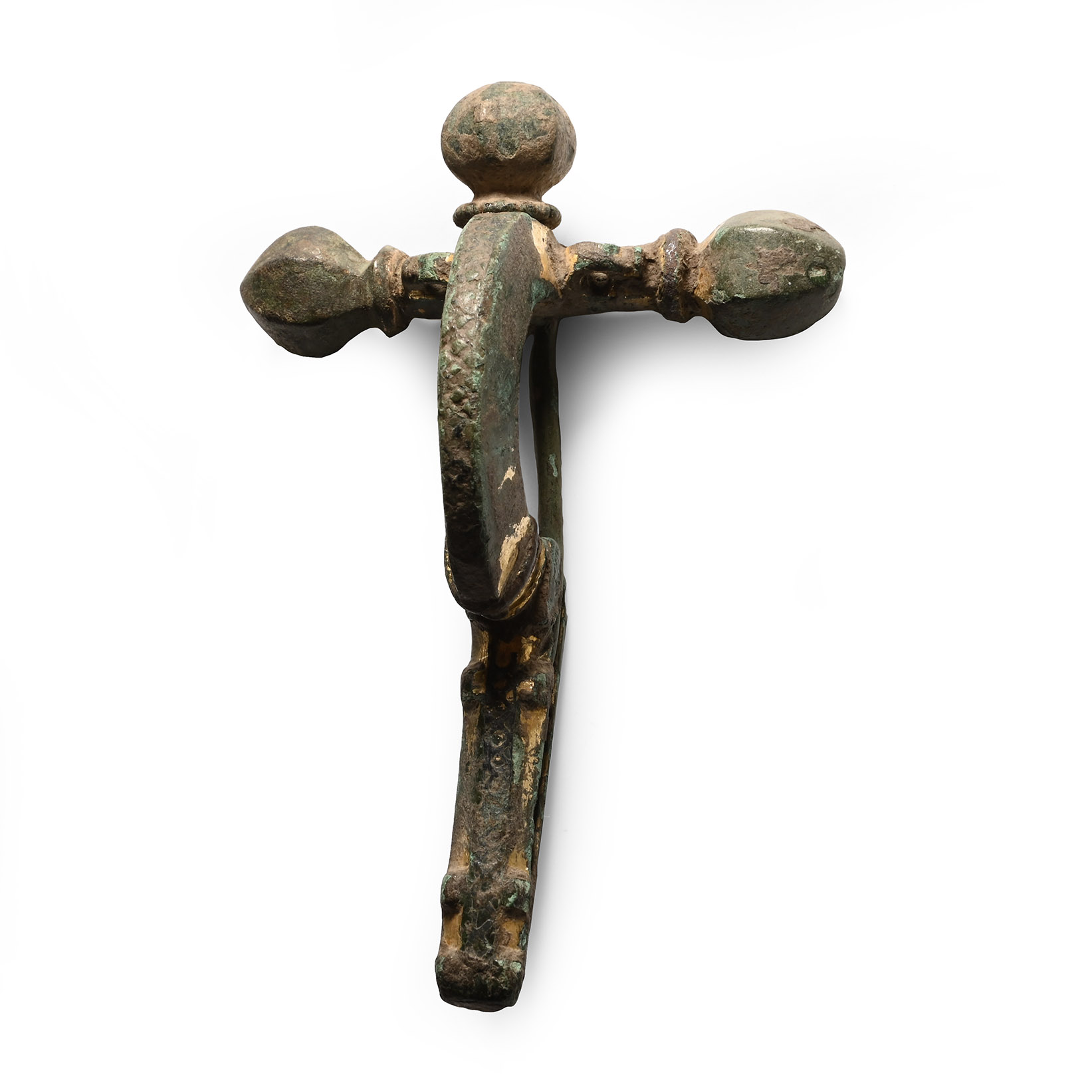
Roman Gilt Bronze Crossbow Brooch
4TH CENTURY A.D.
3 1/8 in. (58 grams, 80 mm).
With three faceted knops to the crossbar, the upper one with beaded collar, and pierced moulding to the upper face, deep bow, stepped junction with foot, chamfered edges to foot with integral catch; hinged pin to reverse; Keller Type 3.
ProvenanceEx German art market, 2000s.
Acquired from an EU collector living in London.
From the collection of Surrey, UK, gentleman.
Cf. Mackreth, D.F., Brooches in Late Iron Age and Roman Britain, Oxford, 2011, vol.2, pl.139, item 10452.
CONDITIONTimeLine Auctions follows a vetting process to ensure the authenticity and legality of all items, reinforcing our commitment to integrity and responsible trading. Each antiquity, antique, and coin lot undergoes thorough examination by a vetting committee of at least ten external specialists, professional trade association members, scientists, and archaeologists: Our Vetting Process
AUCTIONS:
TimeLine is a leading auction house specialising in antiquities, ancient art, collectables, natural history, coins, medals, and books. Our auctions offer museums, collectors, historians, and enthusiasts the opportunity to acquire unique and historically significant pieces.
-
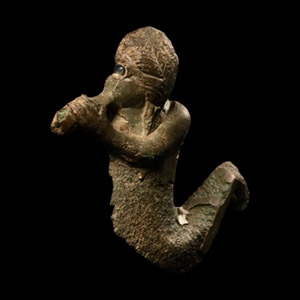
Roman Bronze Triton Mount
1st-2nd century A.D.Sold for (Inc. bp): £221
Long haired, human face with detailed scaly fish body, glass insert preserved in the eye, in the act of blowing to a seashell. 31.6 grams, 70 mm
From the collection of the famous author, writer and speaker, Gordon Bailey, Essex, UK; formed since 1968.
The Triton is in the typical position of playing an empty shell. The mount was an exceptional piece, with the eyes filled with glass, and would have decorated an ornate bowl or vessel. -
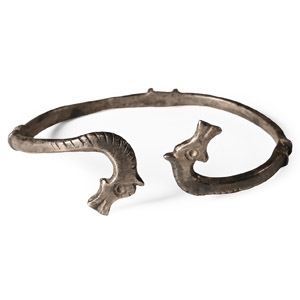
Roman Silver Horse-Headed Bracelet
3rd-4th century A.D.Sold for (Inc. bp): £221
Penannular bracelet with D-section shank, paired projecting flanges, horse-head finials placed tête-bêche each with ring-and-dot eye and notched mane. 9.9 grams, 59 mm
Property of the vendor's grandfather, thence by family descent, circa 1985. From the private collection of a New York, USA gentleman. -
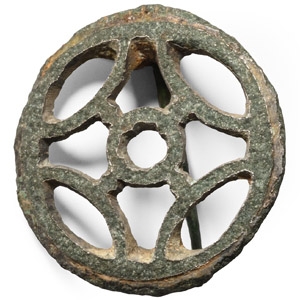
Roman Bronze Military Plate Brooch
2nd century A.D.Sold for (Inc. bp): £85
Openwork body with a shield design; pin and catchplate to the reverse. 10.3 grams, 33 mm
Ex German art market, 2000s. Acquired from an EU collector living in London. From the collection of Surrey, UK, gentleman.
